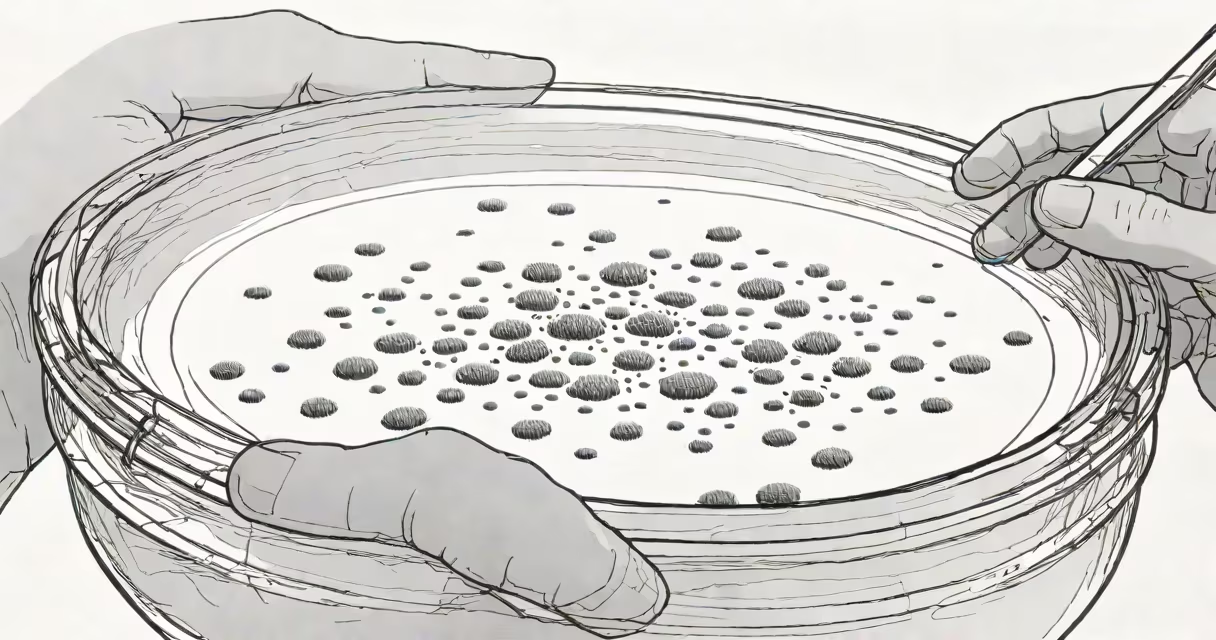
Subculturing in microbiology is the process of transferring a small sample of microorganisms from one growth medium to a fresh, sterile medium to sustain growth, isolate pure strains, or prepare cultures for experimentation. This procedure ensures continued viability and prevents nutrient depletion or waste accumulation in the original culture.
Microbiologists perform subculturing routinely in labs to maintain live cultures, test antibiotic sensitivity, or preserve strains for long-term storage. The method relies on strict sterile technique to avoid contamination from environmental microbes. Without proper handling, even a single contaminant can dominate a culture within 24 hours.
Subculturing is distinct from inoculation, which introduces microbes into a medium for the first time. Subculturing specifically refers to moving organisms from an existing culture to a new environment. It's not simply "re-potting" bacteria-it's a precision step that affects experimental outcomes.
The process begins with selecting a healthy, actively growing culture. A small amount of microbial material-usually a colony or a loopful of broth-is transferred using a sterile inoculating loop or needle. The tool is flamed between uses to sterilize it and prevent cross-contamination.
The sample is then streaked or spread onto a new solid medium (like agar plates) or introduced into fresh liquid medium (such as broth). After incubation at optimal temperature and humidity, the microorganisms grow into visible colonies or turbid broth, indicating successful transfer.
For example, a researcher studying *Escherichia coli* might subculture a strain every 48 hours to maintain its metabolic activity. If left untransferred, the culture depletes nutrients and accumulates toxic byproducts, reducing viability after 72 hours. Regular subculturing preserves growth potential and enables consistent results across experiments.
There are three primary methods based on the medium type and purpose:
| Method | Medium Type | Use Case | Duration to Growth |
|---|---|---|---|
| Streak Plate | Solid (agar) | Isolating pure colonies | 12-24 hours |
| Loop Transfer | Liquid (broth) | Maintaining high-density cultures | 6-8 hours |
| Serial Dilution | Both solid and liquid | Quantifying viable cells (CFU/ml) | 24 hours |
Streak plate subculturing is most common in clinical labs to isolate individual bacterial species from mixed samples. Loop transfers are standard in industrial microbiology for fermentations requiring constant cell density. Serial dilutions allow researchers to count viable cells, critical in vaccine development and antimicrobial testing.
A key insight often missed: subculturing frequency depends on the organism's doubling time. Fast-growing bacteria like *E. coli* may require daily transfers, while slow growers such as *Mycobacterium tuberculosis* can survive weeks between subcultures. Over-subculturing can lead to genetic drift-mutations accumulate over generations, altering phenotypes.
Without regular subculturing, microbial cultures degrade. Nutrients deplete, pH shifts, and waste products inhibit growth. In a 2021 study published in Applied and Environmental Microbiology, researchers found that *Pseudomonas aeruginosa* cultures lost 60% of their viability after 72 hours without transfer due to acid buildup from metabolic byproducts.
In medical diagnostics, subculturing is essential for confirming pathogen identity. A sputum sample might initially show mixed flora. By subculturing on selective media-like MacConkey agar for Gram-negative rods-laboratories isolate the causative agent. This step is important for accurate antibiotic prescribing.
One common mistake is assuming all subcultures yield identical results. In reality, slight differences in technique-such as loop size, flame duration, or incubation temperature-can alter growth patterns. A 2019 report from the American Society for Microbiology noted that inconsistent flaming practices led to contamination rates as high as 14% in student labs.
Many assume subculturing is interchangeable with freezing or cryopreservation. It is not. Freezing preserves cultures long-term at -80°C or in liquid nitrogen. Subculturing maintains short-term viability. Using subculturing as a permanent storage method leads to genetic instability and loss of reference strains.
Another misconception: that any growth medium works. In fact, media must match the organism's nutritional needs. *Lactobacillus* requires complex media with vitamins and amino acids; using minimal media causes poor growth. Selective media like blood agar support fastidious organisms but inhibit others-misuse leads to false negatives.
I once observed a lab student repeatedly fail to grow *Staphylococcus aureus* from a wound swab. The issue wasn't the sample-it was the medium. They used nutrient agar instead of mannitol salt agar, which selects for *S. aureus*. Switching media and performing a proper subculture yielded clear colonies within 18 hours.
Always work in a biosafety cabinet when handling pathogenic organisms. Even non-pathogens can cause infection if mishandled. Flaming the loop between transfers reduces contamination risk by 95%, according to CDC guidelines.
Label every culture with date, strain name, and medium type. Mislabeling leads to irreversible errors-especially in long-term projects. Record subculture intervals in a lab notebook. For instance, a *Salmonella* culture should be subcultured every 48 hours to maintain virulence markers.
When working with genetically modified organisms (GMOs), follow institutional biosafety protocols. Subculturing GMOs requires additional containment steps to prevent environmental release.
Subculturing in microbiology is a foundational technique that sustains microbial life in the lab, enabling research, diagnostics, and biotechnology applications. It's not a passive act-it demands precision, consistency, and attention to detail. When done correctly, it preserves culture integrity and supports reproducible science.
Understanding this process is essential for anyone entering microbiology. building a career in biotech, mastering subculturing ensures your experiments start with viable, uncontaminated cultures. Learn the basics, follow sterile technique, and track your transfers. These habits separate reliable data from failed experiments.