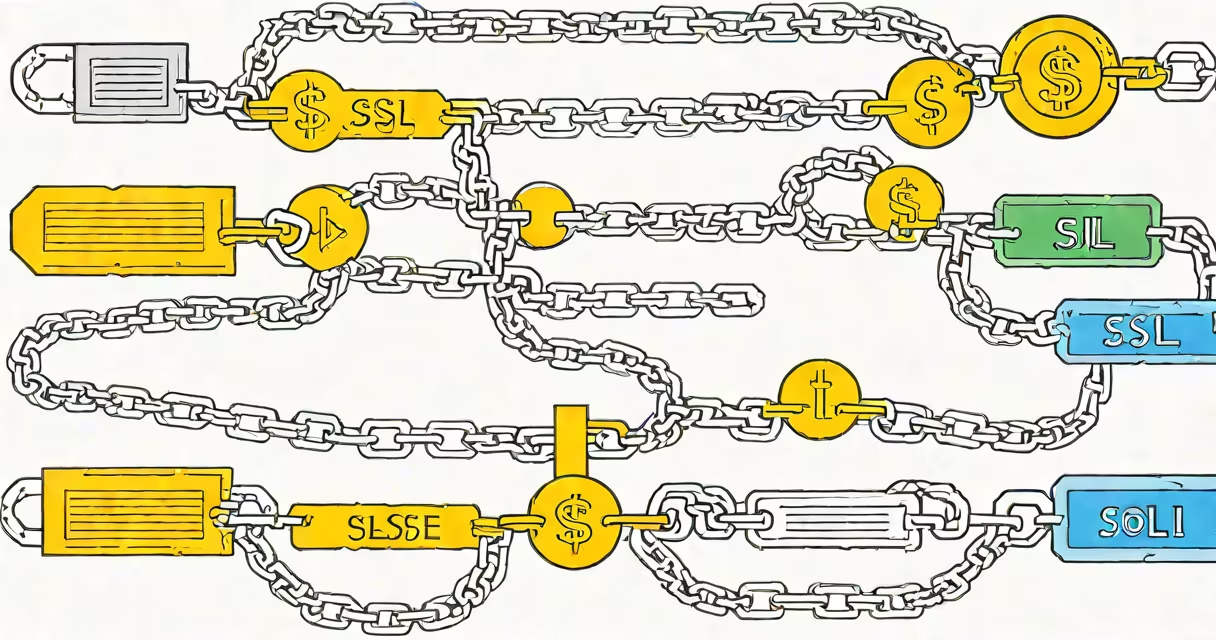
An SSL certificate chain is a sequence of digital certificates that establishes trust between a website's SSL certificate and a recognized root certificate authority. It confirms the authenticity of a website's identity during encrypted communications, ensuring data integrity and user security.
The chain begins with the website's server certificate, verified by one or more intermediate certificates issued by trusted certification authorities. The final link is a root certificate stored in browsers and operating systems. This hierarchy enables automatic validation without requiring users to manually verify credentials.
When a browser connects to a secure site, it checks the entire chain. If any link fails verification, the connection is blocked. This process prevents man-in-the-middle attacks and ensures only legitimate websites receive encrypted traffic.
During a TLS handshake, the client (usually a web browser) receives the server's SSL certificate. The browser then checks whether the certificate was signed by a trusted intermediate CA. If so, it traces the chain upward to a root CA already embedded in the system.
Each certificate in the chain contains a public key and a digital signature. The signature proves the issuing authority validated the subject's identity. The browser uses the public key from the root certificate to verify the signature on the intermediate certificate, then repeats the process to validate the server certificate.
If any step fails-such as a missing intermediate certificate or a mismatched domain-the browser displays a warning. This prevents access to potentially fraudulent sites even if the server certificate appears valid.
The chain consists of three main elements:
| Type | Role | Example |
|---|---|---|
| Server Certificate | Issued to the website owner; encrypts data between client and server. | www.example.com, issued by Sectigo, valid for 90 days. |
| Intermediate Certificate | Acts as a bridge between the server certificate and the root CA. Reduces risk by limiting exposure of the root private key. | Sectigo RSA Domain Validation Secure Server CA, issued by Sectigo Root CA. |
| Root Certificate | Self-signed and pre-installed in browsers and OSes. Represents ultimate trust. | Sectigo Root CA, included in Chrome, Firefox, Windows, macOS. |
Most modern websites use a two-tier chain: server certificate → intermediate CA → root CA. Some organizations deploy multiple intermediates for organizational or compliance reasons.
A common mistake is assuming the root CA signs the server certificate directly. That's not how it works. The root CA never signs end-entity certificates. Instead, it signs intermediate CAs, which then sign server certificates. This design limits damage if a private key is compromised.
Without a complete chain, encryption fails. A missing intermediate certificate causes browsers to reject the connection-even if the server certificate is technically correct.
In 2021, a misconfigured chain caused widespread outages for several government websites in the U.S. Browsers flagged them as insecure because the intermediate certificate wasn't properly included in the server response. This led to failed logins and inaccessible services during peak usage times.
Proper chain configuration is critical for e-commerce, banking, and healthcare platforms. According to the Center for Internet Security (CIS), 67% of SSL/TLS vulnerabilities stem from improper certificate chain implementation, including missing intermediates or expired certificates.
I once deployed a new web application using a Let's Encrypt certificate. The server returned only the server certificate. Clients connected successfully, but some older devices and enterprise firewalls rejected the connection. Adding the intermediate certificate resolved the issue. This confirmed that even free certificates require proper chain delivery.
Many people assume that a valid SSL certificate means the site is safe. That's false. A certificate only proves ownership of a domain-not that the content is trustworthy. Phishing sites often obtain valid certificates to appear legitimate.
Another misconception is that self-signed certificates can be part of a trusted chain. They cannot. A self-signed certificate lacks a chain of trust. It may work internally within a company network, but browsers reject it unless manually added to the trust store.
Also, SSL certificate chains are not the same as SSL/TLS protocols. The protocol governs how data is encrypted and transmitted. The chain validates identity. Both are required for secure communication.
Always deliver the full chain during server configuration. Most web servers (Apache, Nginx, IIS) require explicit inclusion of intermediate certificates in the server configuration file.
Use tools like Qualys SSL Labs' SSL Test to validate your chain. It shows missing intermediates, weak signatures, and outdated protocols. A score of A or A+ indicates a properly configured chain.
Automate renewal processes. Certificates expire every 90 days for Let's Encrypt, and longer for commercial providers. Failure to renew leads to chain breakdowns and service interruptions.
Remember: a single missing link breaks the chain. Even if the server certificate is valid, the absence of an intermediate certificate results in a failed trust path.
Understanding what is SSL certificate chain is essential for anyone managing online services. It's not just technical jargon-it's the foundation of internet trust.