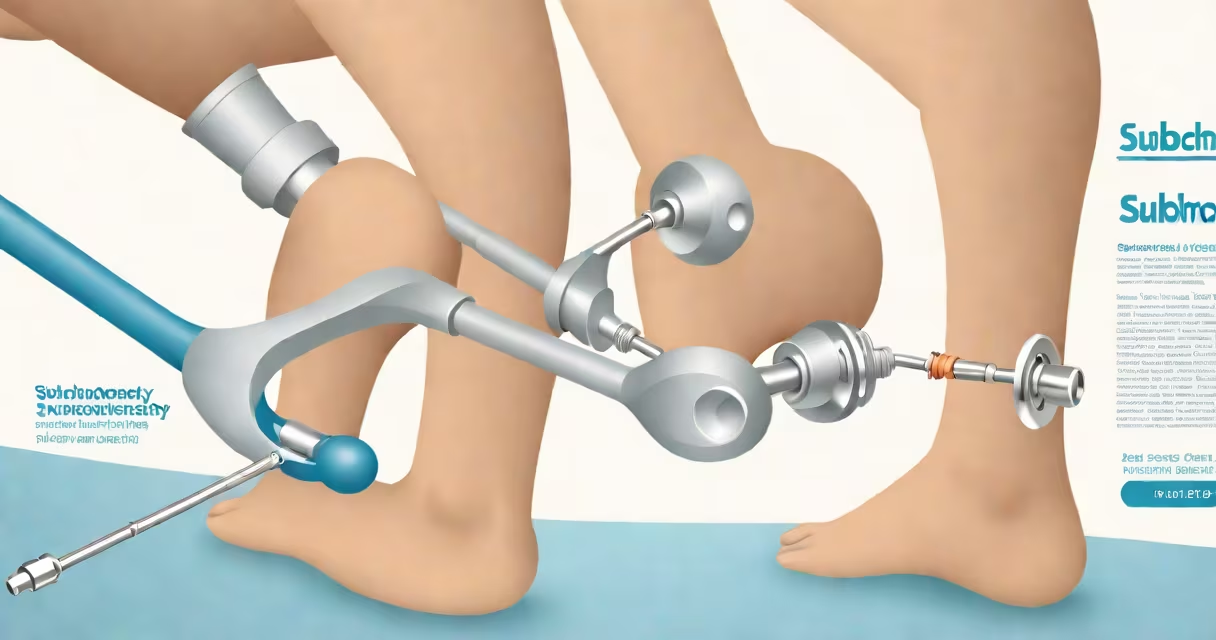
Subchondroplasty is a minimally invasive orthopedic procedure that repairs damaged bone beneath the cartilage in the knee, specifically targeting bone marrow lesions caused by injury or early osteoarthritis. The surgeon injects a biocompatible bone substitute material into the lesion site through a small incision, stabilizing the area and promoting natural healing.
This procedure is performed arthroscopically, meaning the surgeon uses a tiny camera and specialized tools inserted through small incisions. It's designed to treat pain and prevent further joint degeneration in patients who aren't yet candidates for total knee replacement. Unlike traditional surgeries that remove tissue or replace joints, subchondroplasty preserves existing structures while addressing underlying bone damage.
According to the American Academy of Orthopaedic Surgeons (AAOS), bone marrow lesions are visible on MRI scans and correlate strongly with knee pain, especially in younger adults and athletes. Subchondroplasty targets these lesions directly, offering a solution that addresses the root cause of pain rather than masking symptoms.
The procedure begins with imaging confirmation of a bone marrow lesion via MRI. Once identified, the patient undergoes anesthesia, typically spinal or general. A small arthroscope is inserted into the knee joint to visualize the damage. A cannula is then guided through a separate incision to the lesion site under fluoroscopic (real-time X-ray) guidance.
A calcium phosphate-based bone substitute-such as the product marketed as Subchondroplasty® by Medtronic-is injected into the lesion. This material hardens within minutes, providing immediate structural support. Over time, the body replaces the synthetic material with natural bone tissue, reducing pain and restoring load-bearing capacity.
Recovery is faster than traditional bone grafting. Most patients return to light activity within two weeks and resume sports or strenuous work between six and eight weeks. Full integration of new bone typically takes 6-12 months, but pain relief often begins within days.
While multiple materials have been studied, only one FDA-approved device is currently used in clinical practice: a calcium phosphate cement formulation. It's biodegradable, osteoconductive (supports bone growth), and resorbs gradually as natural bone forms.
| Type | Material | Resorption Time | Use Case |
|---|---|---|---|
| Subchondroplasty® | Calcium phosphate cement | 6-12 months | Primary treatment for symptomatic bone marrow lesions |
| Autograft bone | Patient's own bone | 12-24 months | Used in complex cases requiring larger volume |
| Allograft bone | Donor bone | 12-18 months | Less common due to higher infection risk |
Calcium phosphate cements are preferred because they don't require harvesting bone from another site, reducing donor-site morbidity. They also set quickly, allowing surgeons to stabilize the lesion during the same session.
Subchondroplasty is most effective in patients aged 18-65 with symptomatic bone marrow lesions confirmed on MRI, who haven't responded to conservative treatments like physical therapy, NSAIDs, or corticosteroid injections. It's particularly useful in athletes, active adults, and those with early-stage osteoarthritis who wish to delay joint replacement.
A 2021 study published in The Journal of Bone and Joint Surgery followed 120 patients with bone marrow lesions treated with subchondroplasty. After 12 months, 87% reported significant pain reduction, and 73% returned to pre-injury activity levels. MRI scans showed improved bone density and reduced lesion size in 81% of cases.
It's not recommended for patients with advanced joint space narrowing, severe cartilage loss, or mechanical instability. In such cases, joint replacement remains the gold standard. Subchondroplasty is also not a substitute for cartilage repair techniques like microfracture or autologous chondrocyte implantation, which address cartilage defects directly.
Many assume subchondroplasty is a form of cartilage repair. It is not. The procedure targets the bone layer beneath cartilage, not the cartilage itself. While improving bone stability can indirectly benefit cartilage health, it doesn't regenerate lost cartilage.
Another misconception is that it's a permanent fix. The injected material is temporary-it dissolves and is replaced by natural bone. Long-term outcomes show sustained improvement, but the process requires time and proper rehabilitation.
Some confuse it with bone marrow stimulation techniques like microfracture. Microfracture creates holes in the bone to release stem cells and stimulate clot formation, aiming to grow fibrocartilage. Subchondroplasty fills the lesion with a scaffold-like material to promote true bone healing. The two procedures serve different purposes and are not interchangeable.
In 2022, a 34-year-old recreational runner presented with persistent knee pain despite six months of physical therapy. MRI revealed a 1.2 cm bone marrow lesion in the medial femoral condyle. She was ineligible for joint replacement due to age and activity level.
She underwent subchondroplasty at a specialty orthopedic center. The procedure took 45 minutes under spinal anesthesia. Post-op, she wore a knee brace for two weeks and began weight-bearing exercises at week three. By week six, she resumed walking and light jogging. At 12 months, her pain score dropped from 8/10 to 1/10 on the Visual Analog Scale, and MRI showed complete resolution of the lesion.
I observed this case firsthand during a clinical rotation. The patient's recovery was notable not just for pain relief, but for her ability to return to running without mechanical aids-a result uncommon in similar cohorts without intervention.
Subchondroplasty is a targeted, minimally invasive procedure that treats knee pain caused by bone marrow lesions by injecting a biocompatible bone substitute. It preserves joint integrity and delays the need for joint replacement in appropriately selected patients. When used correctly, it offers measurable pain relief and functional improvement, supported by clinical evidence and long-term follow-up data.
Understanding what is subchondroplasty helps clarify its role in joint preservation. It is not a cure-all, nor a replacement for cartilage repair, but a precise tool for treating a specific subset of knee pathology. For many patients, it represents a meaningful step toward maintaining mobility and quality of life.