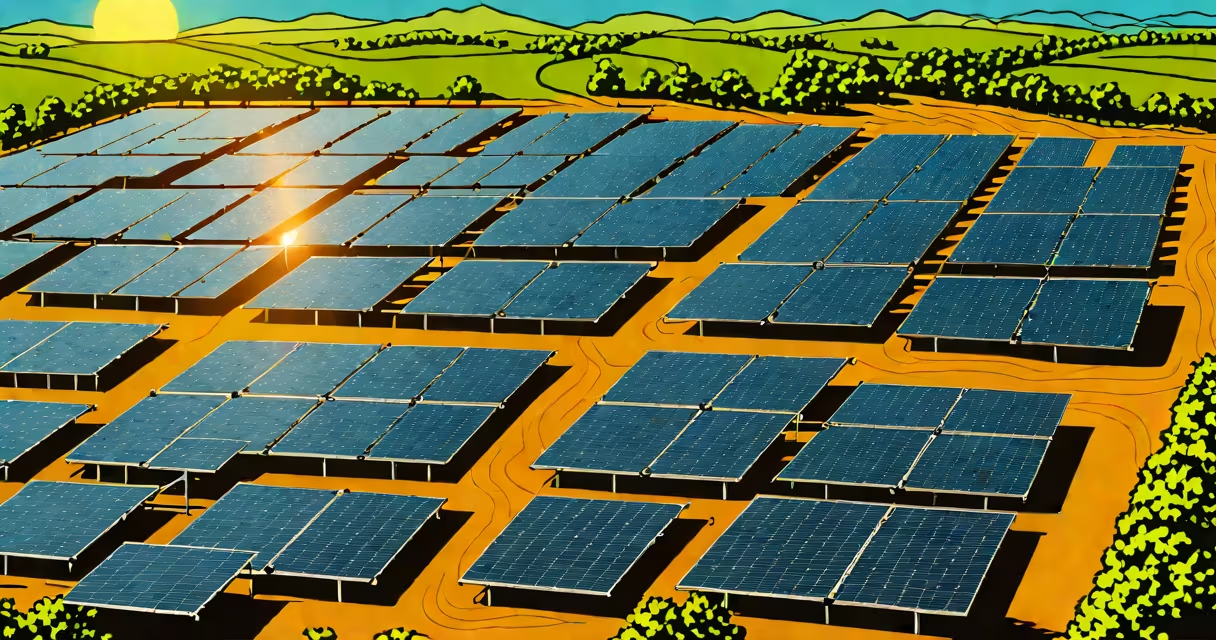
Tax equity financing is a capital structure used primarily to fund renewable energy projects, where investors receive federal tax credits and depreciation benefits in exchange for equity ownership. This model enables developers to secure non-repayable funding without taking on debt, reducing financial risk and accelerating project deployment.
Investors in tax equity deals typically include large financial institutions, insurance companies, and pension funds. They contribute capital upfront and claim tax benefits over a 10-year period, usually through the Investment Tax Credit (ITC) and Modified Accelerated Cost Recovery System (MACRS) depreciation. The developer retains operational control and receives long-term revenue from power purchase agreements (PPAs).
The U.S. Internal Revenue Code Section 46 provides the legal basis for this structure. Under current law, qualified solar and wind projects can generate a 30% ITC on eligible costs, which translates into significant tax savings for investors. These savings are the primary incentive driving capital into clean energy infrastructure.
A typical tax equity deal begins when a renewable energy developer identifies a viable project-such as a 20-megawatt solar farm-and secures off-take agreements with utilities or corporations. The developer then structures a special-purpose entity (SPE) to own the asset and issues equity interests to investors.
For example, a developer builds a $10 million solar installation. They raise $6 million through tax equity financing. The investor pays $6 million for a 70% stake in the SPE. Over 10 years, the investor claims $4.2 million in tax credits and accelerated depreciation-enough to offset their taxable income. The developer keeps the remaining 30% equity and operates the site.
At the end of the 10-year period, the investor may sell their interest or exit via a refinancing event. The developer often buys back the stake using proceeds from long-term PPAs or new debt financing. This exit mechanism ensures liquidity and allows the developer to retain control.
There are two main models: direct and conduit. Direct structures involve the investor holding equity directly in the project company. Conduit structures route capital through a partnership or limited liability company (LLC) that acts as a pass-through entity for tax purposes.
| Type | Structure | Use Case | Example |
|---|---|---|---|
| Direct | Investor owns shares in the project LLC | Simple projects, single investor | Small wind farm with one institutional investor |
| Conduit | Investor funds a partnership that owns the asset | Larger projects, multiple investors, syndication | Utility-scale solar plant with 12 tax equity partners |
Conduit structures are more common in large-scale developments because they allow pooling of capital and easier management of multiple stakeholders. They also enable better risk distribution and compliance tracking.
Renewable energy projects require high upfront capital-typically $1 to $3 million per megawatt. Traditional bank loans often don't cover the full cost, especially for early-stage developers without strong credit histories. Tax equity fills that gap by offering non-recourse funding based on projected tax benefits rather than balance sheet strength.
According to the U.S. Department of Energy, tax equity accounted for 60% of all private capital invested in utility-scale solar projects between 2018 and 2022. That share rose to 72% in wind projects during the same period. These figures reflect the dominance of tax equity in enabling rapid deployment of clean energy infrastructure.
One key advantage is that tax equity doesn't require repayment. Unlike debt, it doesn't burden the developer with interest payments or covenants. Instead, returns come from tax savings, which are predictable and tied to IRS-approved depreciation schedules and credit rates.
Many assume tax equity is a form of debt. It is not. Investors do not lend money-they buy equity. The return is not interest but tax reduction. The developer does not repay the investor; they earn revenue from electricity sales and distribute profits after expenses.
Another misconception is that only wealthy individuals invest. In reality, most tax equity capital comes from institutional investors. A 2023 report by the National Renewable Energy Laboratory (NREL) found that 89% of tax equity investments were sourced from corporations, banks, and pension funds-not individual high-net-worth clients.
There's also confusion about how long the investor stays involved. The standard term is 10 years, matching the duration of the ITC and MACRS recovery period. After that, the investor exits, either by selling their stake or receiving a distribution from the project's cash flow.
In 2021, a solar developer in Texas planned to build a 50-megawatt solar facility. The total cost was $45 million. The developer secured $27 million in tax equity financing through a conduit structure involving six institutional investors.
Each investor contributed $4.5 million and received a 15% stake in the project's LLC. Over 10 years, they claimed $13.5 million in tax credits and $10.8 million in depreciation. The developer retained 30% ownership and managed operations. The project began generating revenue in Q2 2022 and met its PPA obligations through 2032.
This deal closed in under four months-a timeline typical for well-structured tax equity transactions. The developer avoided debt service and maintained full control over site operations.
I observed a tax equity closing for a 120-megawatt wind project in Iowa. The lead investor, a regional pension fund, reviewed 27 pages of IRS Form 8824 and 14 pages of partnership agreements before signing. The process took 11 weeks, including due diligence, title review, and IRS compliance checks. The final documents were filed with the SEC under Rule 144A for private placement.
What stood out was the level of documentation required. Every dollar of project cost had to be traced to a receipt or invoice. The auditor verified that the ITC applied only to qualified components-panels, inverters, and mounting hardware. Non-qualifying items like land acquisition were excluded from the credit calculation.
Debt financing requires regular principal and interest payments. Failure to meet them triggers default and potential foreclosure. Tax equity does not carry repayment obligations. The investor's return is derived solely from tax benefits, not cash flow.
Debt lenders assess creditworthiness and collateral. Tax equity investors focus on project economics, tax credit eligibility, and regulatory stability. A project with weak credit history can still attract tax equity if it meets IRS criteria and has strong off-take contracts.
For example, a small developer in New Mexico secured $12 million in tax equity for a 15-megawatt solar farm despite having no prior projects. The deal succeeded because the developer had signed a 20-year PPA with a state agency and met all ITC requirements.
Understanding the mechanics of tax equity financing requires familiarity with federal tax law, particularly Sections 46 and 48 of the Internal Revenue Code. Developers often work with specialized legal and tax advisors to structure deals compliant with IRS guidelines.