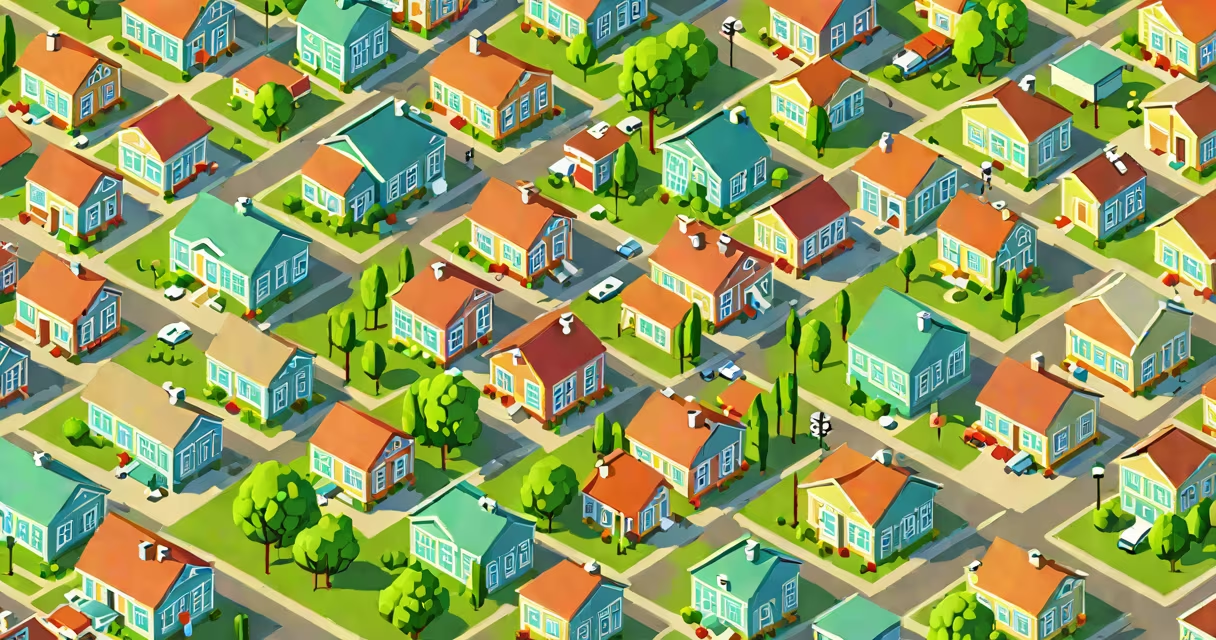
Real estate refers to land and any permanent structures attached to it, including buildings, houses, and infrastructure. It encompasses both physical space and legal rights to use, develop, or sell property. The term applies to residential, commercial, industrial, and raw land assets.
Real estate is defined by ownership of physical location and legal title. A plot of land in downtown Chicago with a high-rise office building is real estate. So is a single-family home in suburban Atlanta or a warehouse in a logistics zone. Ownership grants control over use, leasing, sale, or development. This includes rights to extract resources, construct, or lease space.
The concept traces to common law systems where land ownership formed the basis of wealth and power. Today, real estate remains central to national economies. In the U.S., it accounts for about 14% of GDP and represents over $40 trillion in asset value, according to the U.S. Bureau of Economic Analysis and the Federal Reserve's Flow of Funds report.
Real estate functions through ownership, usage, and exchange. When someone buys a property, they gain legal title via a deed recorded in public land records. This document establishes exclusive rights to occupy, modify, rent, or sell the asset. Transactions require contracts, appraisals, inspections, and financing or cash payments.
Properties generate value through location, utility, and scarcity. A retail store in a high-traffic shopping district earns higher rental income than one in a remote area. Similarly, a beachfront condo commands premium pricing due to limited access and desirability. Value also increases with improvements-adding a kitchen, installing solar panels, or expanding square footage.
Real estate markets operate regionally. Prices in San Francisco differ from those in Cleveland due to supply, demand, zoning laws, and economic activity. Local governments influence value through taxes, building codes, and development permits. For example, a city may restrict construction in flood zones, reducing available buildable land and increasing prices in safe areas.
Real estate falls into four primary categories based on use and structure:
| Type | Description | Examples |
|---|---|---|
| Residential | Property used for living, including single-family homes, apartments, and condominiums. | A 3-bedroom house in Austin, Texas; a 12-unit apartment complex in Miami. |
| Commercial | Buildings used for business operations, such as offices, retail spaces, and hotels. | A bank branch in Seattle; a strip mall in Phoenix. |
| Industrial | Facilities for manufacturing, storage, or distribution. | A food processing plant in Kansas City; a distribution center in Ontario. |
| Retail | Spaces dedicated to selling goods or services directly to consumers. | A grocery store in Denver; a clothing boutique in Portland. |
Each category has distinct financial models. Residential properties often rely on rental income or resale. Commercial leases typically span five to ten years with fixed rent increases. Industrial sites may include long-term agreements tied to production volume. Retail spaces face higher turnover and occupancy risk.
Many assume real estate is only about houses. In reality, it includes undeveloped land, mineral rights, and even air rights above buildings. A developer who owns the airspace above a city block can legally sell or lease it for rooftop gardens, antennas, or drone delivery hubs.
Another myth is that real estate always appreciates. While historically it has risen in value, declines occur during recessions or market shifts. In 2008, U.S. home prices dropped 30%, according to the S&P CoreLogic Case-Shiller U.S. National Home Price Index. Some areas still haven't recovered to pre-crisis levels.
People confuse real estate with real estate investing. Owning a property doesn't guarantee profit. A homeowner may pay $500,000 for a house but see little appreciation if the neighborhood deteriorates. Conversely, a rental property in a growing suburb can yield returns even if the market is flat.
Consider Maria, a baker who runs a successful cupcake shop in Portland. Her lease expires in six months. She decides to buy the storefront and adjacent parking lot for $650,000. She secures a 25-year mortgage at 5.2% interest. After renovations costing $75,000, she operates her business from the property.
Over five years, she generates $42,000 annually in net income from sales. She also collects $18,000 in annual rent from a nearby coffee shop leasing part of the parking lot. Her total return on investment is 8.4% per year, excluding appreciation. If the property increases in value by 3% annually, her equity grows steadily.
This example shows how real estate supports business continuity, provides tax benefits, and builds long-term wealth. It also illustrates that success depends on location, management, and market conditions-not just ownership.
Real estate differs from personal property-movable items not permanently attached to land. A piano in a concert hall is personal property. A custom-built stage floor embedded in concrete is real estate. The IRS defines this boundary in Publication 527, which states that items affixed to land or buildings become part of the real estate unless removed before sale.
For example, a buyer purchasing a historic theater in New Orleans must determine whether chandeliers, seats, or lighting systems are included. If installed permanently, they transfer with the property. If removable, they remain the seller's. This affects valuation and contract terms.
Understanding this distinction prevents disputes during transactions. It also impacts taxation. Capital gains on real estate are taxed differently than gains on vehicles, art, or collectibles.
I once assisted a client in buying a 1920s warehouse in Brooklyn. The building had structural issues, outdated electrical systems, and zoning restrictions limiting conversion to residential use. After hiring engineers and reviewing city planning documents, we discovered the site qualified for a special permit allowing mixed-use development. We secured a loan with a 20-year term and converted the space into lofts and studios. The project took 18 months and cost $2.3 million. Today, it rents for $3,800/month per unit-well above local averages.
This experience confirmed that real estate value isn't just in the bricks-it's in research, compliance, and timing. Even a dilapidated property can become profitable with proper analysis.
Real estate underpins housing stability, economic growth, and capital formation. Governments use property taxes to fund schools, roads, and emergency services. In 2022, U.S. local governments collected $500 billion in property tax revenue, according to the U.S. Census Bureau.
Investors use real estate to diversify portfolios. Unlike stocks, real estate tends to move independently of financial markets. During inflation spikes, property values often rise faster than consumer prices, offering protection against currency devaluation.
For individuals, owning real estate offers control over living environment, potential tax deductions, and legacy planning. Families pass homes to children, preserving wealth across generations. Developers reshape cities by constructing new neighborhoods, transit hubs, and mixed-income communities.
Understanding the meaning of real estate begins with recognizing it as more than land and buildings. It is a system of rights, responsibilities, and opportunities rooted in geography, law, and economics.