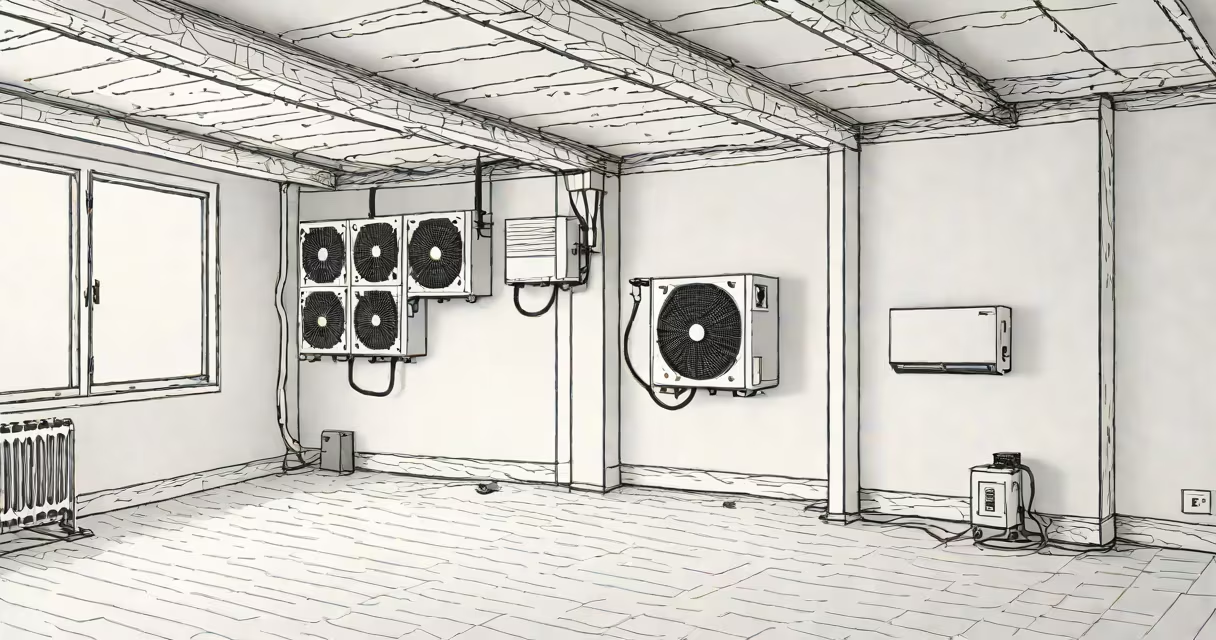
A 1800-square-foot space typically requires a 3.5- to 4-ton air conditioning system, or a unit with 42,000 to 48,000 BTUs of cooling capacity, depending on insulation, window count, ceiling height, and local climate. This range ensures consistent indoor temperatures without excessive energy use or wear.
AC sizing is based on cooling load-the amount of heat the system must remove hourly. For most homes, HVAC professionals apply a rule of thumb: 20 BTUs per square foot. That yields 36,000 BTUs for 1800 sq ft. But real-world conditions often demand more. A 1800-square-foot home in Phoenix with high solar gain may need 50,000 BTUs, while the same home in Seattle may only require 38,000 BTUs.
Under-sizing leads to constant running, poor humidity control, and higher bills. Over-sizing causes short cycling-frequent on-off cycles-that reduces efficiency and degrades indoor air quality. The U.S. Department of Energy notes that improperly sized systems waste 20-30% more energy than correctly matched units.
Proper AC sizing uses Manual J, a standardized method developed by the Air Conditioning Contractors of America (ACCA). It accounts for wall insulation R-values, window U-factors, number of occupants, internal heat sources (like appliances), and local weather patterns. A 1800-square-foot home with double-pane windows, R-19 walls, and a shaded roof may need only 38,000 BTUs. The same home with single-pane windows and low attic insulation may require 52,000 BTUs.
For example, a 1800-square-foot ranch home in Houston with 9-foot ceilings and west-facing windows had a cooling load of 54,000 BTUs during a Manual J assessment. The homeowner initially planned a 4-ton unit (48,000 BTUs), but the HVAC technician recommended a 5-ton system (60,000 BTUs) due to high solar exposure and poor attic ventilation. After installation, the system maintained 72°F at 90°F outdoor temperature with minimal runtime.
Manual J is not optional for new construction or major renovations. The International Residential Code (IRC) mandates its use in residential HVAC design. Even for replacements, contractors who skip it risk warranty voidance and system failure within five years.
Most 1800-square-foot homes use either central air conditioning or ductless mini-split systems. Central systems are measured in tons-1 ton equals 12,000 BTUs. Mini-splits are rated in BTUs or nominal tons. Below is a comparison of typical setups:
| System Type | Typical Capacity Range | Best For |
|---|---|---|
| Central AC (single zone) | 3.5 to 4 tons (42,000-48,000 BTUs) | Whole-home cooling, standard insulation |
| Ductless mini-split (single zone) | 18,000-36,000 BTUs | Remodeled rooms, additions, no ductwork |
| Multi-zone mini-split (2-4 zones) | 24,000-48,000 BTUs total | Open-plan homes, uneven heat distribution |
For a 1800-square-foot home with multiple bedrooms and a living area, a 3.5-ton central system is common. If the house has high ceilings or large windows, upgrading to 4 tons is standard practice. A mini-split system may be better for homes with existing ductwork issues or where zoning flexibility is needed.
Many homeowners assume bigger is better. A 5-ton unit (60,000 BTUs) in a 1800-square-foot home in a moderate climate will cycle too frequently, fail to dehumidify properly, and increase utility costs by 25-35%. The Environmental Protection Agency (EPA) warns that oversized units reduce comfort and shorten equipment lifespan.
Another error is relying solely on online calculators without accounting for site-specific variables. A popular online tool suggested a 3-ton unit for a 1800-square-foot home in Denver. The actual Manual J assessment revealed a 4.5-ton requirement due to high elevation (5,280 ft), direct sunlight on the south wall, and poor attic insulation. The homeowner avoided a $3,000 repair bill by correcting the initial estimate.
Some believe SEER ratings alone determine performance. While a 16 SEER unit is more efficient than a 13 SEER model, both can fail if undersized. A 16 SEER 3-ton unit in a poorly insulated 1800-square-foot home still struggles to maintain 72°F on 95°F days. Efficiency matters, but correct sizing comes first.
A family in Decatur, Georgia, replaced their 15-year-old central AC. The home had 1800 sq ft, 8-foot ceilings, three bedrooms, and a cathedral ceiling in the living room. Initial estimates from a free online tool recommended a 3-ton unit. The contractor ran a Manual J analysis and found:
The resulting cooling load was 50,400 BTUs. The contractor recommended a 4-ton system (48,000 BTUs) with a variable-speed blower. After installation, the family reported stable indoor humidity (45-50%) and reduced runtime compared to the old unit. The system achieved 15 SEER efficiency and qualified for a $300 state rebate.
Always consult a licensed HVAC professional for accurate sizing. Do not rely on generic formulas or unverified online tools. Use the air conditioner what size room calculator only as a starting point, not a final decision.
Correct AC sizing prevents inefficiency, extends equipment life, and maintains indoor comfort. For 1800 square feet, aim for 42,000-54,000 BTUs depending on location and building envelope. Always verify with a Manual J load calculation before purchase.