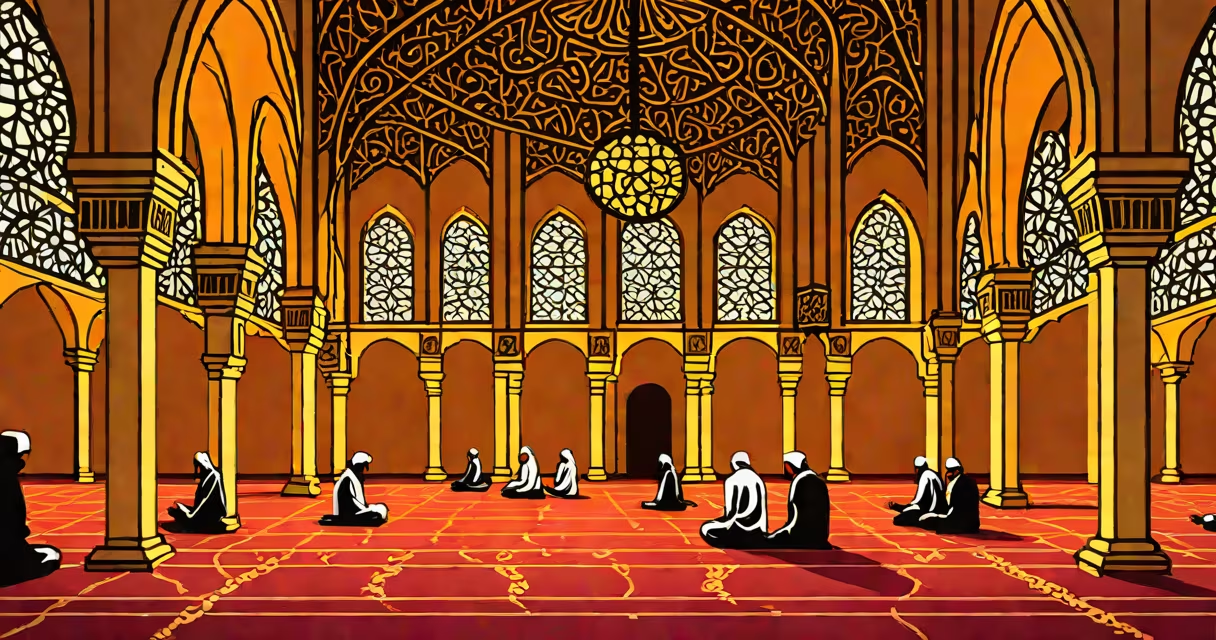
The last 10 nights of Ramadan begin on the 21st day of the Islamic month of Ramadan and extend through the 30th, culminating in Laylat al-Qadr-the Night of Power. This period is marked by intensified worship, Quran recitation, and nighttime prayers, especially during the odd-numbered nights (21st, 23rd, 25th, etc.).
These nights fall within the lunar-based Islamic calendar, which shifts approximately 11 days earlier each year relative to the Gregorian calendar. As a result, the dates vary annually. For example, in 2024, Ramadan began on March 10, making the last 10 nights span from March 21 to March 30.
Laylat al-Qadr is not fixed to a single date but is believed to occur on one of the odd-numbered nights in the final third of Ramadan. The Quran states, ", We sent it [the Quran] down during the Night of Power" (Surah Al-Qadr, 97:1). Scholars emphasize that this night holds immense spiritual weight-its blessings surpass those of 1,000 months of worship.
Each night in the last 10 of Ramadan is structured around increased devotion. Muslims observe Tarawih prayers-additional voluntary prayers performed after Isha (night prayer)-which are often led by a community imam and involve the recitation of a portion of the Quran each night. Over the course of 10 nights, the entire Quran is typically completed.
During this time, many Muslims fast from dawn until sunset, then engage in extended supplication (dua), charity (zakat), and acts of kindness. The focus shifts from physical restraint to inner purification. Fasting is not just about abstaining from food and drink-it's a training ground for patience, humility, and mindfulness.
A common practice is staying awake through part or all of the night in worship. This includes reading the Quran, offering extra prayers, and reflecting on personal behavior. Some families gather for iftar meals later than usual to accommodate late-night gatherings.
The spiritual structure of the last 10 nights rests on three pillars: worship, reflection, and community. Worship takes the form of additional prayers, Quranic study, and dhikr (remembrance of God). Reflection involves self-assessment-evaluating one's intentions, habits, and relationships. Community participation strengthens collective identity through shared rituals.
Types of activities vary by region and cultural tradition. In Egypt, neighborhoods often host communal iftars and nightly lectures. In Indonesia, mosques fill with thousands for Tarawih. In North America, Muslim communities organize iftar events at community centers or places of worship. The scale differs, but the intent remains consistent: to deepen faith and connection.
| Night | Common Practice | Significance |
|---|---|---|
| 21st | Tarawih begins; Quran recited in full | First major night of intensified worship |
| 23rd | Increased focus on dua and charity | Popular candidate for Laylat al-Qadr |
| 25th | Special prayers and sermons | Many believe this is the most likely night |
| 27th | Peak of devotion; fasting ends | Most widely observed night for Laylat al-Qadr |
| 29th | Final night of Ramadan; preparation for Eid | Reflection and gratitude before Eid al-Fitr |
The last 10 nights of Ramadan are observed globally, to Toronto. They are central to Islamic observance because they represent the climax of the spiritual process initiated during Ramadan. The month itself is a time of discipline, but the final stretch amplifies intentionality.
For many, these nights are the most emotionally and spiritually intense of the year. A 2021 Pew Research Center survey found that 68% of Muslims in the U.S. reported attending special prayers during the last 10 nights, compared to 45% during the rest of Ramadan. This shows a measurable increase in engagement.
One non-obvious fact: Laylat al-Qadr is not universally celebrated on the same night. While the 27th is widely observed, scholars differ on whether it falls on the 21st, 23rd, 25th, or 27th. The uncertainty is intentional-Muslims are encouraged to seek it through worship, not certainty. This ambiguity fosters sustained effort rather than a single-day rush.
Some assume the last 10 nights are solely about prayer and fasting. But they are equally about social responsibility. Acts of charity, including feeding the poor and visiting the sick, are integral. The Prophet Muhammad (PBUH) emphasized that "the best of people are those who have the best character." During these nights, ethical conduct is as important as ritual.
Another misconception is that Laylat al-Qadr is a fixed date. It is not. The Quran says, "And what can make you know what the Night of Power is?" (97:2). This rhetorical question underscores the mystery. Muslims do not wait for confirmation-they act in anticipation.
I once attended a mosque in Minneapolis during the 25th night of Ramadan. The air was thick with silence broken only by soft recitations. A man near me wept silently while reading Surah Al-Baqarah. He told me he had not prayed regularly in years but returned during this period. That moment reminded me that the last 10 nights are not just religious observances-they are moments of personal reckoning.
The last 10 nights of Ramadan are not a static event. They are a changing window of spiritual opportunity. Their timing shifts annually, but their purpose remains constant: to invite introspection, deepen faith, and strengthen community. Whether observed in solitude or in congregation, these nights offer a chance to realign with higher values.
Understanding when the last 10 nights of Ramadan occur helps prepare both physically and spiritually. For those observing, the key is consistency-not perfection. Even one night of sincere prayer can carry weight beyond measurement.