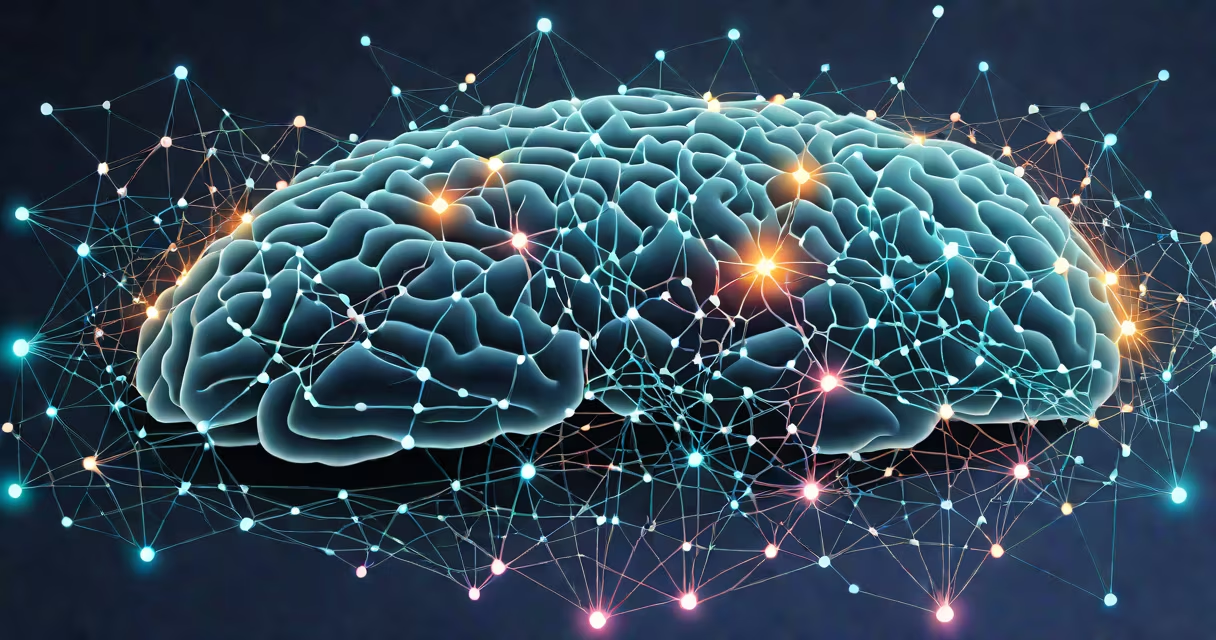
Your brain generates vivid, emotionally charged experiences during REM sleep that activate the same neural circuits used in wakefulness, making dreams feel indistinguishable from reality until you wake.
During rapid eye movement (REM) sleep, the brain's limbic system-responsible for emotions and memory-becomes highly active. The visual cortex lights up, creating scenes with detailed imagery. The auditory and somatosensory cortices simulate sounds and physical sensations. This synchronized firing mimics waking perception, so your mind interprets the dream as real.
Neuroimaging studies show that when people dream, the prefrontal cortex-the area governing logical reasoning and self-awareness-shows reduced activity. Without this region's oversight, your brain doesn't flag the dream as unreal. You accept the dream's narrative without questioning it, even when it includes impossible events like flying or time travel.
REM sleep typically occurs in cycles lasting 90 to 110 minutes, with longer periods toward morning. Dreams during late REM phases are often longer and more complex. A 2017 study using fMRI scans found that brain patterns during lucid dreams (where you're aware you're dreaming) closely resemble those seen in wakeful states, especially in the frontoparietal network.
Not all dreams feel equally real. Vivid dreams tend to occur after prolonged REM cycles, such as after waking up early and returning to sleep. They're also more intense when stress, anxiety, or certain medications affect neurotransmitter levels. For example, serotonin and dopamine fluctuations during sleep can amplify emotional content and sensory detail.
| Sleep Stage | Brain Activity Level | Dream Quality | Common Dream Features |
|---|---|---|---|
| Stage 1 & 2 (NREM) | Low | Fragmented, vague | Simple images, brief narratives |
| Stage 3 (Deep NREM) | Moderate | Abstract, symbolic | Recurring themes, emotional weight |
| REM Sleep | High (near-wakefulness) | Vivid, immersive | Full sensory details, emotional intensity |
People often confuse dream realism with actual memory. When you wake from a dream, the hippocampus-a key structure for forming episodic memories-can encode the dream as a real event. A 2020 study published in Nature Neuroscience showed that participants who experienced high emotional arousal during REM sleep were more likely to report false memories of dream events as real-life incidents.
One non-obvious fact: the sense of self in dreams is not always consistent. Some dreams feature a stable "I" that acts with intention, while others involve shifting identities or fragmented perspectives. This instability reflects the brain's attempt to construct continuity from disjointed neural signals. The feeling of being "you" in a dream arises from the brain's default mode network, which maintains a sense of personal narrative-even when the story defies logic.
I once had a dream where I was trapped in a library that expanded infinitely. I remember the smell of old paper, the sound of footsteps echoing down narrow aisles, and the panic rising in my chest. When I woke, my heart was racing. The dream felt real because my amygdala-involved in fear processing-had responded as if under threat. Only later did I realize the bookshelves were arranged in impossible geometries. That moment of dissonance between emotional response and logical contradiction is common in dream experiences.
Some people report recurring dreams that feel more real than waking life. These may stem from unresolved psychological tension. The brain uses dream scenarios to process unresolved emotions, often replaying trauma or conflict in symbolic form. A 2019 analysis in Journal of Sleep Research found that individuals with PTSD frequently experience hyper-realistic nightmares involving relived traumatic events, sometimes with full sensory immersion.
Contrary to popular belief, not all dreams are symbolic. While Freudian theory emphasized hidden meanings, modern neuroscience shows that most dreams reflect recent experiences, emotions, and cognitive processes. A 2021 study tracking participants' daily activities and dream reports found that 68% of dreams contained elements from the previous day's events-such as conversations, locations, or objects-suggesting dreams are more about memory consolidation than subconscious messaging.
When dreams feel real, it's not because they're true-but because your brain treats them as valid input. The same mechanisms that allow you to perceive the world awake are repurposed during sleep. This explains why dream logic can be bizarre yet internally consistent: your brain fills gaps using stored knowledge, creating plausible scenarios even when the setting defies physics.
If you've ever woken up disoriented, convinced a dream was real, you're not alone. The brain's simulation of reality during sleep is so precise that distinguishing it from waking life requires conscious effort. This phenomenon underscores how deeply integrated perception, emotion, and memory are in the human mind.
Why do dreams feel real? Because your brain constructs them using the same tools it uses to build reality-sensory input, memory, emotion, and narrative coherence-all while you're asleep.