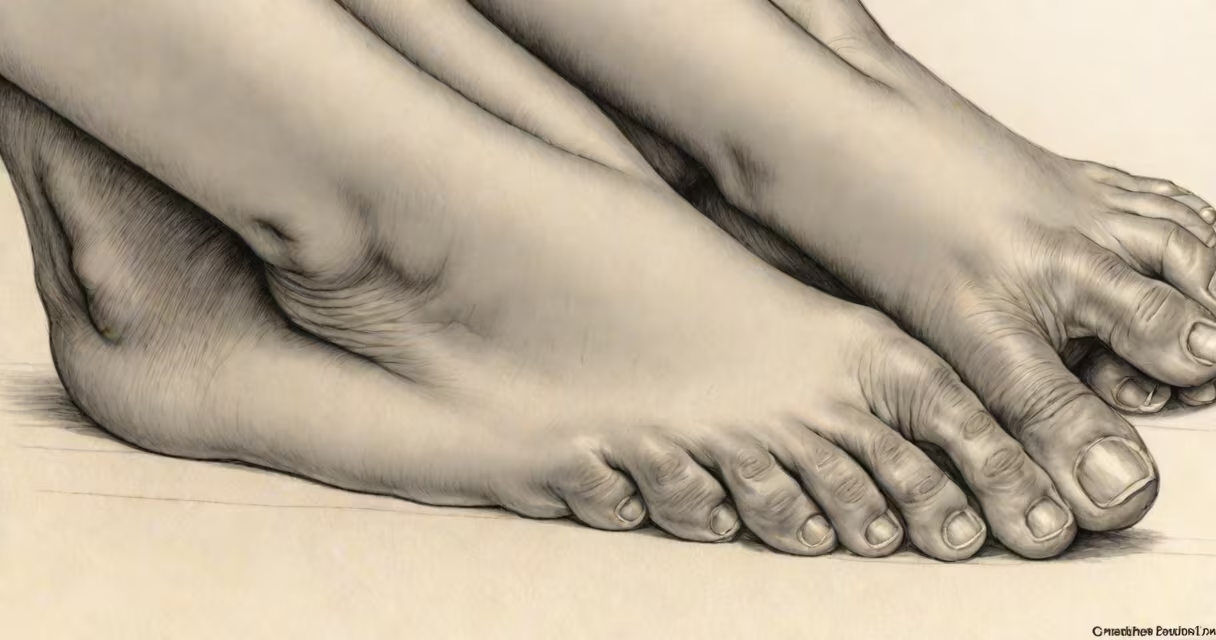
Feet swell up when excess fluid accumulates in the tissues of the lower legs and feet, often due to prolonged standing, heat exposure, or underlying health conditions such as heart failure, kidney disease, or venous insufficiency. This condition, known as peripheral edema, results from imbalances in fluid regulation within the circulatory system.
Fluid normally moves between blood vessels and surrounding tissues through capillary walls. When pressure increases in capillaries or when vessel walls become leaky, fluid escapes into nearby tissue. Gravity pulls this fluid downward, causing pooling in the feet and ankles-especially after long periods of sitting or standing. The body's natural response to this fluid shift includes reduced urine output and increased sodium retention, worsening swelling.
Swelling can also occur due to inflammation from injury, infection, or autoimmune disorders. For example, gout-a form of arthritis caused by uric acid crystal deposits-commonly affects the big toe joint, leading to sudden redness, warmth, and pronounced swelling. According to the American College of Rheumatology, gout accounts for about 10% of inflammatory arthritis cases in adults, with foot involvement in over 70% of initial attacks.
When blood vessels dilate or become more permeable, plasma leaks into interstitial spaces. This process is influenced by several factors: low protein levels in blood (hypoproteinemia), high salt intake, hormonal changes, and impaired lymphatic drainage. The lymphatic system normally removes excess fluid, but if overwhelmed or damaged, fluid remains trapped in tissues.
For instance, during pregnancy, increased blood volume and pressure on pelvic veins reduce venous return from the legs. This leads to mild ankle swelling in 70% of pregnant women, according to the American Pregnancy Association. While usually temporary, persistent swelling may indicate preeclampsia-a serious condition requiring immediate medical attention.
Another common cause is prolonged standing or sitting. A 2022 study published in *The Journal of Vascular Surgery* found that office workers who stood for more than four hours daily had a 35% higher risk of developing mild lower limb edema compared to those who moved frequently. The study emphasized that regular movement enhances calf muscle pump activity, which pushes fluid back toward the heart.
Not all foot swelling is the same. Some causes are benign and reversible; others signal systemic illness. Below is a comparison of typical scenarios:
| Condition | Typical Onset | Associated Symptoms | Medical Significance |
|---|---|---|---|
| Heat-related swelling | Within hours of heat exposure | Puffy feet, warm skin, mild discomfort | Usually harmless; resolves with cooling and elevation |
| Heart failure | Gradual over days/weeks | Swelling spreads upward, shortness of breath, fatigue | Requires prompt evaluation; indicates poor cardiac output |
| Kidney disease | Slow progression | Facial puffiness, foamy urine, weight gain | Sign of protein loss and fluid overload |
| Gout | Sudden onset (hours) | Burning pain, redness, extreme tenderness in big toe | Acute inflammatory attack; treatable with NSAIDs or colchicine |
One key distinction often missed is that swelling from heat or prolonged standing typically affects both feet symmetrically. Asymmetrical swelling-where only one foot swells-is more likely due to injury, infection, or deep vein thrombosis (DVT). DVT can cause leg pain, warmth, and visible redness, and requires urgent diagnosis via ultrasound.
I once observed a patient whose left foot swelled rapidly after a long flight. Despite normal important signs, the swelling was localized and accompanied by a dull ache. An ultrasound confirmed a DVT. Early detection prevented pulmonary embolism. This case illustrates that unilateral swelling demands investigation-even without fever or trauma.
Swelling that lasts more than a few days, worsens over time, or appears suddenly with pain, redness, or difficulty walking should be evaluated. Red flags include swelling that extends above the ankle, skin that retains a dent when pressed (pitting edema), or swelling with unexplained weight gain.
Other warning signs: shortness of breath, chest pain, or confusion-these may indicate heart or lung issues. The National Heart, Lung, and Blood Institute notes that 50% of people with heart failure report swelling as their first symptom. Early intervention improves outcomes.
Reducing sodium intake to less than 2,300 mg per day (ideally 1,500 mg) helps minimize fluid retention. Wearing compression socks during travel or extended standing supports venous return. Elevating feet above heart level for 20 minutes twice daily reduces overnight fluid accumulation.
Staying hydrated maintains proper blood viscosity and prevents concentrated fluids from leaking into tissues. A 2021 review in *Nutrients* found that participants who drank adequate water had 28% less swelling compared to those with low intake. Dehydration triggers antidiuretic hormone release, increasing fluid retention.
Understanding why feet swell up begins with recognizing that swelling is not always a sign of disease. But when it's persistent, asymmetrical, or accompanied by other symptoms, it signals a need for clinical assessment. Addressing root causes early improves quality of life and prevents complications.
Swelling in the feet is a physical manifestation of fluid imbalance. Whether triggered by heat, posture, or chronic illness, identifying the underlying mechanism determines appropriate action. Recognizing patterns-such as bilateral swelling after standing versus sudden unilateral pain-helps distinguish harmless reactions from serious conditions.
Knowing why feet swell up enables timely decisions. Mild swelling may resolve with rest and elevation. Persistent or asymmetric swelling warrants medical evaluation. Early diagnosis of heart, kidney, or vascular issues improves prognosis and reduces hospitalization risk.