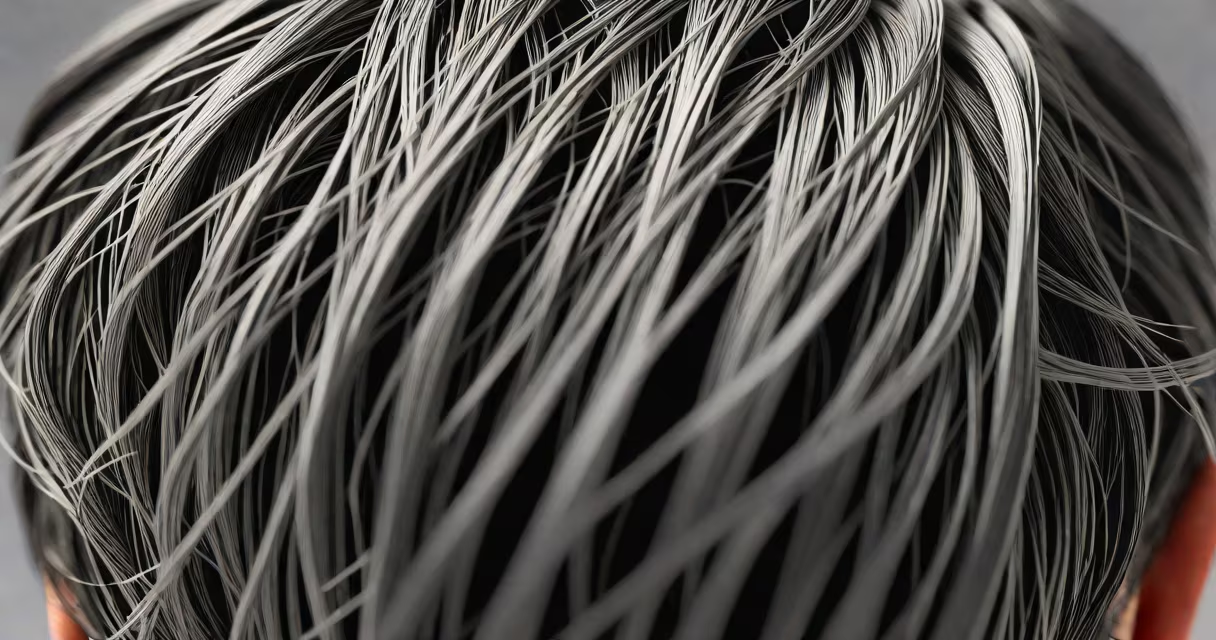
Men get grey hair when pigment-producing cells in hair follicles stop making melanin, the substance that gives hair color. This process begins naturally with aging but can start earlier due to genetics, stress, or health conditions.
As men age, melanocytes-the cells responsible for producing melanin-gradually lose function. When these cells die off or become inactive, new hair grows without pigment, appearing white or grey. The rate varies widely between individuals, but most men begin noticing grey hair in their late 30s or early 40s.
The process is not uniform. Grey hair often appears first at the temples or crown, then spreads across the scalp. Some men develop significant greying by age 30, while others retain dark hair into their 60s. Genetics play the largest role, accounting for about 80% of variation in when greying begins, according to research published in Nature Communications.
Hair color comes from melanin, produced in the hair bulb by specialized cells called melanocytes. These cells transfer melanin granules into growing hair shafts. As men age, melanocyte stem cells in the hair follicle niche deteriorate. Once depleted, they cannot regenerate, leading to pigment-free hair growth.
This decline happens gradually. Initially, hair may appear streaked with grey or silver, especially in areas exposed to sunlight. Over time, more follicles lose pigment, resulting in a mix of colors. Eventually, all hair may turn grey or white.
A 2020 study in Science Translational Medicine identified that oxidative stress in the hair follicle environment accelerates melanocyte death. Free radicals damage cellular machinery, particularly in the melanocyte stem cell reservoir. This explains why some men who experience high stress or poor diet may see greying earlier than expected.
Premature greying occurs when hair turns grey before age 30. It affects about 1 in 10 men globally, though prevalence varies by ancestry. People of East Asian descent tend to grey earlier than those of European or African descent.
| Trigger | Typical Onset | Key Factors |
|---|---|---|
| Genetic predisposition | Under 30 | Family history, specific gene variants (e.g., IRF4) |
| Chronic stress | 20s-40s | High cortisol levels, sleep disruption, trauma |
| Nutritional deficiency | 30s+ | Lack of B12, copper, zinc, vitamin D |
| Autoimmune conditions | Varies | Albinism, vitiligo, thyroid disorders |
One non-obvious fact: grey hair does not grow faster than pigmented hair. A common myth suggests grey strands grow quicker, but measurements show no difference in growth rate. The perception arises because grey hair is stiffer and more visible against darker roots.
Stress-related greying is real but misunderstood. While acute stress doesn't instantly turn hair grey, chronic psychological stress can trigger a rapid loss of melanocytes through the sympathetic nervous system. A 2021 mouse study showed that severe stress caused immediate greying in fur, linked to the release of norepinephrine, which depletes melanocyte stem cells.
Many assume that pulling out grey hairs causes more to grow. This is false. Each hair follicle produces only one strand at a time. Removing a grey hair won't create a replacement-it simply regrows the same color.
Another myth is that frequent washing or using certain shampoos causes greying. Shampoo removes surface oils and residue but does not affect melanin production in the follicle. There is no scientific evidence linking hair care products to changes in hair pigmentation.
Some believe grey hair indicates poor health. While early greying can correlate with certain conditions-like thyroid disease or pernicious anemia-it is not a direct sign of illness. Most men who go grey early remain healthy. The presence of grey hair alone does not require medical evaluation.
Consider James, a 34-year-old software engineer. He noticed his first grey hairs at the temples during a period of intense work pressure. His father went grey at 32, and his maternal grandfather had significant greying by 30. James's blood tests showed normal levels of vitamin B12, copper, and thyroid hormones.
His dermatologist confirmed that his greying was likely genetic. Despite managing stress through meditation and regular exercise, the greying continued. By age 38, he had 40% grey hair. He chose to embrace it rather than dye it, noting that it felt like a natural part of aging.
James's experience reflects a broader trend: many men view grey hair as a personal milestone, not a flaw. A 2023 survey by the American Academy of Dermatology found that 68% of men aged 35-55 feel grey hair is a sign of maturity, not decline.
Grey hair is usually harmless. But if greying begins suddenly in your 20s or spreads rapidly, consult a doctor. Conditions like vitiligo (loss of skin and hair pigment), alopecia areata, or autoimmune thyroiditis can cause patchy or rapid greying.
Deficiencies in vitamin B12, iron, or copper can also lead to premature greying. A blood test can confirm deficiencies. For example, low B12 levels are linked to reduced melanin synthesis. Correcting the deficiency may slow further greying, though existing grey hair won't revert.
One underreported factor: smoking. A 2016 study in PLOS ONE found that smokers were 2.5 times more likely to develop grey hair before age 30 compared to non-smokers. Tobacco chemicals increase oxidative stress, accelerating melanocyte damage.
Men have several options for handling grey hair. Dyeing is the most common. Modern dyes offer long-lasting results and blend well with natural hair. However, frequent dyeing can weaken hair structure and irritate the scalp.
Alternative approaches include embracing the change. Many men report feeling more confident when they stop trying to hide grey hair. It can signal authenticity and resilience. Social media influencers like actor Daniel Kaluuya and comedian John Mulaney have spoken publicly about choosing to go grey.
If you're considering covering grey hair, choose a shade close to your natural color. Avoid drastic changes-over-dyeing can result in unnatural tones. Use professional services or high-quality home kits designed for men's hair texture.
Understanding why men get grey hair reduces anxiety around the process. It's not a sign of failure or illness. It's a biological event shaped by genes, environment, and time. Accepting it can free mental space for other priorities.
Grey hair is not a problem to fix. It's a natural outcome of aging and individual biology. Knowing the science behind it helps men make informed choices-whether to treat, accept, or ignore it.