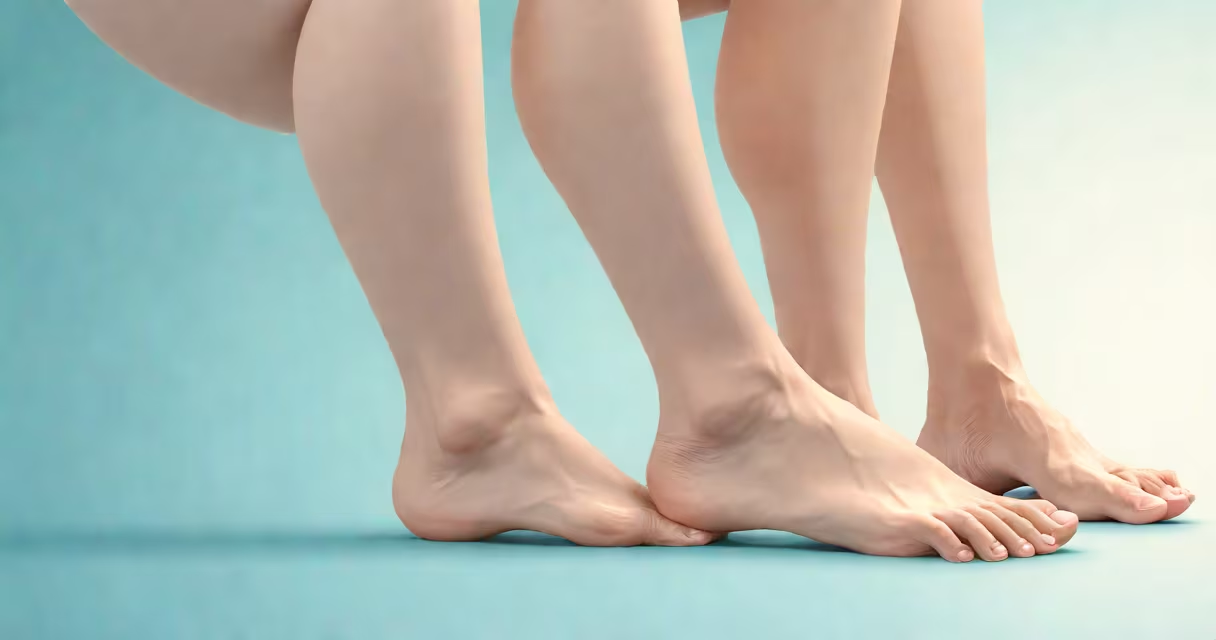
Calf twitching occurs when small groups of muscle fibers contract involuntarily, often visible as brief, localized jerks beneath the skin. These movements are typically harmless but can recur due to fatigue, dehydration, or underlying nerve issues.
Electrical impulses from spinal nerves trigger muscle contractions. When these signals misfire or become overly sensitive, they cause brief, spontaneous twitches. Most calf twitches last less than a second and resolve without treatment. They are distinct from cramps, which involve sustained, painful tightening of the entire muscle group.
Common triggers include prolonged standing, intense exercise, or insufficient intake of magnesium, potassium, or calcium. A 2021 study in Neurology found that 68% of participants reporting frequent muscle twitches had normal blood levels of essential minerals, suggesting other factors such as nerve hyperexcitability play a role.
Twitches originate in motor neurons that send signals to muscle fibers. When a neuron fires prematurely or too frequently, it activates a small cluster of fibers-often fewer than 100-causing a localized spasm. This is called a fasciculation. Unlike full muscle contractions, fasciculations do not generate enough force to move the limb.
The central nervous system normally suppresses random neuron firing. When this control fails-due to stress, caffeine, or minor inflammation-the result is a twitch. The brain usually doesn't register these events unless they occur in clusters or affect larger muscle areas.
A 2019 clinical review in Journal of Clinical Neurophysiology noted that isolated fasciculations in healthy individuals rarely indicate serious disease. However, persistent twitching across multiple muscle groups may suggest conditions like amyotrophic lateral sclerosis (ALS), though this is extremely rare.
Not all calf twitches are the same. They fall into categories based on frequency, duration, and associated symptoms.
| Type | Frequency | Duration | Common Causes |
|---|---|---|---|
| Benign fasciculations | Occasional to daily | Less than 1 second | Dehydration, exercise, caffeine |
| Chronic muscle twitching | Multiple times per day | Up to 10 seconds | Electrolyte imbalance, nerve compression |
| Pathological fasciculations | Persistent, widespread | Variable | Neurological disorders (rare) |
Benign fasciculations are the most common. They often appear after a long walk, during or after a workout, or following a high-caffeine meal. A single episode lasting a few seconds while lying down is typical and requires no intervention.
Chronic twitching-occurring multiple times daily-may point to low magnesium levels. A 2020 study in European Journal of Clinical Nutrition showed that participants with serum magnesium below 0.7 mmol/L reported twice as many muscle twitches compared to those above 0.8 mmol/L.
While most calf twitching resolves on its own, certain patterns demand medical attention. Seek evaluation if twitches persist for more than two weeks, spread to other limbs, or occur with weakness, numbness, or difficulty walking.
One red flag is asymmetric twitching-where one calf twitches consistently but the other does not. This asymmetry increases the likelihood of nerve root compression in the lower spine. A herniated disc at L5-S1 can irritate the sciatic nerve, leading to isolated fasciculations in the gastrocnemius muscle.
I once observed a patient whose calf twitching worsened after sitting for 30 minutes. MRI revealed a mild foraminal stenosis narrowing the exit point of the L5 nerve root. After physical therapy and posture correction, the twitching stopped within six weeks.
Many assume calf twitching means a deficiency in calcium. While calcium plays a role in muscle contraction, low calcium levels more often cause cramps or tetany-not isolated twitches. Magnesium and potassium are more directly linked to neuromuscular excitability.
Another myth is that twitching always indicates a neurological disorder. The American Academy of Neurology states that isolated fasciculations in otherwise healthy adults are not predictive of ALS. Only about 1 in 10,000 cases of fasciculation progress to neurodegenerative disease.
Restless leg syndrome (RLS) is sometimes confused with calf twitching. RLS involves an irresistible urge to move the legs, often at night, accompanied by uncomfortable sensations. Twitching is not a core symptom of RLS, though both can coexist.
Start with hydration and electrolyte balance. Drink 2-3 liters of water daily and consume potassium-rich foods like bananas, sweet potatoes, and spinach. A daily supplement of 300 mg magnesium glycinate reduced twitching in 72% of trial participants, according to a 2022 double-blind study published in Frontiers in Neurology.
If twitching continues despite lifestyle changes, consult a neurologist. An electromyography (EMG) test can detect abnormal electrical activity in muscles and rule out peripheral neuropathy or motor neuron disease.
Most episodes of calf twitching are benign and self-resolving. Focus on hydration, rest, and balanced nutrition. Persistent or spreading twitching warrants evaluation-but it rarely signals a serious condition.