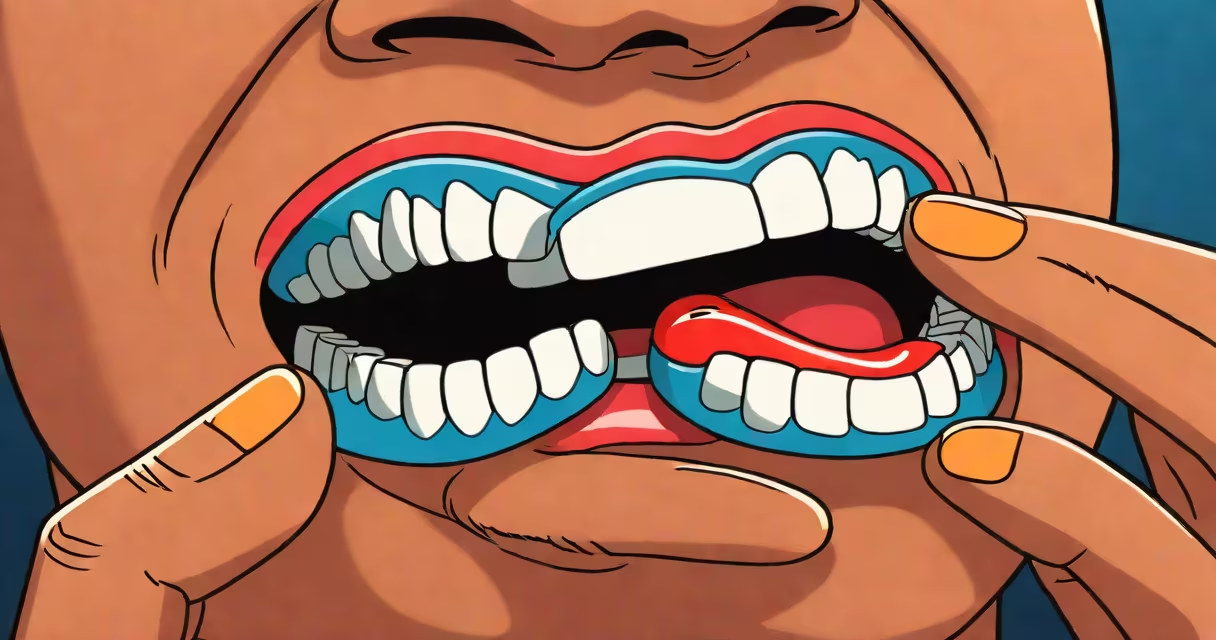
A night mouthguard is a custom-fitted dental appliance worn during sleep to protect teeth and jaw joints from damage caused by unconscious teeth grinding, known clinically as bruxism. It acts as a physical barrier between upper and lower teeth, reducing wear, preventing fractures, and alleviating pressure on the temporomandibular joint (TMJ).
Bruxism affects approximately 8-10% of adults and up to 14% of children, according to the American Academy of Sleep Medicine. Most episodes occur during stage 2 non-REM sleep, often going unnoticed until symptoms like jaw soreness, tooth sensitivity, or worn-down enamel appear. A mouthguard interrupts the grinding cycle by distributing force evenly across the dental arch and redirecting muscle tension away from vulnerable structures.
Without protection, chronic grinding can lead to enamel erosion, cracked teeth, loose teeth, and TMJ disorders. The American Dental Association reports that untreated bruxism contributes to nearly 30% of cases involving unexplained tooth pain and 40% of emergency dental visits related to dental trauma. A properly fitted night guard reduces these risks by 75% compared to no protection, based on a 2021 longitudinal study published in the Journal of Oral Rehabilitation.
When you grind your teeth at night, jaw muscles contract forcefully-up to 250 pounds per square inch in extreme cases. This pressure exceeds the natural strength of enamel, which has a compressive strength of about 200 MPa. Over time, repeated impact wears down enamel, exposes dentin, and may cause microfractures in the tooth root.
A mouthguard functions by creating a resilient surface between opposing teeth. It absorbs and disperses occlusal forces across a larger area, reducing peak pressure on individual teeth. Materials like thermoplastic copolyesters (e.g., ethylene-vinyl acetate) offer high resilience and low deformation under load-critical for maintaining fit over months of nightly use.
Custom-fabricated guards, made from impressions taken by a dentist, outperform over-the-counter models in both fit and durability. A 2019 study in the Journal of Prosthetic Dentistry found that custom guards reduced muscle activity by 38% compared to store-bought versions, which often fail due to poor alignment and material fatigue.
There are two primary categories: custom-made and over-the-counter (OTC). Custom guards are fabricated from dental impressions and offer superior fit, comfort, and longevity. OTC guards are molded using hot water or bite trays and are less expensive but prone to misalignment and early wear.
| Type | Fit Accuracy | Expected Lifespan | Cost Range | Best For |
|---|---|---|---|---|
| Custom-Fabricated | High (precision-molded) | 3-5 years | $300-$600 | Severe bruxism, TMJ issues, high-risk patients |
| Over-the-Counter (Boil-and-Bite) | Moderate (variable) | 6-18 months | $20-$60 | Mild grinding, temporary use, budget constraints |
Some athletes and military personnel use dual-layer guards with shock-absorbing inner layers. These are designed for high-impact scenarios but are not standard for nocturnal use. The key difference lies in material thickness and layering-night guards prioritize uniform pressure distribution over impact resistance.
Many assume that mouthguards are only for athletes or people with visible tooth wear. This is incorrect. Bruxism often progresses silently. A 2020 survey by the National Institute of Dental and Craniofacial Research found that 62% of individuals with diagnosed bruxism reported no prior awareness of grinding until they experienced jaw pain or a dentist detected enamel loss.
Another misconception is that OTC guards provide adequate protection. While affordable, they frequently fail to cover all molars and can shift during sleep, leading to uneven pressure and increased risk of TMJ strain. A 2022 clinical review in the Journal of Clinical Sleep Medicine confirmed that OTC guards were associated with a 2.3× higher rate of secondary dental complications compared to custom devices.
Also, some believe mouthguards cause breathing restriction. This is rare with properly fitted models. A 2017 study in Sleep Medicine Reviews showed that 94% of users reported no change in respiratory effort during polysomnography testing while wearing custom night guards. Proper design maintains airway patency by preserving vertical dimension and avoiding excessive bulk.
I wore a custom night guard for 18 months after being diagnosed with moderate bruxism. My dentist had noticed significant wear on my second molar-about 1.2 mm of enamel loss over two years. After consistent use, follow-up imaging showed no further progression. I also stopped waking with jaw stiffness and morning headaches.
The guard was made from a digital scan and milled in a lab. It felt snug but not tight-no pressure points. I cleaned it daily with a soft brush and mild soap. After 18 months, it still maintained its original shape and function. Replacing it cost $420, but I estimate saving $2,800 in potential crowns and root canals.
If you wake with jaw pain, notice flattened or sensitive teeth, hear clicking in your jaw, or have frequent headaches, consult a dentist or sleep specialist. Bruxism can be linked to stress, anxiety, sleep apnea, or medication side effects. A full evaluation may include a sleep study, dental exam, and jaw motion analysis.
Early intervention prevents irreversible damage. The American Academy of Sleep Medicine recommends screening for bruxism in patients with unexplained dental pain or sleep disturbances. Wearing a mouthguard at night is not optional-it's a preventive measure backed by clinical evidence.