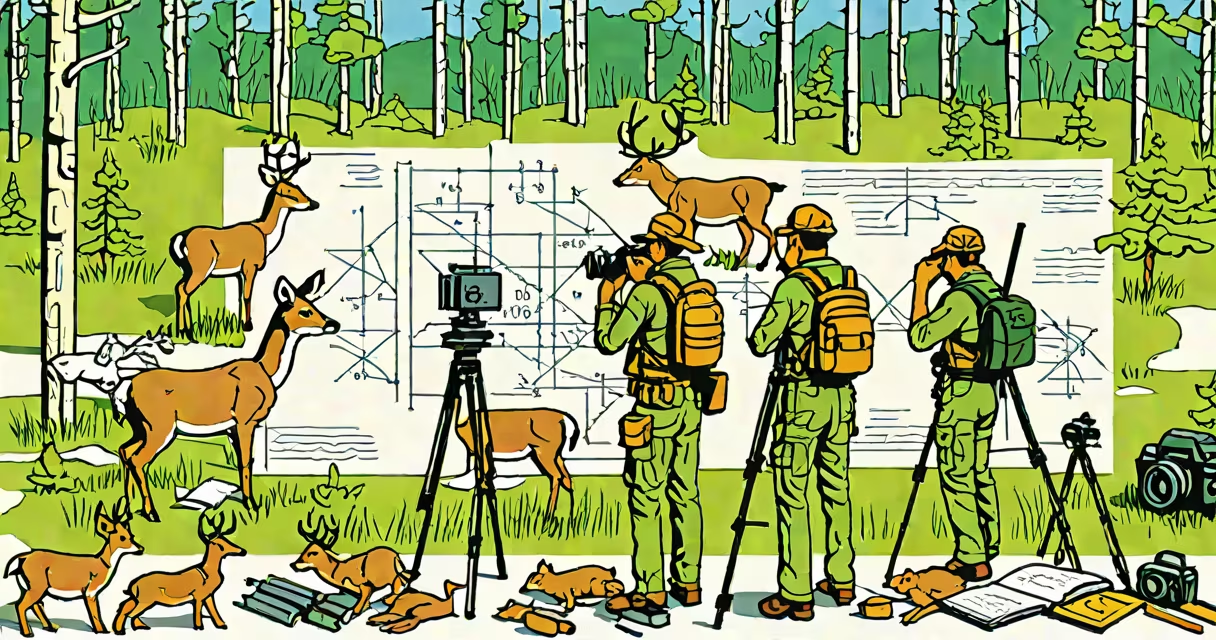
Wildlife biologists study wild animals in their natural environments to understand their behaviors, populations, and ecological roles. They collect field data, analyze species interactions, and use findings to support conservation policies and habitat management.
These scientists focus on vertebrates such as mammals, birds, reptiles, amphibians, and fish. Their work often involves tracking movements using GPS collars, analyzing diet through scat samples, or monitoring breeding success via nest cameras. Fieldwork is central-many spend weeks in remote locations collecting observations under variable weather and terrain conditions.
Research results guide decisions about protected areas, endangered species recovery plans, and sustainable hunting quotas. For example, a study on grizzly bear movement patterns in Yellowstone National Park informed the placement of wildlife corridors to reduce vehicle collisions. This direct link between field data and policy action distinguishes wildlife biology from general ecology.
Most projects begin with a hypothesis-such as "urban development reduces fox survival rates." The biologist designs a study to test it, selecting methods based on species traits and environment. Common tools include motion-sensor cameras, acoustic recorders for bird calls, and mark-recapture techniques using tagged individuals.
Data collection happens in phases. A researcher studying migratory songbirds may set up mist nets during spring and fall migrations, capture birds, attach leg bands, measure wing length and fat stores, then release them. Over multiple years, this generates population trend data. Statistical models then estimate survival rates and migration routes.
Fieldwork is physically demanding. One project I worked on involved hiking 12 miles daily across alpine meadows in Colorado to count pikas-small rodents sensitive to temperature changes. We recorded sightings, soil temperatures, and vegetation cover. After three seasons, we confirmed pikas were retreating to higher elevations, a sign of climate stress. That data was later cited in a U.S. Fish and Wildlife Service report on climate impacts in the Rocky Mountains.
Wildlife biologists specialize by taxonomic group, system, or method. Some focus on large carnivores like wolves or mountain lions, others on pollinators such as bees or butterflies. Specialization affects both tools and goals.
| Type | Focus Area | Common Tools | Example Application |
|---|---|---|---|
| Population Ecologist | Species abundance and distribution | Camera traps, aerial surveys | Tracking elk numbers in national forests to adjust hunting limits |
| Behavioral Ecologist | Animal communication and social structure | Audio recorders, GPS trackers | Studying wolf pack dynamics in Denali National Park |
| Conservation Geneticist | Genetic diversity and inbreeding risk | DNA from hair or feces samples | Assessing genetic health of Florida panthers to guide reintroduction |
Some biologists work in labs analyzing tissue samples. Others lead long-term monitoring programs. A marine biologist studying sea turtles might deploy satellite tags to track nesting migrations across oceans. These tags transmit location data every few hours, allowing researchers to map travel routes and identify high-risk zones near shipping lanes.
Employment spans government agencies, universities, nonprofits, and private consulting firms. Federal roles include positions with the U.S. Geological Survey (USGS), the Environmental Protection Agency (EPA), and state wildlife departments. Many work on federally funded projects requiring peer-reviewed reports.
For example, the U.S. Fish and Wildlife Service relies on wildlife biologists to assess whether a species qualifies for listing under the Endangered Species Act. A biologist's report on the decline of the northern spotted owl due to old-growth forest loss led to expanded protections in the Pacific Northwest. The agency uses these assessments to justify land-use restrictions and funding allocations.
Private consultants often conduct environmental impact statements for construction or mining projects. A biologist hired by a wind energy company might survey bat activity near proposed turbine sites. If data shows high bat mortality risk, the client may adjust turbine operation times to avoid peak migration periods. This integration of science into infrastructure planning is a key function of the profession.
Wildlife biologists are not the same as wildlife rehabilitators. Rehabilitators care for injured or orphaned animals with the goal of releasing them back into the wild. They typically lack formal training in population-level analysis or statistical modeling. While both work with animals, their objectives differ: rehab focuses on individual recovery, while wildlife biology addresses species and system health.
A common mistake is equating wildlife biologists with zoologists. Zoologists study animals broadly, including domesticated species and those in captivity. Wildlife biologists specifically examine free-ranging animals in natural settings. The distinction matters because captive environments alter behavior and physiology-data from zoo studies cannot reliably predict wild outcomes.
Another misconception is that all wildlife biologists work in remote wilderness. While many do, others operate in urban parks, agricultural landscapes, or even office-based roles analyzing satellite imagery. A biologist working for a city park department might monitor raccoon populations near green spaces to prevent disease spread among pets and humans.
One non-obvious fact: most wildlife biologists do not handle live animals during fieldwork. Handling increases stress and alters behavior. Instead, they use non-invasive methods-like analyzing DNA from shed feathers or feces-to gather data. This approach preserves animal welfare and improves data accuracy by reducing observer bias.
In 1995, the U.S. Fish and Wildlife Service reintroduced gray wolves to Yellowstone National Park. Before release, biologists conducted extensive research. They studied wolf pack structures in Canada, modeled prey availability, and assessed human tolerance levels through surveys.
After reintroduction, biologists monitored wolf packs using radio collars and aerial photography. They tracked elk population declines and observed increased beaver activity due to reduced browsing pressure. These cascading effects demonstrated trophic cascade theory in action-a concept now taught in ecology courses worldwide.
The project's success relied on continuous data collection. Annual reports showed wolf numbers stabilizing at around 100 individuals. This stability allowed managers to adjust protection status. In 2020, the U.S. Department of Interior removed federal protections, citing population recovery. The decision was based on decades of field data collected by wildlife biologists.