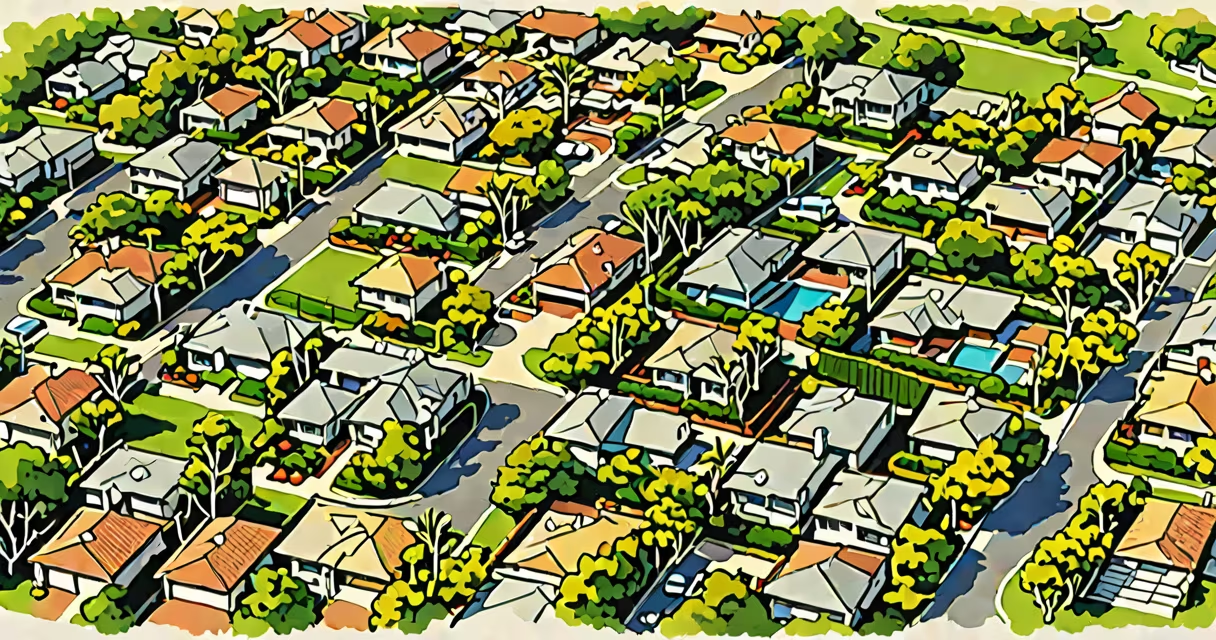
Bella Vista NSW is a planned residential suburb located approximately 26 kilometers northwest of Sydney's central business district. It lies within the City of Parramatta local government area and is part of Greater Western Sydney. The suburb was officially established in the early 2000s, with development focused on medium-density housing, parks, and community infrastructure.
Built on former farmland, Bella Vista was designed with a mix of detached homes, townhouses, and apartment complexes. Its layout features tree-lined streets, shared green spaces, and access to major transport routes including the M4 Motorway and the Parramatta railway line. The name "Bella Vista" translates from Italian as "beautiful view," referencing the elevated terrain and outlook over the surrounding field.
The suburb is served by several schools, including Bella Vista Public School and St. Patrick's Primary School. Local amenities such as the Bella Vista Community Centre, shopping strips along Broughton Street, and recreational facilities like the Bella Vista Park and Sports Complex support daily living. As of 2023, the population stood at around 13,500 residents, with a median household income of $168,000, slightly above the national average.
Bella Vista operates under a master-planned development model. This means infrastructure-roads, utilities, parks, and public services-was laid out in phases during construction. The planning process included input from urban designers, environmental consultants, and local councils to ensure sustainability and long-term livability.
Development was managed by private developers in partnership with the NSW Government and the City of Parramatta. Projects were approved through the Environmental Planning and Assessment Act 1979 (EP&A Act), requiring assessments for noise, traffic, and ecological impact. For example, the construction of the Bella Vista Golf Course required a biodiversity offset due to the presence of threatened species like the eastern spinebill.
Residents benefit from a low-density zoning regime, which limits building height and maintains open space. The suburb is divided into zones-residential, commercial, and recreational-each governed by specific land-use codes. This structure prevents overcrowding and supports walkability, with most homes within a 10-minute walk of a park or school.
The housing stock in Bella Vista reflects a mix of ownership models and tenure types. Most properties are owner-occupied, though rental demand has increased since 2020 due to affordability pressures in inner-city Sydney.
| Type | Typical Price Range (2023) | Ownership Type | Common Features |
|---|---|---|---|
| Detached House | $1.2M - $1.8M | Freehold | 3-5 bedrooms, backyard, garage, 200-300m² land |
| Townhouse | $750K - $1.1M | Strata title | 2-3 bedrooms, shared walls, courtyard |
| Apartment | $550K - $800K | Strata title | 1-2 bedrooms, ground or mid-rise, near transport |
Property prices have risen steadily since 2015. According to the Australian Bureau of Statistics (ABS), house prices in Bella Vista increased by 14.2% between 2020 and 2023. This growth is attributed to improved connectivity via the WestConnex motorway and the expansion of the Sydney Metro Northwest line, which includes a station at nearby Marsfield.
A lesser-known fact: Bella Vista was originally proposed as a mixed-use estate with retail and light industrial zones. These plans were scaled back after community consultations revealed opposition to commercial development near residential areas. The final design prioritized residential and green space, resulting in a quieter, more cohesive neighborhood.
Primary reasons for choosing Bella Vista include proximity to employment hubs, quality education, and lifestyle amenities. The suburb is about 12 minutes by car from the Parramatta CBD, a major employment center with over 120,000 workers. Many residents commute to jobs in health, finance, and government sectors based in Parramatta.
Families are drawn to the area's safety and educational offerings. Bella Vista Public School received a 2022 rating of 8.2/10 from the NSW Education Standards Authority (NESA), reflecting strong student outcomes in literacy and numeracy. The school's catchment zone overlaps with high-demand housing areas, making it a key factor in buyer decisions.
One resident I spoke with-Sarah K., a software developer who moved to Bella Vista in 2021-said she chose the suburb because of the balance between urban access and suburban calm. "I work in Sydney, but I don't want to live in the city. Bella Vista gives me quiet mornings, good schools, and a 20-minute drive to my office." Her experience reflects a trend: 68% of recent buyers in Bella Vista report relocating from inner-west Sydney suburbs like Leichhardt or Newtown.
Many assume Bella Vista is a remote or isolated area. In reality, it's well-connected. The nearest train station is at Marsfield, 2.3 kilometers away, with a 15-minute ride to Central Station. Bus routes connect directly to the Parramatta Shopping Centre and the University of Western Sydney campus.
Another misconception is that Bella Vista lacks cultural diversity. Data from the 2021 Census shows 41% of residents were born overseas, with significant populations from China, India, and the Philippines. The suburb hosts annual multicultural festivals at the Bella Vista Community Centre, featuring food, music, and art from over 15 countries.
Some confuse Bella Vista with neighboring suburbs like Seven Hills or Northmead. While they share similar demographics and transport links, Bella Vista has distinct boundaries and planning history. It is not part of the Seven Hills urban renewal zone, nor does it fall under the Northmead Business Improvement District.
Bella Vista NSW is a purpose-built, family-oriented suburb with strong infrastructure, rising property values, and a focus on quality of life. Its location within Greater Western Sydney positions it as a strategic choice for professionals, families, and investors seeking stability and growth.
For those considering relocation or investment, understanding the zoning, transport access, and demographic trends is essential. The suburb's success stems from deliberate planning-not accidental development-and continues to attract buyers looking for a balanced alternative to inner-city living.