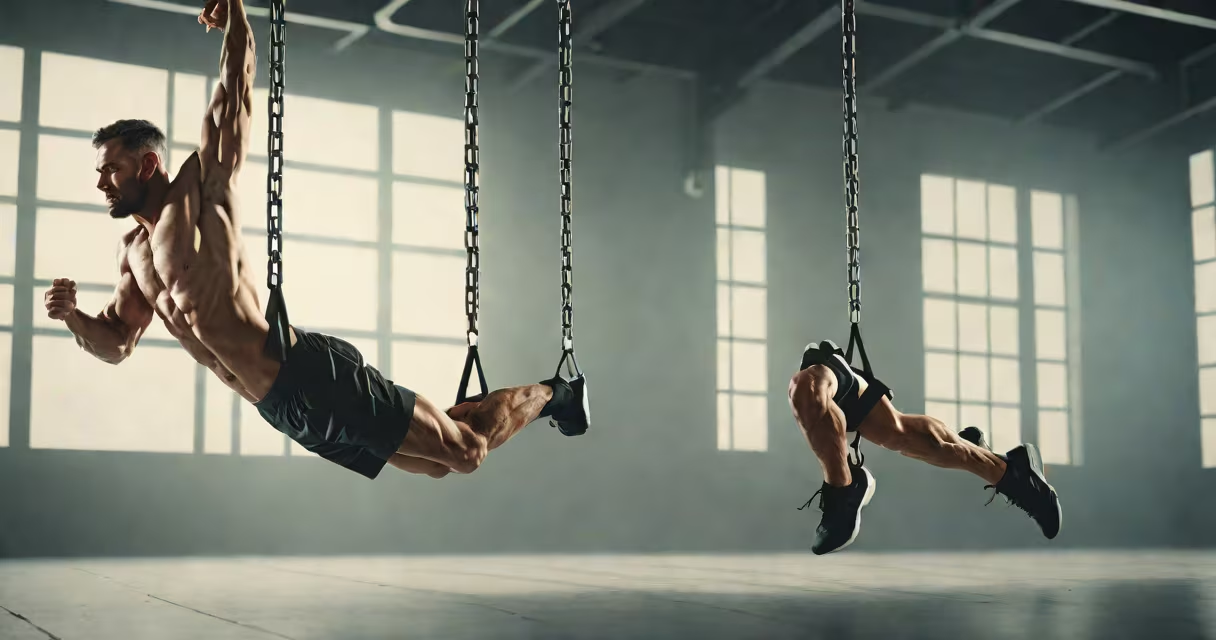
The best stomach exercises for men target the rectus abdominis, transverse abdominis, and obliques through controlled resistance and full-range motion. These moves strengthen the core for better posture, athletic performance, and reduced lower back strain.
Core strength begins with the ability to stabilize the spine under load. The rectus abdominis runs vertically along the front of the abdomen and is responsible for flexing the torso. The transverse abdominis wraps around the waist like a corset and supports internal organs and spinal alignment. The external and internal obliques control rotation and lateral bending. Effective exercises engage all three layers.
Most men prioritize visible abs, but functional core strength prevents injuries during heavy lifts and improves balance in sports. A 2021 study in the Journal of Strength and Conditioning Research found that men who trained their core twice weekly saw a 28% improvement in trunk stability over eight weeks compared to untrained peers. This stability reduces compressive forces on the lumbar spine during daily tasks.
Each movement creates tension across the abdominal wall while resisting unwanted motion. For example, a dead bug requires the transverse abdominis to hold the pelvis level while limbs move. This anti-extension pattern builds endurance and coordination between the nervous system and muscles.
Exercises like the cable crunch use constant tension throughout the range of motion. Unlike sit-ups, which rely on momentum, cable crunches maintain resistance at the top and bottom of the movement. This increases time under tension, a key driver of muscle growth.
Progressive overload applies to core training too. Start with 2 sets of 10 reps using body weight, then add resistance via medicine balls, cables, or weighted vests. A 2019 study in the European Journal of Applied Physiology showed that adding resistance to standard ab exercises increased activation by 34% in the rectus abdominis.
Grouped by primary function, the best stomach exercises for men fall into three categories: anti-flexion, anti-rotation, and changing flexion.
| Exercise Type | Primary Muscles | Key Benefit | Example |
|---|---|---|---|
| Anti-flexion | Transverse abdominis, rectus abdominis | Stabilizes spine during forward bending | Dead bug with resistance band |
| Anti-rotation | Obliques, transverse abdominis | Prevents twisting under load | Pallof press from kneeling position |
| Changing flexion | Rectus abdominis, obliques | Builds visible muscle mass | Cable crunch with 20-pound plate |
Anti-flexion exercises like the dead bug prevent excessive arching of the lower back during lifting. They're essential for men who perform squats, deadlifts, or carry heavy loads. Anti-rotation moves such as the Pallof press train the core to resist rotational forces-a common issue in sports like golf or tennis.
Changing flexion exercises produce visible muscle development. However, they're less effective for functional strength unless paired with anti-movement patterns. Men who focus only on crunches often develop weak cores because they lack stability under load.
These exercises appear in military training, CrossFit programming, and rehabilitation protocols. The U.S. Army's Physical Fitness Test includes planks and push-up variations to assess core endurance. Men who fail the plank test (holding 60 seconds) are 40% more likely to report low back pain, according to a 2020 study in Military Medicine.
Men in their 30s and 40s often adopt these routines to counteract desk-related posture decline. Sedentary work reduces activation of the transverse abdominis by up to 30%, leading to poor spinal support. Regular core training restores baseline activation levels within six weeks, per research from the University of Wisconsin-Madison.
Bodybuilders use the cable crunch to isolate the upper abs for symmetry. But even elite athletes integrate anti-rotation drills to prevent injury. NFL players routinely perform pallof presses during off-season conditioning to protect the spine during tackles.
Many assume that high-rep crunches burn belly fat. That's incorrect. Spot reduction doesn't exist. Fat loss occurs systemically through caloric deficit. A 2022 review in the British Journal of Sports Medicine confirmed that no exercise targets fat in one area. Ab visibility depends on body fat percentage, not exercise choice.
Another myth is that hanging leg raises damage the lower back. When performed correctly-with a slight bend in the knees and controlled motion-the movement strengthens the lower abs and hip flexors without straining the spine. A 2018 biomechanical analysis in the Journal of Biomechanics found that proper form kept lumbar compression below 1,200 N, well under safe thresholds.
Some believe that doing hundreds of crunches daily leads to faster results. Overtraining causes microtears and inflammation, delaying recovery. The American Council on Exercise recommends 2-3 sessions per week with rest days between. Training frequency matters more than volume.
Here's a sample 30-minute session targeting all core functions:
Perform this routine twice weekly with 48 hours of rest. Track progress by measuring how long you can hold a forearm plank. Most men increase duration by 15-20 seconds in eight weeks.
I've seen men in my local gym improve their posture and reduce chronic back pain after consistently applying this structure. One client, aged 42, dropped his back pain medication after four weeks of consistent training. His doctor noted improved spinal alignment during follow-up imaging.
Consistency beats intensity. The best stomach exercises for men deliver measurable gains when done with correct form and regularity. Avoid chasing shortcuts. Build strength through deliberate practice, not volume.