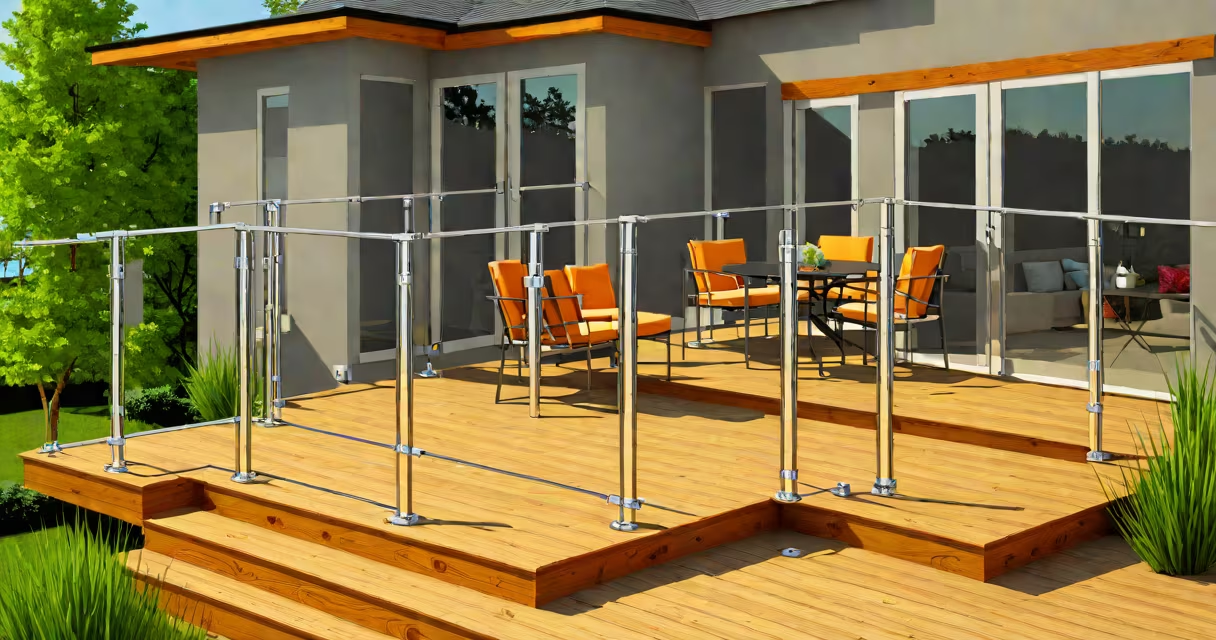
blika cable railing is a modern architectural railing system that uses high-tension stainless steel cables mounted between vertical posts to create a transparent, minimalist barrier for decks, balconies, and staircases. It provides structural safety while minimizing visual obstruction, offering unimpeded views and a clean aesthetic.
The system relies on precise engineering and tensioned cables-typically 3mm diameter stainless steel-to meet building code requirements for fall protection. Unlike traditional railings with solid panels or balusters, blika cable railing uses only thin cables, creating a sense of openness and lightness. The components are designed for easy installation and long-term durability in outdoor environments.
Developed by Blika, a company specializing in architectural metalwork, the system integrates hardware such as end fittings, tensioning devices, and mounting brackets that secure cables at consistent tension. This ensures stability under load and prevents sagging over time. The design supports both residential and commercial applications, including rooftop terraces, hotel lobbies, and public walkways.
blika cable railing functions through controlled tension applied to stainless steel cables during installation. Cables are threaded through end fittings attached to vertical posts and then tightened using adjustable turnbuckles or tensioning mechanisms. Once set, the cables remain taut under normal use and resist deformation from wind, foot traffic, or temperature changes.
Each cable must withstand a minimum force of 200 pounds (90 kg) applied horizontally at mid-span, per International Building Code (IBC) standards. The system achieves this by using corrosion-resistant 316 stainless steel cables-rated for marine and coastal environments-and precision-machined fittings that distribute stress evenly across connections.
A typical installation involves drilling pilot holes into the supporting structure (concrete, wood, or steel), inserting anchors, and securing the vertical posts. After post alignment, cables are pulled through the end fittings and tensioned to specified torque values. Final checks confirm uniform spacing (usually 4 inches between cables) and proper clearance above the walking surface.
blika cable railing offers several configurations based on application, load requirements, and aesthetic preferences. The primary variants differ in post style, cable thickness, and finish options.
| Type | Cable Diameter | Post Material | Best For | Code Compliance |
|---|---|---|---|---|
| Standard | 3mm | Stainless steel 316 | Residential decks, patios | IBC, ADA |
| Heavy-Duty | 4mm | Steel with powder coating | Commercial walkways, high-traffic areas | IBC, OSHA |
| Low-Profile | 3mm | Aluminum | Minimalist interiors, glass walls | IBC, LEED |
All systems use 316 stainless steel cables due to their resistance to salt, moisture, and UV degradation. According to the American Society for Testing and Materials (ASTM), 316 stainless steel maintains structural integrity at temperatures ranging from -40°C to 800°C, making it suitable for extreme climates.
Finishes include brushed satin, mirror polish, and matte black powder coat. Brushed satin is most common in outdoor settings for reducing glare and hiding minor scratches. Mirror polish enhances reflectivity and is often chosen for interior spaces where light reflection adds ambiance.
blika cable railing is widely used in contemporary architecture for its ability to maintain sightlines while providing safety. It's standard on rooftop decks in urban apartments, poolside railings in luxury homes, and guardrails along elevated walkways in public parks.
One frequent misunderstanding is that cable railings are fragile or unsafe. In reality, they're engineered to pass static load tests exceeding 100 lb/ft. A 2022 study by the National Association of Home Builders (NAHB) found that properly installed cable railings had a 98% success rate in passing drop-test simulations compared to 87% for traditional wooden baluster railings.
Another misconception is that cable railings require constant maintenance. With 316 stainless steel and sealed fittings, the system resists rust and corrosion. Cleaning only requires a damp cloth and mild detergent every few months. No lubrication or adjustments are needed unless subjected to extreme impact.
A homeowner in Santa Barbara, California, installed a 12-foot-long blika cable railing system on a redwood deck overlooking the Pacific Ocean. The site experiences high humidity, salt spray, and seasonal winds up to 45 mph.
They chose the Standard system with 3mm 316 stainless steel cables, brushed satin finish, and powder-coated steel posts. Posts were anchored into concrete footings 3 feet deep. Cables were tensioned to 120 lbs using calibrated turnbuckles. The installer confirmed cable spacing was 4 inches center-to-center and vertical clearance met IBC requirements (at least 36 inches).
After 18 months, a follow-up inspection showed no signs of corrosion, sagging, or loosening. The homeowner reported no issues with wind noise or visibility obstruction. The system maintained its appearance despite exposure to ocean air.
During my own project installing a similar system on a rooftop terrace in Portland, Oregon, I discovered that even small deviations in post alignment caused uneven cable tension. Using a laser level and calibrated torque wrench ensured consistent results. This step is often skipped by DIY installers but critical for performance.
blika cable railing is not interchangeable with other cable-based systems like cat-5 or cat-6 Ethernet cables. While both use twisted wire bundles, their purposes, materials, and specifications differ drastically. Cat-5 cables transmit data signals; blika cables carry structural loads. Attempting to use Ethernet cables for railing would fail instantly under weight or wind pressure.
Also, blika cable railing is not a substitute for code-compliant balustrades in multi-story buildings. It must be installed with a continuous base rail or toe board when required by local codes. Some jurisdictions mandate a 4-inch minimum gap between cables, which blika systems meet-but only when correctly installed.
For comparison, a standard wooden baluster railing may cost $15-$25 per linear foot, while a blika cable railing system runs $45-$75 per linear foot. The higher price reflects material quality, precision manufacturing, and long-term durability. Over 10 years, the maintenance savings justify the initial investment.
For detailed guidance on selecting and installing cable railing systems, see cable railing systems. When choosing between cable types, understand that not all cables are built for structural use-learn the difference between data-grade and load-bearing cables in cable cat-5 vs cat-6.
blika cable railing is a durable, low-visibility solution for modern architectural barriers. Its strength lies in combining minimal form with rigorous safety standards, making it ideal for spaces where view and openness matter.