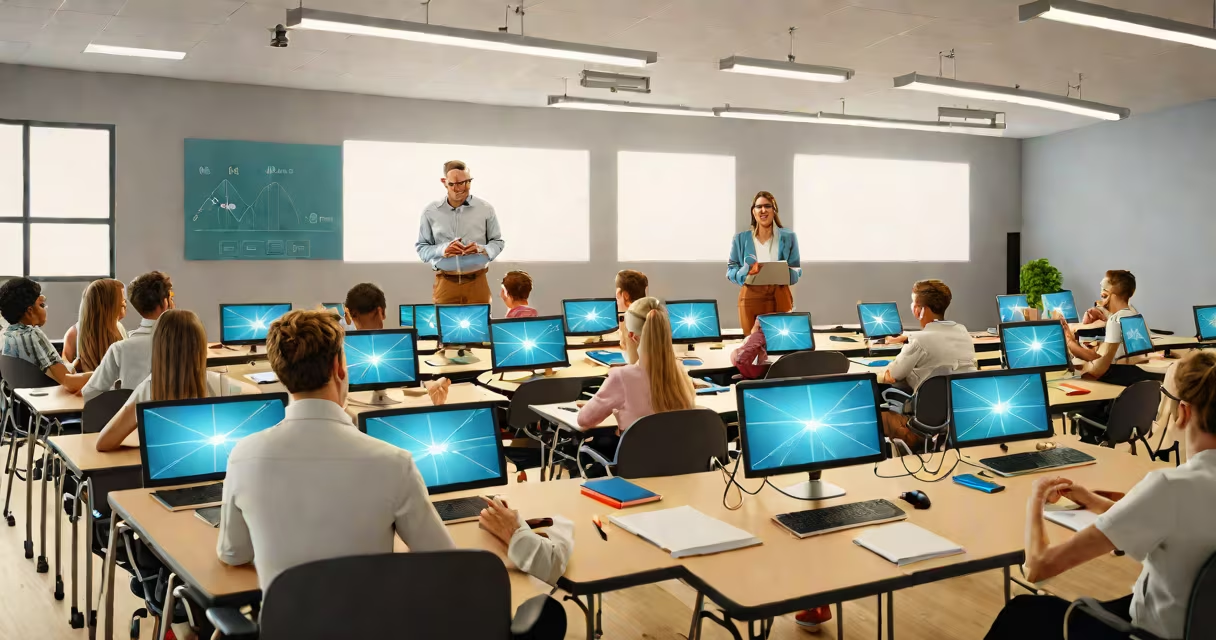
Blended learning meaning refers to an educational approach that integrates face-to-face instruction with digital learning experiences. It is not simply online classes with occasional in-person meetings-it's a structured mix where both modes serve distinct roles based on learning objectives and student needs.
This model emerged from the need to personalize education while maintaining human interaction. Research from the U.S. Department of Education (2010) found that students in blended learning environments outperformed those in purely face-to-face or purely online settings by an average of 10 percentile points. The success stems from intentional design-not just adding technology to classrooms.
Blended learning is not a single format. It includes models like station rotation, flex, and flipped classroom. Each uses different timing, pacing, and control between teacher-led and student-directed activities. The key is alignment: digital components support, extend, or deepen in-person learning rather than replace it.
Blended learning operates on a cycle of instruction, practice, feedback, and application. Students engage with content through digital platforms-videos, interactive quizzes, simulations-then apply what they've learned in live sessions with teachers and peers.
A typical school day might begin with a 20-minute video lecture assigned via a learning management system (LMS). Students watch it at home or during a study period. In class, the teacher leads a discussion, facilitates problem-solving, or runs hands-on experiments using the prior knowledge. This structure allows teachers to focus on higher-order thinking rather than basic content delivery.
For example, a high school biology class uses a blended model. Students complete a 15-minute interactive module on photosynthesis via a platform like Edpuzzle. The module pauses for embedded questions and animations. During class, the teacher assigns small groups to conduct a lab measuring oxygen production in plants under varying light conditions. The digital component builds foundational understanding; the in-person session enables inquiry and collaboration.
Four primary models define how time and space are allocated between online and in-person learning. Each suits different goals, grade levels, and institutional resources.
| Model | Structure | Best For | Example |
|---|---|---|---|
| Station Rotation | Students rotate through four stations: teacher-led instruction, collaborative group work, independent digital tasks, and peer tutoring. | Elementary and middle school classrooms with mixed ability levels. | A 5th-grade math class uses 30-minute rotations. One station offers adaptive software; another involves a teacher-led small group on fractions. |
| Flipped Classroom | Students learn new content online before class. Class time focuses on application, discussion, and problem-solving. | High school and college courses requiring critical thinking and analysis. | In a 10th-grade history course, students watch a 12-minute video on the causes of World War I. In class, they debate which factor was most significant. |
| Flex Model | Online learning dominates. Teachers provide support as needed during scheduled office hours or drop-in times. | Self-paced programs, alternative schools, and remote learners. | A community college offers a psychology course where 80% of content is delivered via an LMS. Instructors hold weekly virtual office hours. |
| Enriched Virtual | Most instruction occurs online. Students attend periodic in-person sessions for labs, exams, or team projects. | Advanced placement courses, vocational training, or dual enrollment programs. | A high school student takes AP Calculus through a state-approved online provider but meets weekly with a local tutor for review and test prep. |
Each model requires planning. A common mistake is assuming that assigning videos replaces teaching. Effective blended learning uses digital tools to free up class time for deeper work. According to the National Education Association (NEA), successful implementation hinges on teacher training and clear learning goals-not just access to devices.
Blended learning is widely adopted in K-12 schools, higher education, corporate training, and professional development. Its use grew rapidly after the pandemic, but institutions continue using it because it supports equity, flexibility, and measurable progress.
Public school districts such as Summit Public Schools in California have implemented district-wide blended models. Their system uses a customized platform called Summit Learning, which tracks student mastery across standards. Teachers receive dashboards showing where students struggle. This enables timely interventions-students who fail a quiz on quadratic equations automatically receive remedial modules and are flagged for extra help.
Corporate training also benefits. A Fortune 500 company rolled out a compliance training program using blended learning. Employees completed a 45-minute e-module on workplace harassment policies. Then, in person, managers led role-playing scenarios to reinforce ethical decision-making. Post-training assessments showed a 34% improvement in retention compared to previous fully online versions.
One non-obvious distinction: blended learning is not the same as hybrid learning. While both involve online and in-person elements, hybrid learning often implies equal time split between formats-common in university courses during emergencies. Blended learning is purposeful, with digital components designed to improve specific learning outcomes. Hybrid may be reactive; blended is strategic.
Many assume blended learning means "more screen time." That's incorrect. The goal is reduced cognitive load through better pacing and personalization. A 2021 study by the RAND Corporation found that students in well-designed blended programs reported lower stress levels and higher motivation than peers in traditional classrooms.
Another myth: blended learning only works for older students. In reality, it's effective across ages. A kindergarten class in New York City uses a blended model where children listen to storytime via audio recordings at home, then discuss themes and predict endings during morning circle time. Teachers report improved listening skills and vocabulary growth.
I observed this firsthand in a rural middle school where internet access was limited. The district used offline-capable apps with pre-loaded content. Students downloaded lessons on USB drives. Teachers met with small groups twice a week to assess understanding. After one semester, reading proficiency rose 18%-a result tied directly to the structured blend of offline digital content and guided discussion.
Blended learning meaning centers on intentionality. It's not about replacing teachers with screens. It's about using technology to create space for richer interactions, differentiated instruction, and student agency. When done well, it improves outcomes across diverse populations.
Effective blended learning requires clear objectives, trained educators, and reliable infrastructure. It's not a quick fix. But when aligned with pedagogy, it becomes a useful tool for equity and engagement. Institutions that treat it as a core instructional strategy-rather than a temporary workaround-see lasting gains.
Understanding blended learning meaning helps educators, parents, and policymakers make informed choices. It's not a trend. It's a proven method for delivering education that meets students where they are-and grows with them.