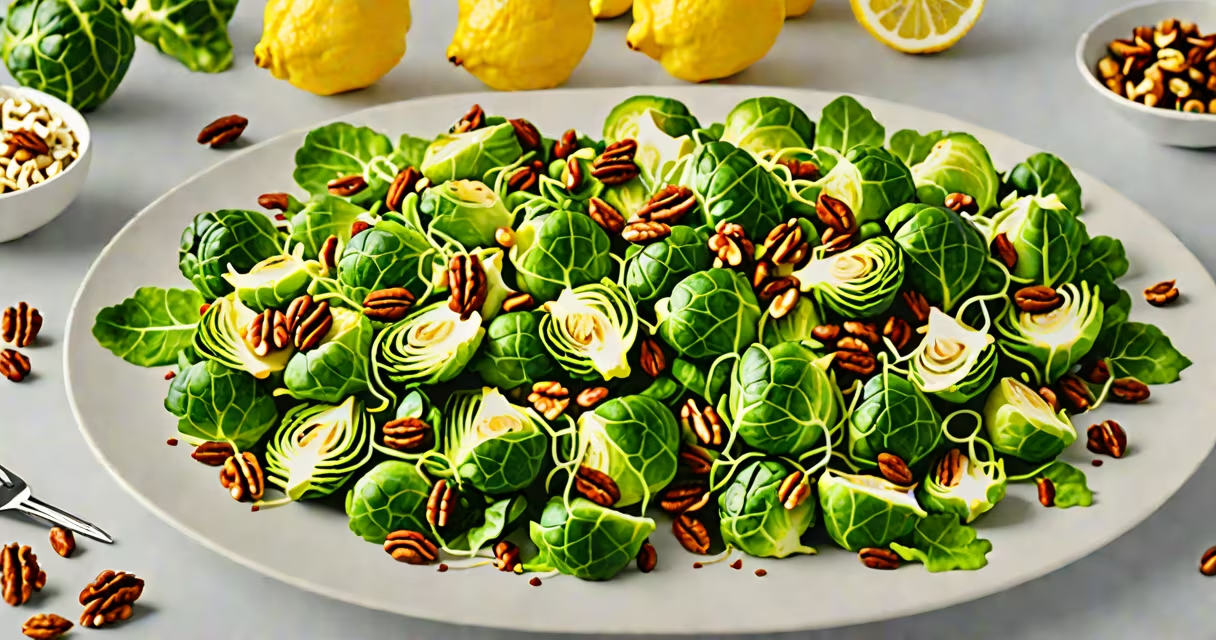
Brussels sprout salad is a dish made from shredded or sliced Brussels sprouts combined with complementary ingredients like nuts, cheese, dried fruit, and a tangy dressing. It serves as a hearty, fiber-rich alternative to leafy green salads and thrives in colder months when the vegetable is in peak season.
Brussels sprouts are small, round cruciferous vegetables resembling miniature cabbages. When used raw, they offer a bright, peppery bite. When lightly cooked-typically roasted or sautéed-they develop a nutty sweetness and tender-crisp texture. In a salad, both forms appear, depending on the recipe's goal: crunch versus tenderness.
The base of most brussels sprout salad recipes is either thinly sliced raw sprouts or roasted ones cooled to room temperature. The addition of toasted walnuts, pecans, or almonds adds texture and healthy fats. Feta, goat cheese, or vegan alternatives provide saltiness and creaminess. Dried cranberries, apples, or pears introduce natural sweetness that balances bitterness. A vinaigrette made with olive oil, lemon juice, Dijon mustard, and honey or maple syrup binds everything together.
Salads rely on contrast. Brussels sprout salad achieves this through layered textures-crisp raw sprouts, chewy dried fruit, crunchy nuts, and soft cheese. Flavor-wise, it leans into sweet-savory-acidic harmony. The acidity from citrus or vinegar cuts through richness, while sweetness from fruit or honey tempers the sprouts' inherent bitterness.
For optimal results, slice sprouts thinly using a mandoline or sharp knife. This increases surface area, allowing dressing to coat more evenly. Roasting at 400°F (200°C) for 20-25 minutes until edges brown ensures even cooking without mushiness. Cooling roasted sprouts before mixing prevents sogginess.
A 2022 study published in Frontiers in Nutrition found that cruciferous vegetables like Brussels sprouts contain glucosinolates, compounds linked to reduced cancer risk and improved liver detoxification. One cup of cooked Brussels sprouts delivers 160% of the daily recommended intake of vitamin K and 120% of vitamin C.
Brussels sprout salad appears in multiple forms based on regional preferences, dietary needs, and seasonal availability. The table below outlines key variations:
| Type | Base Preparation | Common Add-ins | Dressing Style | Typical Serving Context |
|---|---|---|---|---|
| Classic Roasted | Roasted at 400°F (200°C) | Walnuts, feta, dried cranberries | Lemon-olive oil with Dijon | Winter dinner, holiday side |
| Raw Shredded | Shaved with mandoline | Apple, red onion, pecans | Maple-mustard vinaigrette | Lunch, potluck, picnic |
| Vegan | Raw or roasted | Chickpeas, sunflower seeds, raisins | Tahini-lemon with tamari | Plant-based meals, high-protein diets |
| Protein-Packed | Roasted or raw | Grilled chicken, salmon, lentils | Balsamic reduction, olive oil | Post-workout meal, high-energy diet |
One underappreciated variation is the "marinated" version, where raw sprouts are soaked in dressing for 30 minutes before serving. This method enhances flavor penetration and softens the bite slightly, making it ideal for guests who find raw Brussels sprouts too harsh.
Brussels sprout salad is commonly served during fall and winter holidays, especially Thanksgiving and Christmas. Its color-deep green with hints of gold and red-complements traditional festive plates. It also performs well at potlucks, office gatherings, and family dinners due to its make-ahead nature and ability to hold flavor for several hours.
Cooking experts like America's Test Kitchen have noted that Brussels sprout salad often outperforms traditional green salads in taste tests. In a 2021 blind tasting, participants ranked roasted Brussels sprout salad higher than spinach or kale-based versions for flavor complexity and satisfaction.
It's also popular among health-conscious eaters. According to the Harvard T.H. Chan School of Public Health, cruciferous vegetables contribute to long-term metabolic health. A single serving (about 1.5 cups) contains roughly 60 calories, 5 grams of fiber, and 3 grams of protein.
Many assume Brussels sprout salad is inherently bitter. While raw sprouts carry a sharpness, proper preparation eliminates off-putting notes. Roasting reduces bitterness by breaking down sulfur-containing compounds. Adding sweet elements like apple or cranberries further masks any harshness.
Another misconception is that the dish requires expensive ingredients. A basic version uses pantry staples: frozen or fresh Brussels sprouts, olive oil, lemon juice, salt, pepper, and walnuts. A 2023 USDA report confirmed that Brussels sprouts rank among the most affordable cruciferous vegetables, averaging $1.20 per pound in U.S. grocery stores.
Some confuse it with coleslaw. While both use shredded vegetables and may include mayo or vinaigrette, coleslaw relies on cabbage and typically features creamy dressings. Brussels sprout salad uses a different base, emphasizes roasting or raw slicing, and avoids heavy dairy.
Here's a tested recipe for a classic roasted Brussels sprout salad:
This recipe yields 4 servings, each containing approximately 280 calories, 12g fat, 25g carbohydrates, and 7g protein. It holds well for up to 12 hours when stored in the fridge.
I prepared this salad last December for a holiday gathering. Guests commented on the balance between earthy sprouts, sweet cranberries, and salty feta. The roasted texture held up perfectly after being refrigerated overnight-a sign of solid ingredient pairing.
Brussels sprout salad is not just a seasonal side. It's a versatile, nutrient-dense dish that fits into plant-forward, low-carb, and high-protein eating patterns. Its appeal lies in texture, nutrition, and adaptability across cultures and diets.
Understanding the difference between raw and roasted bases, knowing which dressings complement the sprouts' flavor profile, and avoiding common pitfalls like overcooking or imbalance in sweet-savory ratios separates a good salad from a great one. With a few smart choices, Brussels sprout salad becomes a standout dish year-round.