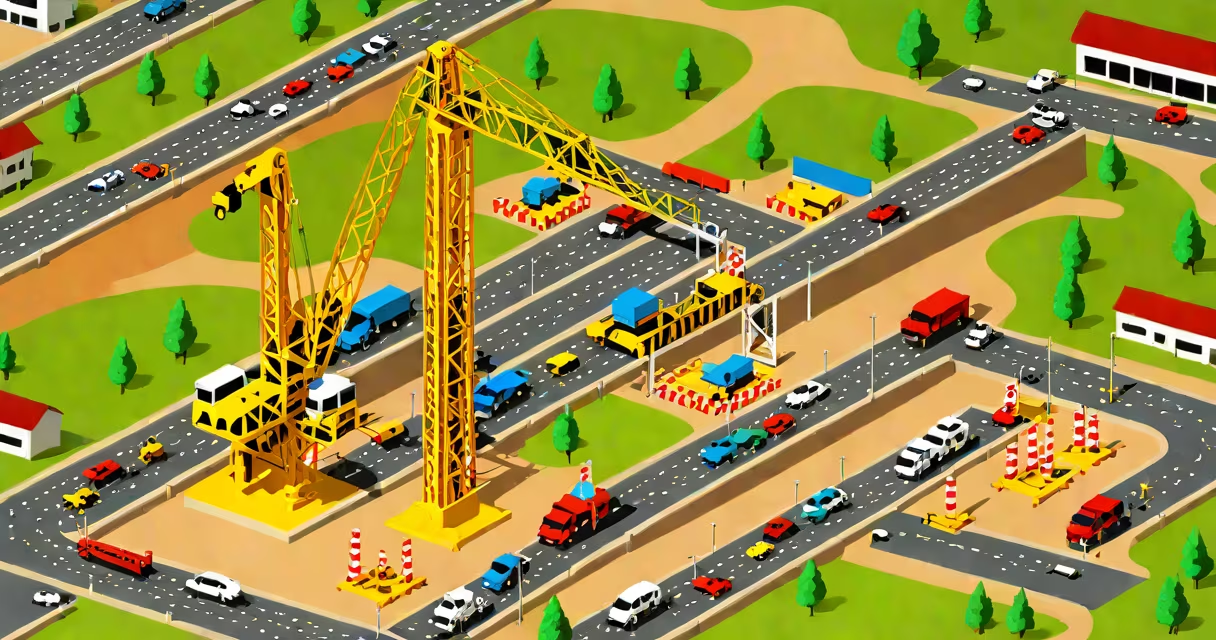
Build operate transfer (BOT) is a public-private partnership model in which a private company funds, constructs, and manages an infrastructure project for a fixed term-typically 20 to 30 years-before handing it over to the government. The private party recovers costs and earns returns through user fees, tariffs, or government payments during the operational phase.
BOT projects are common in transportation, energy, water, and telecommunications. A private developer builds a toll highway, runs it for 25 years collecting tolls, then transfers full control to the state. This model shifts upfront capital risk from public budgets to private investors while ensuring long-term maintenance and service delivery.
The U.S. Department of Transportation notes that BOT agreements reduce taxpayer burden and improve project efficiency by aligning incentives between operators and users. The World Bank confirms that BOT structures have delivered over 1,200 infrastructure projects globally since the 1990s, especially in Asia and Latin America.
A BOT project begins with a government issuing a request for proposals (RFP) for a specific infrastructure need-like a new bridge or wastewater treatment plant. Private firms submit bids detailing their technical design, financing plan, and operations strategy. The winning bidder signs a concession agreement granting exclusive rights to develop and manage the asset.
During the build phase, the private partner secures funding-often through project finance, where lenders rely on future revenue streams rather than the sponsor's balance sheet. Construction proceeds under strict timelines and performance benchmarks. Once completed, the asset enters the operate phase, where the contractor collects fees from users (e.g., tolls, utility charges) or receives payments from the government.
After the agreed-upon operational period-usually 20 to 30 years-the private operator transfers ownership and control to the public authority. The handover includes detailed records of maintenance, system performance, and asset condition. The government assumes responsibility for ongoing oversight and potential upgrades.
While all BOT models share core elements, variations exist based on revenue structure and risk allocation:
| Type | Revenue Source | Risk Level | Use Case Example |
|---|---|---|---|
| Classic BOT | User fees (tolls, utility charges) | High (demand risk) | Toll road in Indonesia |
| BOOT (Build Own Operate Transfer) | Government payment (availability payment) | Medium (payment risk) | Water treatment plant in Mexico |
| BOO (Build Own Operate) | Private revenue only | Low (full private control) | Power plant in India |
BOOT differs from classic BOT by including a government availability payment-funds paid regardless of usage. This reduces demand risk for the private partner. BOO allows full private ownership and operation indefinitely, often used in energy sectors where long-term returns justify permanent control.
Despite the name, "transfer" doesn't always mean full handover. Some contracts include phased transfer or retention of minority equity by the private party. The key is that the public sector gains control at the end of the concession period.
BOT is often mistaken for outright privatization. Unlike selling a public asset permanently, BOT is a time-limited arrangement. The government retains ultimate ownership and can renegotiate terms if needed. The private partner acts as a contractor and operator-not a buyer.
A notable example is the M6 Toll in the UK, developed by a consortium led by Transurban. The project opened in 2003, collected tolls for 30 years, and transferred to National Highways in 2033. It reduced congestion on the M6 motorway and generated £1.2 billion in revenue during its operational phase.
Another example is the Suez Canal Container Terminal in Egypt, built by a joint venture between DP World and the Egyptian government. The private partner financed construction, operated the terminal for 25 years, and transferred it to the state after meeting performance standards. The port now handles over 4 million TEUs annually.
A lesser-known fact: BOT projects often include mandatory performance bonds and third-party audits. The World Bank reports that 78% of BOT contracts in developing countries include independent monitoring mechanisms to ensure compliance with environmental and social standards.
BOT enables governments to deliver critical infrastructure without immediate large-scale borrowing. It attracts private capital, accelerates project timelines, and improves accountability through measurable performance targets. For private firms, it offers stable returns tied to long-term contracts.
I once observed a BOT water project in rural Kenya where a local firm built and operated a solar-powered water purification plant. After five years of operation, they handed it over to the county government. The facility now serves 12 villages with clean water daily-a result not achieved through traditional public procurement due to budget constraints.
When evaluating a BOT proposal, assess the concession duration, revenue mechanism, and exit clause. A 25-year term with availability payments may be less risky than a 30-year toll-only model in a low-demand region. Always verify whether the government has the capacity to take over operations smoothly.
Build operate transfer remains a proven method for delivering complex infrastructure. Its success hinges on clear contracts, transparent governance, and alignment between public goals and private incentives.