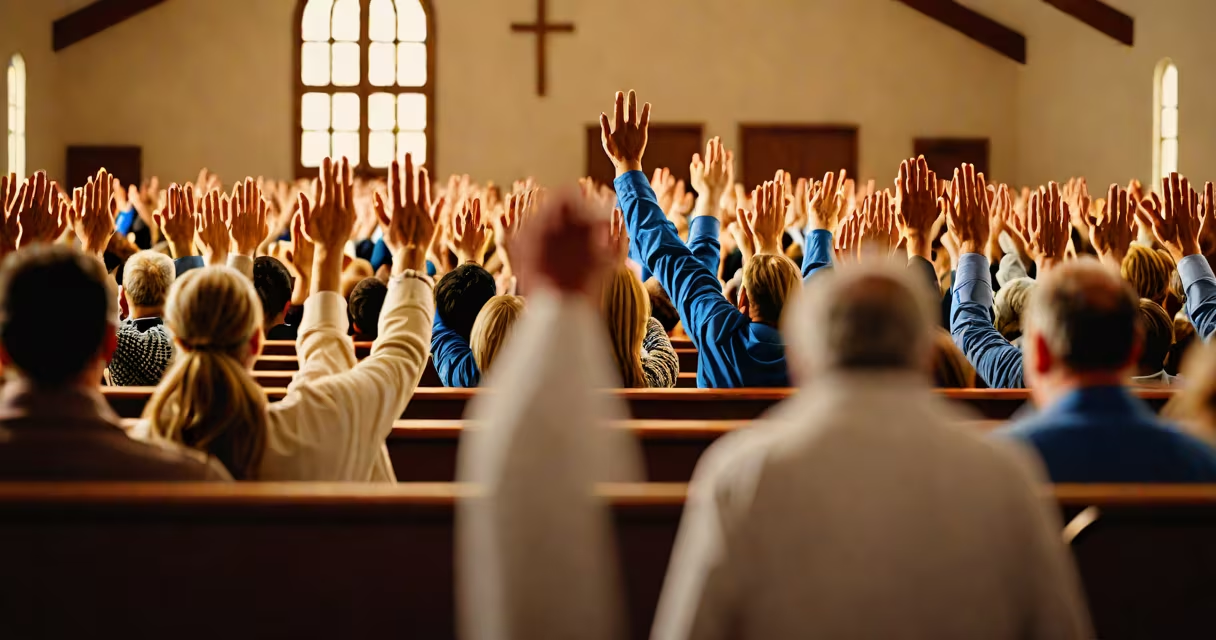
The Christian Biblical Church of God is a Pentecostal Christian denomination rooted in the belief that Scripture is the ultimate authority in faith and practice. It emphasizes personal conversion, baptism in the Holy Spirit, speaking in tongues, and active evangelism. The group emerged in the early 20th century as part of the broader Holiness-Pentecostal movement, with formal organization occurring in the United States during the 1930s.
Founded by Reverend William J. Wynn in 1936, the church developed from a revivalist tradition centered on spiritual renewal and scriptural fidelity. Its name reflects its core identity: adherence to the Bible as divine revelation and commitment to Christ-centered worship. The denomination operates through local congregations governed by regional leadership, with national oversight through elected bishops and administrative councils.
Core practices include weekly worship services featuring preaching, hymn singing, and altar calls. Members observe baptism by immersion for believers and believe in the imminent return of Jesus Christ. The church maintains strict moral standards, discouraging alcohol consumption, gambling, and premarital sex. It supports missionary outreach, youth programs, and disaster relief efforts through affiliated ministries.
The Christian Biblical Church of God functions through a hierarchical structure combining local autonomy with centralized oversight. Each congregation is led by a pastor, often ordained through a denominational training program. Pastors report to district supervisors who coordinate activities across counties or regions.
National leadership is organized under a General Board composed of elected bishops, administrators, and committee chairs. Decisions on doctrine, policy, and funding are made through regular assemblies. The board sets guidelines for church operations, including financial reporting, curriculum development, and mission assignments.
Local churches operate independently in budgeting and staffing but follow standardized liturgical formats and doctrinal statements. All sermons must align with the denomination's official interpretation of key biblical passages, particularly those related to salvation, sanctification, and spiritual gifts.
The church's theology centers on the authority of the Bible, the deity of Jesus Christ, and the necessity of the Holy Spirit's work in the believer's life. It teaches that salvation comes through faith in Christ alone, confirmed by repentance and water baptism. Speaking in tongues is viewed as evidence of Spirit baptism, a belief shared with other Pentecostal groups.
Members participate in weekly services, monthly communion observances, and annual conventions. The church holds a firm stance against theological liberalism, rejecting interpretations that reinterpret scripture based on cultural trends. It adheres to a conservative reading of Genesis, believing in a literal six-day creation and the historical reality of Adam and Eve.
Family life is emphasized through marriage counseling, parenting seminars, and Sunday school programs. Youth groups meet weekly and engage in service projects. The church sponsors a network of orphanages and feeding programs in underserved communities, especially in sub-Saharan Africa and parts of Central America.
While the Christian Biblical Church of God maintains a unified doctrinal statement, regional branches exhibit minor variations in worship style and outreach focus. In the U.S., congregations in the South and Midwest tend to favor traditional gospel music and large-scale revivals. Urban centers often host smaller, house-based fellowships due to space constraints.
In West Africa, particularly Nigeria and Ghana, the church has grown rapidly since the 1980s. Local leaders adapt sermon delivery to oral traditions and incorporate indigenous musical instruments. Worship in these regions often includes extended prayer sessions and prophetic declarations.
A comparison of key features across regions:
| Feature | United States | Nigeria | Ghana |
|---|---|---|---|
| Primary Language | English | English, Hausa, Yoruba | English, Twi |
| Worship Style | Traditional hymns, choir-led | Call-and-response, drumming | Chanting, hand clapping |
| Annual Event | Summer Revival Camp | National Prayer Assembly | Church Unity Festival |
Despite regional differences, all branches affirm the same foundational creed: the Nicene and Apostles' Creeds, along with the denomination's own Statement of Faith adopted in 1948. This document outlines beliefs about the Trinity, the resurrection, and the final judgment.
The Christian Biblical Church of God has over 1.2 million members across 57 countries, according to the 2022 Global Religious Demographics Report by the Pew Research Center. It is most concentrated in Sub-Saharan Africa, where growth rates exceed 7% annually. In the U.S., it has approximately 120,000 members, primarily in states like Georgia, Texas, and California.
Its mission strategy focuses on rural evangelism and community development. In 2021, the church launched a mobile medical unit program in rural Kenya, providing free health screenings and distributing Bibles. Over 45,000 people received care in the first year. The initiative is funded through tithe contributions and partnerships with international aid organizations.
One non-obvious fact: unlike many Pentecostal groups that emphasize prosperity theology, the Christian Biblical Church of God explicitly rejects the idea that financial blessing is a sign of divine favor. It teaches that material wealth is not guaranteed by faith and warns against greed, citing Proverbs 23:4-5: "Do not wear yourself out to get rich; do not trust your own cleverness."
The Christian Biblical Church of God is frequently mistaken for the Church of God (Cleveland, Tennessee), another Pentecostal denomination with a similar name. While both share roots in the Holiness movement, they differ in governance and doctrine. The Cleveland-based church allows women in pastoral roles and has a more ecumenical orientation. The Christian Biblical Church of God restricts ordination to men and avoids interdenominational alliances.
Another common error is equating the group with the Worldwide Church of God, which was founded by Herbert W. Armstrong and later disavowed by mainstream Christianity. The Christian Biblical Church of God has no historical or doctrinal connection to that group. It does not teach that the Sabbath is observed on Saturday, nor does it reject the Trinity.
I once attended a regional assembly in Atlanta where a visiting bishop from Lagos delivered a sermon on Ephesians 4:11-13. He emphasized that spiritual gifts are meant to build unity, not create division. His message resonated deeply-especially when he paused to ask, "When was the last time you prayed for someone in your church who disagrees with you?" That moment underscored the denomination's emphasis on reconciliation over doctrine alone.
Understanding the Christian Biblical Church of God requires recognizing its dual identity: a tightly structured religious body with clear boundaries, yet also a changing movement focused on transformation through faith. Its teachings remain consistent across continents, even as local expressions evolve. The church continues to grow through grassroots evangelism and community service, maintaining a distinct voice within global Christianity.
For further exploration of living a Christian life, see this guide.