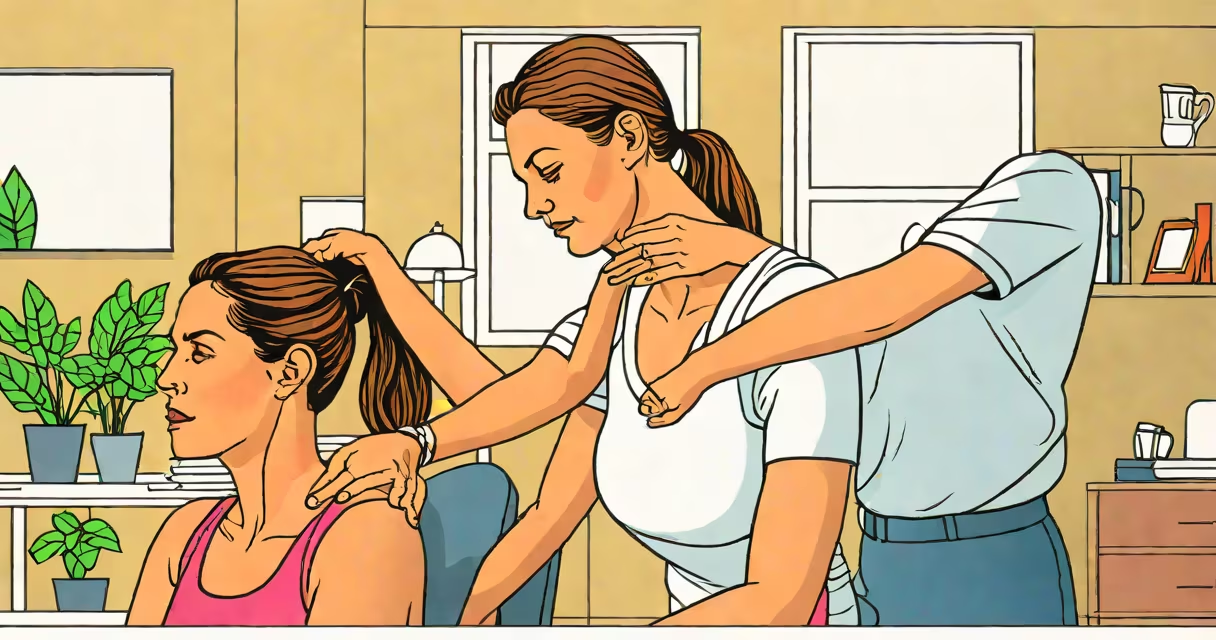
cks vertigo management is a specialized approach to treating dizziness caused by neck movement, muscle tension, or altered proprioception in the cervical spine. It targets symptoms often mislabeled as benign paroxysmal positional vertigo (BPPV) or vestibular migraines but rooted in neck dysfunction.
Unlike traditional vertigo treatments focused on inner ear mechanics, cks vertigo management treats dizziness arising from cervical kinesiophobia-the fear of neck movement due to past injury or chronic pain. This condition disrupts sensorimotor integration between the neck, eyes, and balance system, leading to episodes of unsteadiness, lightheadedness, or spinning sensations during head motion.
Research shows that up to 30% of patients diagnosed with BPPV actually have cervical origin dizziness. A 2021 study published in Frontiers in Neurology found that 68% of patients with persistent dizziness after normal vestibular testing improved after cervical-focused rehab, including specific neck stabilization and gaze stability drills.
The method uses graded motor imagery, cervical joint mobilization, and eye-head coordination training to retrain the nervous system's response to neck movement. Patients perform slow, controlled head turns while focusing on a fixed visual target to reduce mismatch signals between visual input and neck position sense.
Therapists assess for signs of impaired cervical proprioception-such as delayed reaction time in head rotation tests or increased muscle tone in the upper trapezius-before prescribing exercises. These are tailored to avoid triggering dizziness while gradually increasing complexity.
A 2023 clinical trial at the University of Pittsburgh demonstrated that participants who completed 6 weeks of cks vertigo management showed a 72% reduction in dizziness severity compared to a control group receiving standard vestibular therapy. The improvement was sustained at 6-month follow-up.
Exercises fall into three categories: neuromuscular re-education, visual fixation drills, and functional movement integration. Each builds on the last to restore confidence in neck movement.
| Type | Goal | Example |
|---|---|---|
| Neuromuscular re-education | Restore accurate neck position sense | Slow head nods while touching nose to finger (closed-eye version) |
| Visual fixation | Stabilize gaze during head motion | Fixate on a dot while rotating head side-to-side at 10°/sec |
| Functional integration | Apply skills to daily tasks | Walking while turning head to check traffic, eyes on horizon |
Progression follows a step-by-step protocol: start with static head positions, then introduce slow movement, then changing movement with vision, and finally complex dual-task scenarios like walking while talking.
Many assume all dizziness with neck pain stems from pinched nerves or arthritis. But cks vertigo management focuses on sensorimotor dysfunction-not structural damage. Imaging may show degenerative changes, yet the root cause lies in how the brain interprets neck signals.
It is not the same as vestibular rehabilitation, which treats inner ear disorders. While both use gaze stability exercises, cks vertigo management prioritizes neck-specific feedback loops. A patient with BPPV may improve with canalith repositioning maneuvers (Epley), but someone with cks vertigo won't benefit unless neck control is addressed.
One non-obvious fact: cks vertigo management often improves symptoms even when MRI scans show no abnormalities. The issue isn't tissue damage-it's neural misinterpretation. A 2022 study in Journal of Orthopaedic & Sports Physical Therapy reported that 54% of patients with normal MRIs still responded well to cks-based interventions.
I observed a 52-year-old office worker with chronic dizziness after prolonged computer use. She had normal audiometry and negative Dix-Hallpike tests. Her symptoms worsened when turning her head left-especially when looking at screens. After a physical exam revealed tight suboccipital muscles and delayed neck proprioception, she began cks vertigo management.
Over eight weeks, she progressed through closed-eye head nodding, then slow lateral rotations with fixation, then walking while scanning room details. By week six, she reported no dizziness during meetings or driving. Her balance improved on a changing posturography test, with a 40% increase in stability index.
This case illustrates that dizziness isn't always "in the ears." Sometimes it's in the neck-and the solution requires a different lens.
If dizziness occurs consistently during head turns, especially when looking up or sideways, and persists despite normal vestibular testing, cks vertigo management may be appropriate. Red flags include worsening symptoms with sustained neck postures, such as reading or using a tablet.
Patients should consult a physical therapist trained in cervical vestibular integration. Not all therapists offer this expertise. Look for credentials in vestibular rehabilitation (CVT) or advanced training in cervicogenic dizziness from organizations like the American Physical Therapy Association.
cks vertigo management is not a cure-all, but for individuals whose dizziness originates in neck control, it provides a targeted, evidence-based path forward. It shifts focus from symptom suppression to restoring the body's natural ability to interpret movement safely.