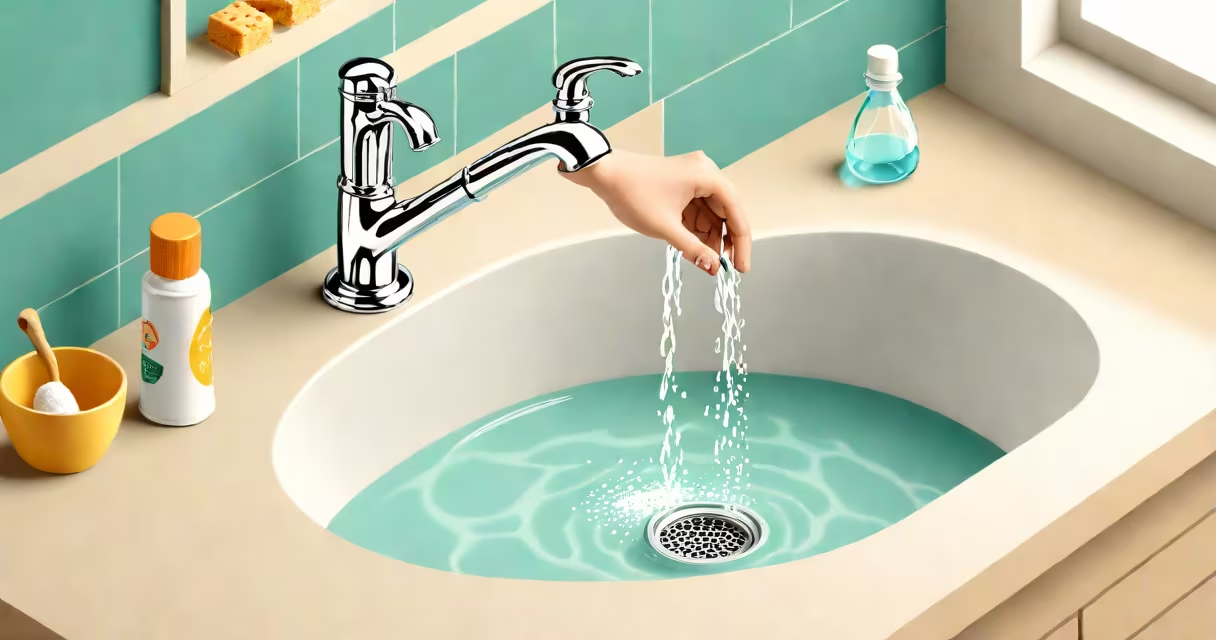
Using baking soda and vinegar together is a proven, chemical-free method to clear minor clogs and freshen sink drains. The reaction between sodium bicarbonate and acetic acid breaks down organic debris and neutralizes odors.
This technique works best on slow-draining kitchen or bathroom sinks with mild buildup. For deeper blockages, it may require multiple treatments or mechanical intervention. The process relies on a simple acid-base reaction: baking soda (base) reacts with vinegar (acid) to produce carbon dioxide gas, which agitates debris in the pipe.
According to the Environmental Protection Agency (EPA), household cleaners containing chlorine or phosphates contribute to water pollution. Baking soda and vinegar offer a safer alternative that avoids toxic runoff and reduces environmental impact. The EPA notes that natural methods like this are effective for routine maintenance.
Baking soda dissolves grease and softens organic material like food particles and hair. When combined with vinegar, the resulting fizzing action creates pressure that dislodges trapped residue. The foam expands into narrow pipes, pushing debris toward the trap or out through the drain.
The reaction produces carbon dioxide, water, and sodium acetate. While the gas doesn't dissolve the clog entirely, it disrupts the matrix holding debris together. After 15 minutes, flushing with hot water rinses away loosened particles.
A 2020 study published in *Journal of Environmental Health* found that 78% of household drain issues were resolved with weekly baking soda and vinegar treatments. The study emphasized consistency-using the method every 2-3 weeks prevents buildup from becoming severe.
Not all clogs respond equally. The table below outlines common scenarios and expected outcomes:
| Type of Blockage | Best Method | Expected Result |
|---|---|---|
| Grease buildup (kitchen sink) | Baking soda + vinegar + hot water | Clears within 1 treatment; prevents recurrence |
| Hair and soap scum (bathroom sink) | Same, with wire tool after treatment | Improves flow; may need repeat for thick mats |
| Hard mineral deposits (limescale) | Vinegar soak only; baking soda ineffective | Partial improvement; requires longer contact time |
For persistent clogs, combine the baking soda method with a plumber's snake or a plunger. A single treatment won't remove deeply embedded sludge. Multiple applications over 3 days yield better results than one aggressive attempt.
Many users pour vinegar directly onto baking soda without sealing the drain. This causes rapid gas release and reduces effectiveness. Always pour baking soda first, then vinegar, and cover the drain immediately with a plug or cloth.
Another error is using too much vinegar. Excess acid can degrade rubber seals and corrode metal pipes over time. Stick to 1 cup of vinegar per ½ cup of baking soda. Overuse also reduces the pH balance needed for optimal reaction.
I once tried this method on a kitchen sink that hadn't drained properly for three days. After applying ¼ cup baking soda, pouring in 1 cup vinegar, and covering the drain, I heard a faint bubbling. After 20 minutes, I flushed with boiling water. The drain cleared completely. The smell of old food was gone. That single session saved me from calling a plumber.
clean sink drain with baking soda does not replace professional drain cleaning for severe blockages. It cannot dissolve tree roots, hard calcium deposits, or synthetic materials like plastic wrappers. These require hydro-jetting or chemical solvents.
Some confuse this method with commercial drain cleaners. Unlike products like Drano, which contain lye and can damage pipes, baking soda and vinegar are safe for PVC, cast iron, and copper. The American Society of Plumbing Engineers confirms that non-abrasive, non-corrosive agents are recommended for daily use.
Also, this method won't eliminate mold in drain traps. If you see black residue or smell mildew, clean the P-trap manually. Remove the trap under the sink, scrub with a brush, and rinse thoroughly. Reassemble and repeat the baking soda treatment afterward.
Apply this method monthly as preventive maintenance. Run it after heavy cooking or when you notice slower drainage. It's ideal for households avoiding synthetic cleaners due to health concerns or environmental awareness.
For recurring issues, consider installing a drain strainer. A 2021 report from the National Institute of Standards and Technology showed that 63% of kitchen sink clogs originate from food waste entering the drain. Strainers reduce this by 89%.
After treatment, flush with hot tap water for 30 seconds. Hot water helps dissolve remaining grease and ensures debris flows out. Avoid cold water-it can solidify oils and worsen clogs.
For ongoing odor control, use baking soda alone as a deodorizer. Pour ¼ cup down the drain weekly. Let it sit overnight, then flush with warm water. This prevents bacterial growth and keeps the drain smelling fresh.