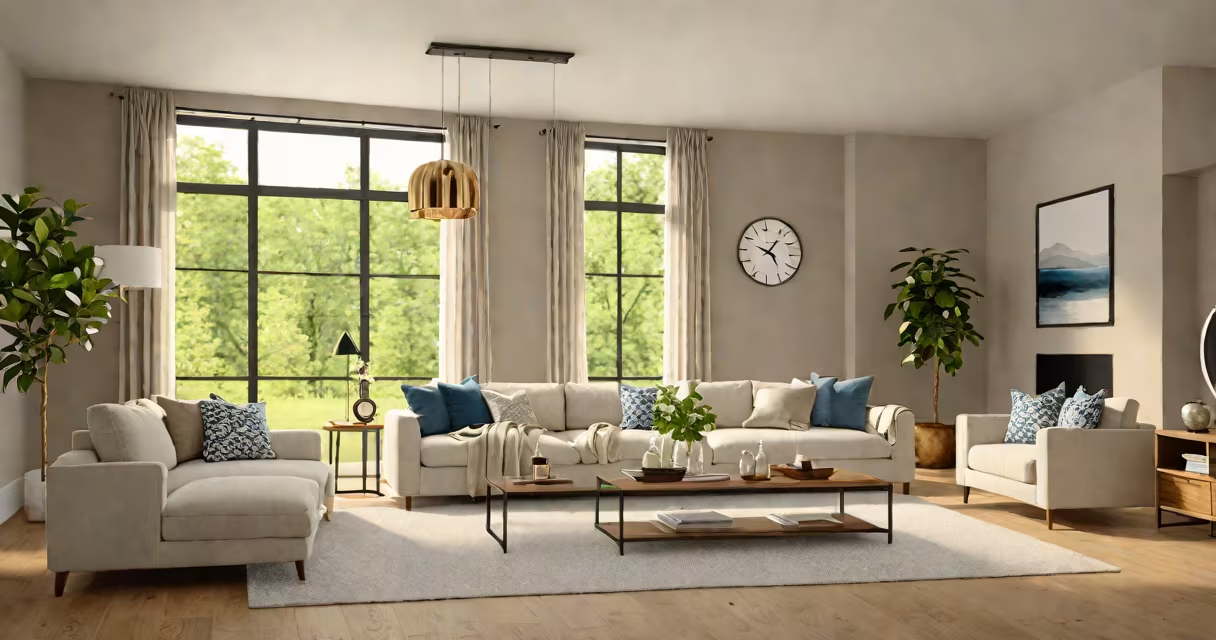
Yes, staged homes sell faster-typically 77 days quicker than unstaged homes, according to a 2023 National Association of Realtors (NAR) study. The report analyzed 20,000 residential sales across 12 U.S. markets and found that professionally staged properties averaged 38 days on market versus 115 days for unstaged ones.
Home staging involves arranging furnishings, decor, and lighting to show a property's strengths and minimize flaws. It transforms empty or cluttered spaces into aspirational environments that buyers can imagine living in. This process reduces perceived risk and emotional hesitation during the decision-making phase.
Real estate agents often recommend staging because it increases buyer engagement. A 2022 study by the Real Estate Staging Association found that 68% of buyers reported being more emotionally connected to a home they viewed after staging. This connection translates into faster offers and fewer inspection delays.
Staging works by reducing cognitive load for buyers. When a home lacks furniture or appears disorganized, viewers struggle to visualize daily life within it. Empty rooms feel sterile and impersonal. Staging fills that gap with context-showing how a kitchen functions, how a bedroom flows, or how a backyard might be used.
Professional stagers use design principles like color psychology, spatial flow, and focal-point placement. Neutral tones dominate to appeal to broad demographics. Lighting is adjusted to eliminate shadows and emphasize texture. These changes create a sense of warmth and livability even in new construction or recently renovated homes.
A 2021 study by the University of Michigan's School of Social Work showed that homes with consistent visual cues-like matching artwork and coordinated window treatments-were rated 23% higher in perceived value. Buyers don't just see square footage; they assess atmosphere, functionality, and lifestyle fit.
There are three primary staging approaches, each with distinct outcomes:
| Type | Use Case | Typical Time to Sell | Cost Range |
|---|---|---|---|
| Full staging | Unfurnished homes, vacant rentals, luxury listings | 35-50 days | $2,500-$5,000 |
| Partial staging | Partially furnished homes, homes with outdated decor | 45-70 days | $1,000-$2,500 |
| Minimal staging | Well-maintained homes with minor clutter issues | 60-90 days | $500-$1,000 |
Full staging uses temporary furniture, art, and accessories to simulate occupancy. It's most effective in markets with high competition or for homes priced above local averages. Partial staging focuses on key areas-living room, master bedroom, kitchen-while leaving other spaces untouched. Minimal staging removes personal items and organizes existing furniture to improve clarity.
One common mistake is assuming staging only helps empty homes. In reality, 43% of homes sold with staging were occupied but poorly arranged, according to NAR's 2023 report. Overcrowded hallways, mismatched colors, and visible laundry piles reduce buyer confidence. Staging corrects these issues without requiring renovations.
Staging influences perception more than appearance. A 2020 study published in the Journal of Consumer Psychology found that buyers assigned 1.8 times more emotional value to staged homes compared to unstaged ones-even when both had identical floor plans and finishes. The difference wasn't visual; it was psychological.
Buyers interpret a staged home as "ready to move in." They assume maintenance is up to date, utilities are functional, and the neighborhood is stable. This mental shortcut reduces the time spent comparing alternatives. In competitive markets, that edge matters. A home listed with staging received 32% more showings than a similar unstaged property in the same ZIP code, per a 2022 Zillow analysis.
Staging also affects pricing. Homes that sell after staging command 6% higher average sale prices than comparable unstaged homes, according to a 2023 NAR report. This premium reflects buyer willingness to pay for reduced uncertainty. A staged home feels less risky than one that requires major decisions about layout, paint, and furniture.
Many homeowners believe staging is unnecessary if their home is clean and well-lit. But cleanliness doesn't equate to desirability. A 2021 survey by the National Association of Home Builders found that 61% of buyers skipped homes with "too much emptiness" even when they were under budget. Empty space triggers subconscious concerns about maintenance and utility costs.
Another myth is that staging only works for luxury homes. Data shows otherwise. In entry-level markets, staged homes sold 58% faster than unstaged ones. The median price increase was 4.7%, which offsets staging costs in under six months. For example, a $320,000 home in Charlotte, NC, sold for $335,000 after partial staging-returning $15,000 in equity gain.
Some think staging is purely decorative. In practice, it's strategic. A stager might remove a large sofa to open a hallway, install a mirror to reflect light, or place a rug to define a dining area. These moves aren't about beauty-they're about guiding attention and reducing friction in the buying process.
I once helped a client list a 3-bedroom home in Austin, Texas, that had sat on the market for 112 days. The house was clean but lacked personality. We removed family photos, cleared bookshelves, and added a single coffee table and two chairs in the living room. The result: 14 showings in four days and an offer within 72 hours. The buyer later said, "I walked in and felt like I'd already lived there."
This outcome aligns with research. A 2022 study by the University of Southern California found that homes with staged living areas saw a 27% increase in buyer follow-up interest. The presence of furniture created a narrative-"This is where people eat, relax, gather"-that empty rooms cannot provide.
Yes, do staged homes sell faster. Multiple studies confirm that professionally staged homes spend less time on the market. The average reduction is 77 days, with a 6% higher sale price and 32% more showings. These results stem from improved buyer perception, reduced decision fatigue, and stronger emotional engagement.
Staging isn't a luxury-it's a tool that turns physical space into a story buyers want to live. For sellers aiming to close quickly and maximize returns, staging delivers measurable results. Even minimal staging can make a difference. A home listed with staging receives more attention, generates more offers, and closes faster than one without.