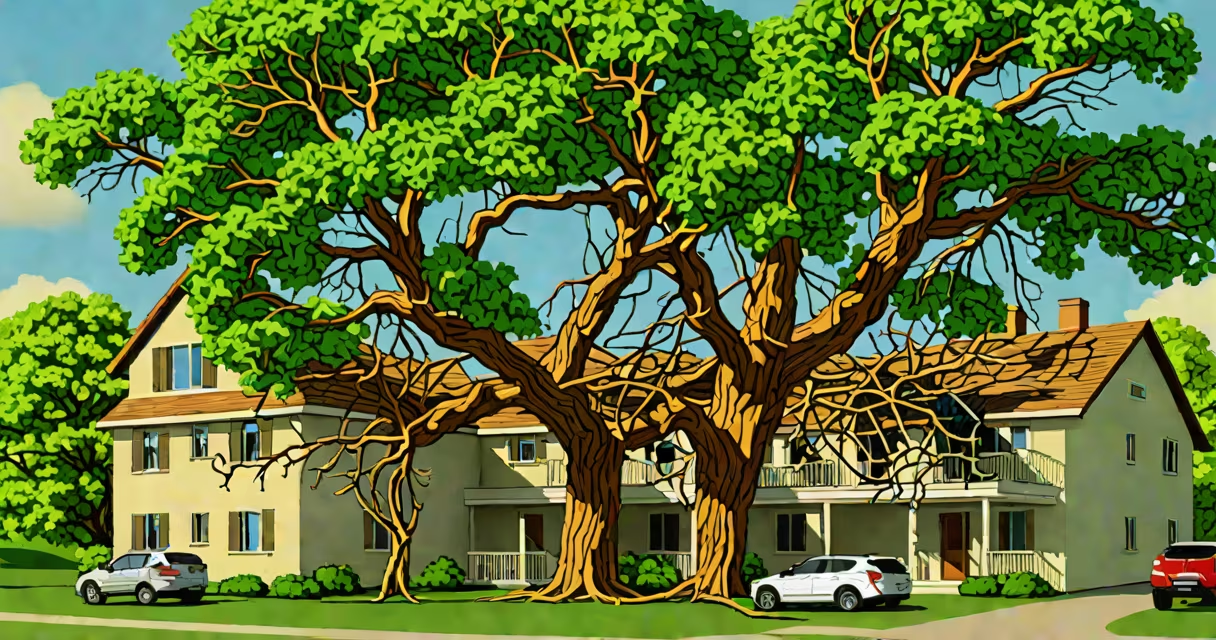
House insurance typically covers damage caused by fallen trees if the tree damages your home, fence, or other insured structures, but it usually doesn't pay for removing the tree itself unless it's part of a covered claim.
Fallen trees are a common consequence of storms, high winds, or weakened roots. When a tree crashes into your roof, garage, or driveway, most standard homeowners policies cover the repair costs under the dwelling coverage section. This includes structural repairs, replacement of damaged siding, and fixing broken gutters or decks.
The key factor is whether the tree caused direct physical damage to an insured structure. If a tree fell on your car, collision or complete auto insurance applies-not homeowners insurance. If the tree only blocked a sidewalk or damaged landscaping, those costs are generally not covered unless you have additional endorsements.
Homeowners insurance uses named perils coverage, meaning only specific events listed in your policy trigger payouts. A fallen tree due to wind or ice is typically included under "windstorm" or "storm-related damage."
If a tree falls during a storm and cracks your roof, your insurer will assess the damage. They'll then pay for repairs up to your policy's dwelling limit minus your deductible. For example, if your roof repair costs $8,000 and your deductible is $1,000, you'd receive $7,000 from the insurer.
Some policies also cover temporary living expenses if the damage makes your home uninhabitable. This benefit kicks in after a storm renders your home unsafe to live in, such as when a tree collapses a bedroom wall.
Most standard policies do not cover the cost of removing a fallen tree-even if it damaged your property. Tree removal is considered a maintenance task, not a repair. You're responsible for clearing debris, even if it's on your property.
For example, if a tree lands on your backyard deck and causes structural damage, your policy will cover the deck repair. But if the tree is still standing and blocking access, or if it's lying across your yard, you must hire a tree service and pay out of pocket.
Some insurers offer optional endorsements or riders that include tree removal. These are often part of "additional living expense" or "property protection" add-ons. Without them, removal remains your responsibility.
There are three main types of homeowners insurance policies: HO-1, HO-2, and HO-3. HO-3 is the most common and offers broad form coverage, which includes protection against fallen trees from wind or storms.
| Policy Type | Typical Coverage for Fallen Trees | Tree Removal Included? |
|---|---|---|
| HO-1 (Basic) | Limited to specified perils (fire, lightning, wind) | No |
| HO-2 (Broad) | Covers 16 named perils including wind and ice | No |
| HO-3 (Special) | Complete protection for most perils | Only if damage occurred; removal not automatic |
A common mistake is assuming that if a tree fell on your property, the insurer will send a crew to cut it up. That's not how it works. The insurer evaluates damage, approves repairs, and pays for materials and labor-but not for debris clearance.
Another misconception is that insurance covers trees that fall on neighbors' property. If your tree damages a neighbor's shed, their insurance may cover the repair, but your policy won't automatically pay for it unless you're found legally liable. Liability coverage applies only if you're at fault-for example, if the tree was dead and you ignored signs of decay.
In 2022, a severe windstorm hit parts of New Jersey. A mature oak tree fell onto a homeowner's roof, breaking several shingles and collapsing part of the attic ceiling. The homeowner filed a claim. Their HO-3 policy covered $12,500 in repair costs after a $1,500 deductible was applied.
However, the tree remained in place for two weeks while the insurance adjuster inspected the damage. The homeowner paid $950 out of pocket to have the tree removed and the yard cleaned. The insurer did not cover removal because it wasn't part of the structural repair.
I've seen this scenario firsthand. A friend in Pennsylvania had a similar event. His policy covered the roof repair, but he had to hire a certified arborist to assess the tree's health and remove it. He later learned that his insurer would have reimbursed him for removal if he'd added a $25 annual rider for "tree removal liability."
Insurance doesn't cover trees that fall due to neglect. If a tree was visibly diseased or leaning and you didn't act, your claim may be denied. Insurers investigate root cause. If evidence shows you ignored warning signs-like cracked bark or visible rot-the claim could be rejected.
Also, fallen trees that damage only landscaping, sidewalks, or driveways are rarely covered. Most policies exclude damage to lawns, flower beds, or paved surfaces unless they're part of a larger structure. For example, if a tree topples and destroys a stone patio attached to your home, that may be covered. But a crushed garden bed isn't.
Finally, trees that fall on vehicles are not covered under homeowners insurance. Auto insurance's complete coverage handles vehicle damage from falling objects. Homeowners policies don't extend to cars.
One overlooked detail: many policies define "tree" as part of the land, not a separate asset. So if a tree falls and damages your property, the insurer treats the tree as part of the field. That means you can't claim the tree's value-it's not a personal property loss.
Another point: if a tree fell on your home during a storm, but the storm wasn't declared a "natural disaster" by FEMA, you still qualify for coverage. Natural disaster declarations affect federal aid, not private insurance. Your claim stands regardless.
According to the National Association of Insurance Commissioners (NAIC), 78% of homeowners insurance claims involving fallen trees were approved when damage was to a covered structure. However, only 32% included removal costs. The NAIC emphasizes that removal is not a standard benefit, even when damage is covered.
Some insurers require you to report tree damage within 72 hours. Delayed reporting can lead to claim denial, even if the damage is valid. Always notify your provider quickly after an incident.
Always review your policy's exclusions. Check the "exclusions" section for language like "damage to trees, shrubs, or plants" or "removal of debris." If you're unsure, ask your agent for clarification.
Understanding what "does house insurance cover fallen trees" means knowing the difference between structural damage and cleanup. The answer isn't yes or no-it's "yes, if it damages a covered structure, but no, not for removal."
Knowing your policy limits and exclusions prevents surprises. Always confirm coverage details before a storm hits.