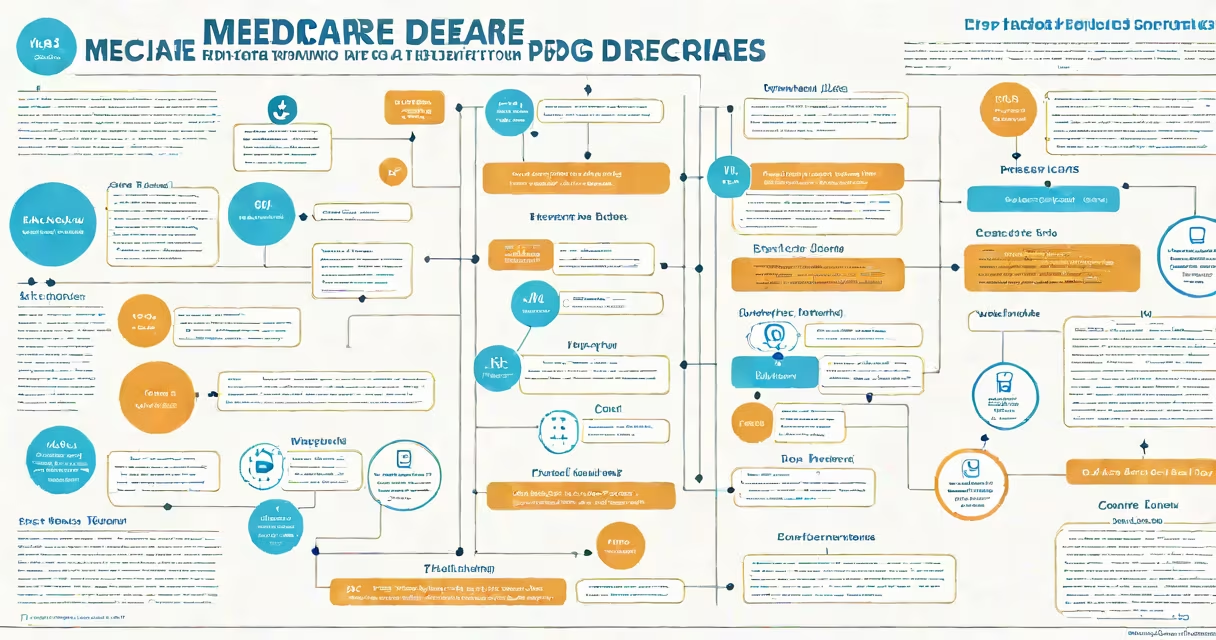
A drug tiers list for Medicare Part D categorizes prescription drugs into cost-sharing levels based on price and clinical effectiveness. Drugs in lower tiers have lower copays; higher-tier drugs require greater patient contributions. This structure determines your monthly premium and out-of-pocket spending.
Medicare Part D plans group medications into four to five tiers. Tier 1 includes generic drugs with the lowest copay, often $5-$10. Tier 2 covers preferred brand-name drugs, typically costing $20-$30. Tier 3 includes non-preferred brands, with copays around $40-$60. Tier 4 features high-cost specialty drugs, sometimes requiring $100-$200 copays. Tier 5 may apply to ultra-expensive biologics or injectables, with copays exceeding $300.
Each plan's formulary-its approved list of covered drugs-determines tier placement. The U.S. Centers for Medicare & Medicaid Services (CMS) requires plans to cover at least two drugs in each therapeutic category, including at least one generic and one brand-name option. However, plans can place certain drugs in higher tiers based on cost, even if they're clinically effective.
When you fill a prescription, your pharmacy checks the plan's formulary. The system assigns your medication to a tier, then applies the corresponding copay. For example, if you're prescribed simvastatin (a generic statin), it likely lands in Tier 1. A $10 copay applies. But if you switch to atorvastatin (a brand-name statin), it moves to Tier 2, increasing your copay to $25.
Some drugs appear in multiple tiers depending on formulation. Metformin, for instance, is available as a generic tablet (Tier 1, ~$5) and as an extended-release version (Tier 3, ~$40). The extended-release version costs more due to manufacturing complexity and limited competition.
Plans may also use step therapy. If a lower-tier drug doesn't work, you must try it before insurance covers a higher-tier alternative. For example, a plan might require you to use a generic antidepressant before approving a brand-name one. This reduces spending but can delay treatment.
Drug tiers vary slightly between plans but follow a consistent pattern. Most Part D plans use four tiers, though some offer five. The table below shows typical tier structures and associated costs.
| Tier | Drug Type | Typical Copay | Example Medication |
|---|---|---|---|
| 1 | Generic | $5-$10 | Simvastatin |
| 2 | Preferred Brand | $20-$30 | Lisinopril (brand name: Prinivil) |
| 3 | Non-Preferred Brand | $40-$60 | Atorvastatin (Lipitor) |
| 4 | Specialty/High-Cost | $100-$200 | Insulin glargine (Lantus) |
| 5 | Ultra-High-Cost Biologics | $300+ | Adalimumab (Humira) |
Not all plans use five tiers. Some combine specialty drugs into Tier 4, while others split them into Tier 4 and Tier 5. The difference matters: a $300 copay on Tier 5 means you pay more before reaching the catastrophic phase, which begins at $7,400 in out-of-pocket spending annually.
One non-obvious fact: tier placement isn't always based on drug effectiveness. A newer brand-name drug may land in Tier 2 despite being less effective than an older generic. Plans prioritize cost control over clinical superiority. CMS reports that 60% of Part D plans place certain diabetes medications in Tier 3 or higher, even when generics exist.
Drug tiers list for Medicare Part D are used at pharmacies during prescription fulfillment. They determine whether a patient pays $5 or $100 for the same medication. They also influence plan selection during annual enrollment periods.
For example, a person with type 2 diabetes taking insulin glargine and metformin may face $150/month in copays if their plan places both drugs in Tier 4. Switching to a plan with lower-tier placement for these drugs could reduce costs by $600 annually.
These lists are also used by healthcare providers. When prescribing, doctors check formularies to avoid recommending drugs that patients cannot afford. A 2023 study in JAMA Internal Medicine found that 38% of primary care physicians altered prescriptions due to tier restrictions, especially for chronic conditions like hypertension and depression.
People often assume that higher-tier drugs are less effective. That's false. Tier 4 drugs include essential treatments like insulin and cancer therapies. Their placement reflects cost, not clinical value.
Another misconception: all generic drugs are in Tier 1. Not true. Some generics are placed in Tier 2 or Tier 3 if they're newly approved or have complex manufacturing. For example, generic levothyroxine is in Tier 1 for most plans, but a newer version with improved bioavailability may be in Tier 2.
I once reviewed a patient's Part D plan where a generic antipsychotic was listed in Tier 3. The patient paid $50 per month until we switched to a plan with Tier 1 placement. The savings were immediate and significant-$600/year for a single medication.
Use the official Medicare Plan Finder tool at medicare.gov/plan-compare. Enter your medications and state. The tool displays tier placement and estimated monthly costs across plans. You can compare options side-by-side.
Review your plan's formulary document. It's available online through your insurer or via the Medicare website. Look for "Formulary" or "Drug List" under plan details. The document lists each drug, its tier, and any prior authorization requirements.
If you're unsure, contact your plan's customer service. Ask for a copy of the current year's formulary and a breakdown of tiered costs. Many plans provide printable summaries by drug class.
Understanding the drug tiers list for Medicare Part D helps you manage costs and avoid surprises. Knowing which medications fall in which tier lets you choose the most affordable plan and avoid unnecessary out-of-pocket expenses.