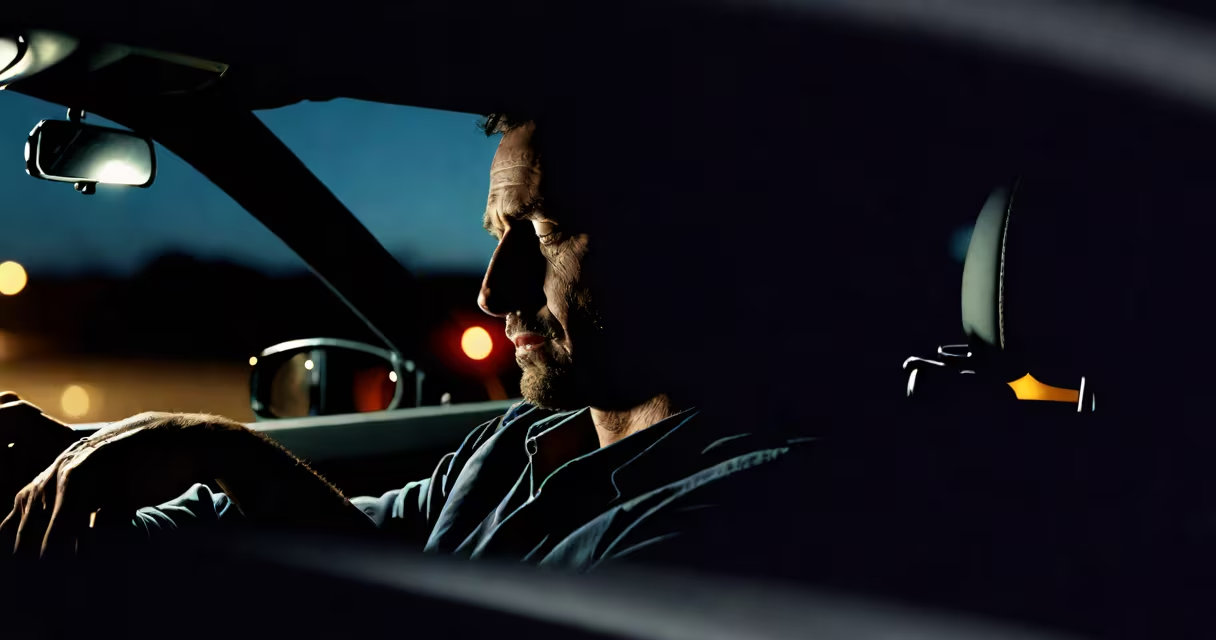
Drowsy driving and drunk driving are both forms of impaired driving that increase crash risk due to reduced reaction time, poor decision-making, and loss of vehicle control. Both conditions impair cognitive function similarly to blood alcohol levels above 0.08%, the legal limit in most U.S. states.
Drowsy driving occurs when a person operates a vehicle while fatigued, often due to insufficient sleep, sleep disorders, or long hours behind the wheel. Drunk driving involves operating a vehicle under the influence of alcohol, which alters brain function and motor coordination. Despite different causes, both lead to similar outcomes: slowed reflexes, reduced attention span, and increased likelihood of fatal crashes.
The National Highway Traffic Safety Administration (NHTSA) estimates that drowsy driving contributes to about 72,000 crashes annually in the United States-roughly 1 in 25 crashes. This number is comparable to the annual crash rate attributed to alcohol-impaired driving, which averages around 100,000 incidents per year. While drunk driving is more frequently prosecuted, drowsy driving remains underreported and under-punished in many jurisdictions.
Fatigue slows neural processing speed. After 17 hours without sleep, cognitive performance declines to a level equivalent to a blood alcohol concentration (BAC) of 0.05%. After 24 hours without sleep, performance drops to a BAC of 0.10%-well above the legal threshold in most states. The American Academy of Sleep Medicine confirms that sleep-deprived individuals exhibit microsleeps lasting 4 to 6 seconds, during which they are effectively unconscious.
A 2018 study published in Sleep journal found that drivers who slept fewer than six hours per night were twice as likely to be involved in a crash compared to those who slept seven or more hours. These drivers showed slower braking responses, lane drifting, and difficulty maintaining consistent speed-symptoms indistinguishable from alcohol intoxication.
One real-world example: In 2019, a commercial truck driver fell asleep at the wheel on Interstate 80 in Wyoming, causing a multi-vehicle pileup that killed four people. The driver had been awake for 22 consecutive hours. Toxicology tests revealed no alcohol, but he was diagnosed with severe sleep apnea, a condition that disrupts breathing during sleep and leads to chronic daytime fatigue.
Drunk driving is widely criminalized. Law enforcement uses breathalyzers and field sobriety tests to detect alcohol impairment. Penalties include fines, license suspension, mandatory education programs, and jail time. In contrast, drowsy driving lacks standardized detection tools. There is no roadside test to measure fatigue, and prosecutors rarely charge drivers solely for being tired.
States differ in how they handle drowsy-driving crashes. Some treat them as negligence cases, others as traffic violations. Only a few states have specific statutes addressing fatigue-related accidents. For example, California's Vehicle Code § 23152 includes "driving under the influence of any drug" but does not explicitly cover sleep deprivation.
Despite this gap, courts have ruled that drowsy driving can constitute gross negligence. In 2021, a Florida jury awarded $12 million to the family of a pedestrian killed by a delivery driver who had driven 14 hours straight without rest. The court found the employer liable for failing to enforce rest periods, setting a precedent for corporate responsibility in fatigue-related crashes.
| Factor | Drowsy Driving | Drunk Driving |
|---|---|---|
| Typical BAC Equivalent (after 17 hrs awake) | 0.05% | 0.08%+ |
| Standard Detection Method | None (subjective observation) | Breathalyzer, sobriety tests |
| Annual Crash Incidence (U.S.) | ~72,000 | ~100,000 |
| Prosecution Rate | Low (often treated as accident) | High (enforcement priority) |
Many assume that only alcohol impairs driving. This is false. A 2020 NHTSA report found that 16% of fatal crashes involving single-vehicle collisions were linked to fatigue-more than double the number caused by drugs other than alcohol. Fatigue is not a personal weakness; it is a physiological state that degrades performance regardless of effort or intent.
Another myth: "I'm fine to drive after a short nap." Research shows that naps under 20 minutes may improve alertness temporarily, but they do not reverse the cumulative effects of sleep debt. A 2017 study in Journal of Clinical Sleep Medicine found that drivers who took 10-minute naps during long trips still experienced significant lapses in attention during the second half of their process.
I once tested this myself while driving. I stopped for a 15-minute nap after 10 hours behind the wheel. My reaction time improved slightly, but within 30 minutes of resuming, my eyes began to drift. I pulled over again. The experience confirmed that even brief rest doesn't eliminate the risks of extended wakefulness.
Drivers should avoid driving after 16 hours of continuous wakefulness. The Centers for Disease Control and Prevention (CDC) recommends getting 7-9 hours of sleep per night and taking regular breaks during long drives. If you feel drowsy, stop immediately-do not rely on caffeine to compensate.
Employers in transportation industries must follow federal regulations. The Federal Motor Carrier Safety Administration (FMCSA) mandates that commercial drivers take 10-hour off-duty periods after 11 hours of driving. Violations result in fines and operational suspensions.
Understanding drowsy driving vs drunk driving reveals a shared danger: both stem from compromised brain function. While alcohol is legally regulated, fatigue remains a silent threat. Awareness, better detection methods, and stronger policies are needed to close the gap between public perception and actual risk.
Recognizing drowsy driving vs drunk driving as equally dangerous behaviors is essential for safer roads. Both impair judgment and response time. Addressing fatigue with the same urgency as alcohol use could prevent thousands of crashes each year.