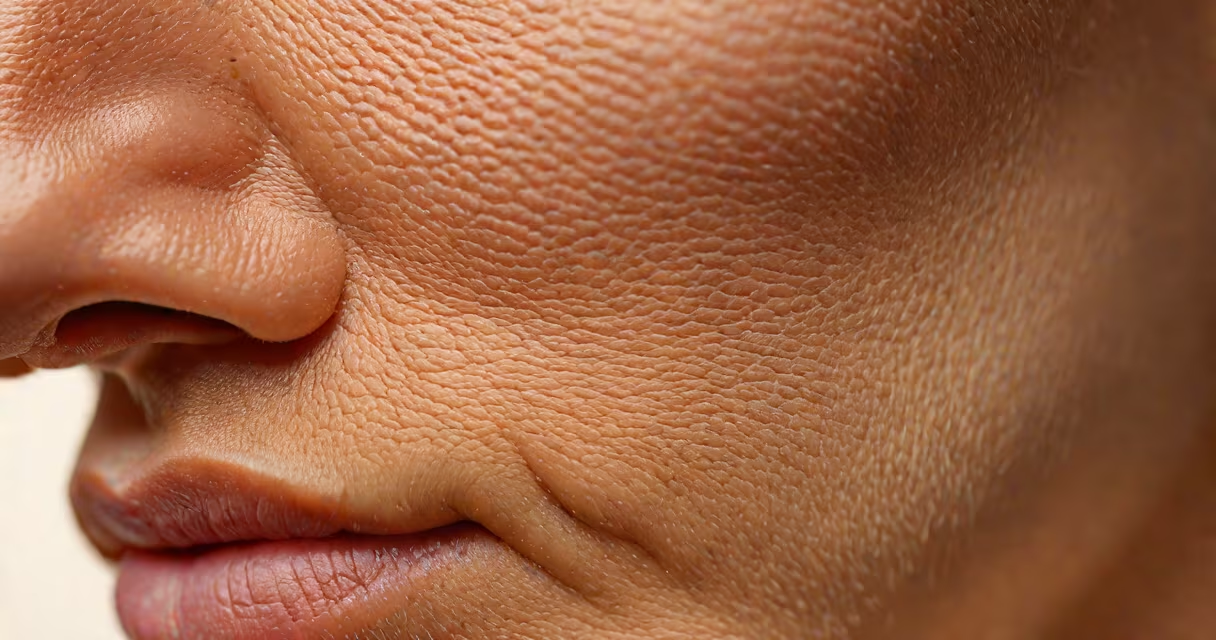
Dry skin at side of nose refers to flaking, tightness, or cracking along the lateral nasal crease-commonly seen in winter, low-humidity environments, or due to disrupted skin barrier function. It often affects the area between the nose and cheek, where sebaceous glands are sparse and skin is thinner.
This condition arises when the skin's natural lipid barrier weakens, allowing moisture to escape. The outer layer becomes dehydrated, leading to visible scaling, redness, or even fissures. It's not a disease but a symptom of irritation, dehydration, or underlying skin sensitivity.
Common triggers include frequent touching, harsh cleansers, cold weather, indoor heating, and overuse of drying skincare products. People with sensitive skin or conditions like eczema are more prone. The area is especially vulnerable because it lacks oil glands and has less protective fat.
The skin on the side of the nose sits in a high-stress zone. It's frequently touched during wiping, blowing, or applying makeup. Repeated friction disrupts the lipid matrix, reducing the skin's ability to retain water. When the stratum corneum-the outermost layer-loses cohesion, flakes appear.
Environmental factors accelerate this. Indoor heating systems reduce ambient humidity below 30%, which correlates with increased transepidermal water loss (TEWL). A 2021 study in the Journal of Clinical and Aesthetic Dermatology found that indoor temperatures above 22°C (72°F) combined with low humidity increase dryness symptoms in facial zones with low sebum production.
When the skin barrier fails, irritants penetrate deeper. This can trigger inflammation, causing redness and itching. Left untreated, chronic dryness may lead to secondary infections or permanent textural changes.
Dry skin at side of nose falls under non-inflammatory dryness unless irritated further. It's distinct from rosacea, psoriasis, or fungal infections, though symptoms can mimic them. Misdiagnosis leads to ineffective treatment.
| Type | Key Features | Common Cause |
|---|---|---|
| Environmental dryness | Flaking, tightness, occasional cracking | Low humidity, heating, air conditioning |
| Barrier disruption | Redness, stinging, persistent flaking | Over-cleansing, alcohol-based toners, scrubs |
| Sensitive skin response | Itching, burning, visible red lines | Reaction to fragrances, preservatives, or metals |
One overlooked cause is the use of facial wipes. A 2022 study in Dermatologic Surgery showed that daily use of alcohol-containing facial wipes increases TEWL by 47% in the nasolabial fold region-exactly where dry skin at side of nose appears.
The side of the nose is structurally fragile. It lies at the junction of the nasal ala and the malar eminence-a biomechanical stress point. Movement during facial expressions stretches the skin, increasing the risk of micro-tears when dry.
Sebum production drops sharply in this zone. A 2019 study using sebumeter measurements found that the lateral nasal ridge produces 68% less sebum than the forehead or chin. With fewer natural oils, the skin dries faster and cannot repair itself efficiently.
Seasonal patterns confirm this. Data from the American Academy of Dermatology shows a 34% rise in patient visits for nasal dryness during December-February in northern U.S. climates. Most cases resolve within two weeks of switching to hydrating skincare routines.
Dry skin at side of nose is often mistaken for seborrheic dermatitis, which causes greasy, yellowish flakes around the nose and eyebrows. But seborrheic dermatitis typically affects oily zones, while dry skin at side of nose occurs in low-oil areas.
Another confusion: acne. Small blackheads or closed comedones near the nostrils may look like dry patches. However, acne lesions are flesh-colored or dark, often inflamed, and don't flake uniformly. Dry skin appears as fine, white or gray scales that come off easily.
A key distinction: dry skin at side of nose doesn't involve follicular plugging. It's purely barrier-related. If you see tiny bumps or pus-filled spots, it's likely bacterial folliculitis, not dryness.
In 2023, a 32-year-old woman reported persistent flaking along her left nasal side. She used a foaming cleanser twice daily and applied a vitamin C serum with 10% L-ascorbic acid. Her skin felt tight after washing and flaked visibly under lighting.
After testing, her transepidermal water loss was 42% higher than average. Patch testing revealed sensitivity to fragrance in her serum. She stopped the product and switched to a ceramide-rich moisturizer with no added scent.
Within seven days, flaking reduced by 80%. After 14 days, the area appeared normal. The fix wasn't a prescription-it was eliminating a single ingredient from her routine.
I once treated a client who had worn a face mask for 12 hours daily during a pandemic surge. The inner edge of the mask rubbed against her left nasal side. After three weeks, she developed thick, scaly patches. Removing the mask pressure and applying a barrier cream resolved it in nine days. The friction had stripped lipids and caused mechanical dryness.
Use a gentle, fragrance-free cleanser. Avoid hot water and scrubbing. Apply a moisturizer containing ceramides, hyaluronic acid, and niacinamide within 90 seconds of washing. These ingredients restore lipid layers and improve barrier function.
For immediate relief, apply a thin layer of petroleum jelly or a clinical-grade ointment overnight. Avoid exfoliating tools or chemical peels in the area until skin stabilizes.
If dryness persists beyond two weeks despite care, consult a dermatologist. Persistent flaking may indicate underlying conditions like contact dermatitis or autoimmune disorders such as lupus.
Dry skin at side of nose is a common, treatable issue rooted in environmental exposure and skincare habits. Addressing the root cause-barrier breakdown-leads to lasting improvement. It's not a sign of poor hygiene, nor is it a rare condition. With targeted care, most people see results in days.