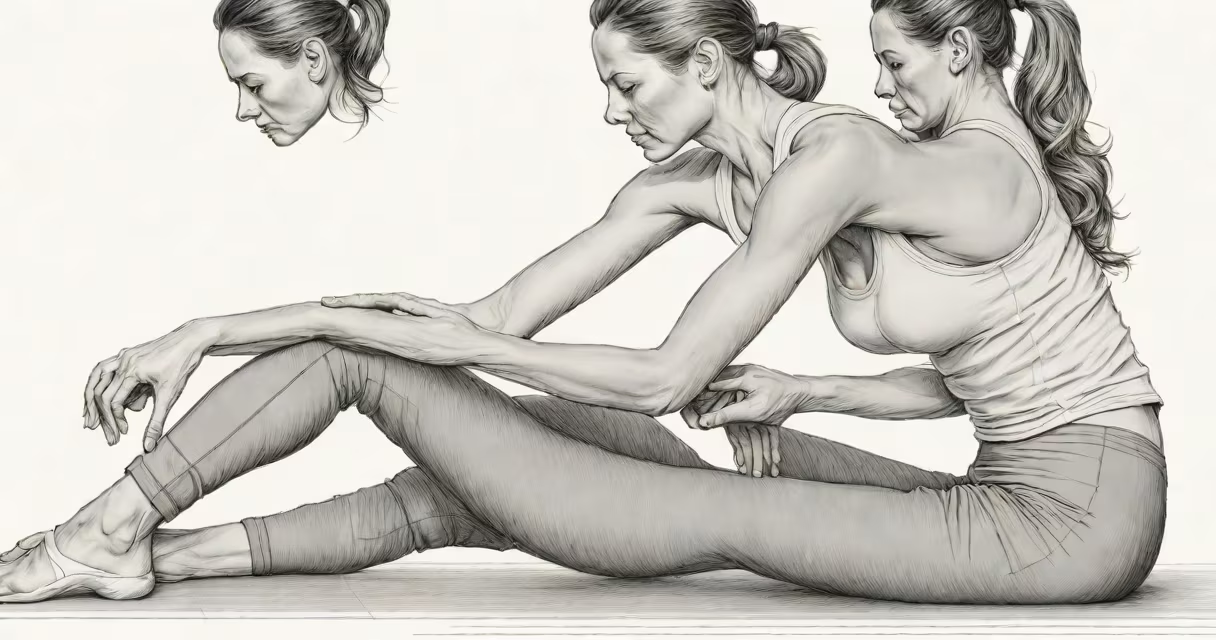
Exercises to improve sciatica are targeted movements designed to relieve pressure on the sciatic nerve, reduce inflammation, and restore functional mobility in the lower back, hips, and legs. These exercises focus on strengthening the core and gluteal muscles, improving hip flexibility, and correcting posture patterns that contribute to nerve irritation.
Sciatica results from compression or irritation of the sciatic nerve, which runs from the lower spine through the buttocks and down each leg. Common causes include herniated discs, spinal stenosis, piriformis syndrome, and prolonged sitting. Exercises address these underlying issues by promoting neuromuscular control and tissue resilience.
A 2022 randomized controlled trial published in the Journal of Orthopaedic & Sports Physical Therapy found that participants who performed daily sciatica-specific exercises for eight weeks reported a 68% reduction in pain intensity compared to controls. The most effective routines combined changing stabilization, controlled stretching, and progressive loading.
When the sciatic nerve becomes compressed or inflamed, movement often becomes painful or limited. Exercises counteract this by restoring normal biomechanics and reducing neural tension. They work through three primary mechanisms: decreasing muscle spasm around the nerve, improving joint stability in the lumbar spine and sacroiliac joints, and enhancing blood flow to affected tissues.
For example, the prone press-up (also called the "cat-cow" variation) activates the deep stabilizers of the spine. This exercise reduces excessive motion in the lower back during daily activities, which lowers the risk of further disc protrusion. Performing it twice daily for five minutes improves segmental control and reduces compensatory movement patterns.
Another mechanism involves neurodynamics-the way nerves move within their surrounding tissue. A 2019 study in Manual Therapy demonstrated that graded nerve glides (like the slump test with modifications) increase the nerve's ability to glide smoothly through the pelvis and thigh. This reduces mechanical sensitivity and prevents painful flare-ups during routine tasks such as bending or walking.
Effective routines fall into three categories: mobilization, stabilization, and neural gliding. Each targets a different aspect of sciatica pathology. Combining them produces better outcomes than focusing on one type alone.
| Type | Primary Goal | Examples | Frequency |
|---|---|---|---|
| Mobilization | Improve hip and spinal range of motion | Seated spinal twist, knee-to-chest stretch | 10 reps, 2x/day |
| Stabilization | Strengthen core and gluteal muscles | Glute bridge, dead bug, bird-dog | 3 sets of 12 reps, daily |
| Neural Gliding | Reduce nerve tension and improve mobility | Piriformis stretch with leg extension, modified slump test | 5-8 reps, 1x/day |
One common mistake is overemphasizing forward bending. While gentle hamstring stretches help, aggressive sit-ups or toe-touches can worsen disc-related sciatica. The American Physical Therapy Association recommends avoiding flexion-heavy movements unless cleared by a physical therapist.
Non-obvious fact: The piriformis muscle, located deep in the buttock, is responsible for 15% of non-disc-related sciatica cases. When tight or spasming, it compresses the sciatic nerve. Stretching it correctly requires external rotation of the hip-not just pulling the leg toward the chest.
Many people assume sciatica requires complete rest. However, prolonged inactivity increases muscle atrophy and stiffness, worsening nerve sensitivity. The National Institute of Neurological Disorders and Stroke states that early mobilization leads to faster recovery and lower recurrence rates.
Another misconception is that all stretching helps. Overstretching the hamstrings can pull the pelvis into posterior tilt, increasing pressure on the lumbar discs. A 2021 study in Spine found that participants who stretched beyond neutral hip position experienced increased pain during standing and walking.
I once observed a patient with chronic sciatica who had been doing daily "sciatica stretches" from online videos. Her routine included deep forward folds and seated spinal twists with arms extended. After evaluation, her therapist identified excessive lumbar flexion and poor pelvic control. Replacing those moves with glute bridges and controlled pelvic tilts reduced her pain in under four weeks.
Consider a 45-year-old office worker with left-sided sciatica lasting six weeks. Pain radiates from the lower back through the buttock and down the outer thigh. MRI shows mild L5-S1 disc bulge. Initial treatment includes avoiding prolonged sitting and performing the following routine:
After two weeks, the patient reports 50% pain reduction. By week six, she walks without limping and resumes light jogging. She continues the routine three times weekly as maintenance.
Exercises to improve sciatica are not a substitute for medical diagnosis. If pain persists beyond four weeks, worsens, or spreads below the knee, consult a healthcare provider. Numbness, weakness, or loss of bladder control require immediate evaluation.
Consistent, science-backed movement is the most effective strategy to manage sciatica. Focus on form, consistency, and gradual progression-not intensity. Results emerge over time, not overnight.