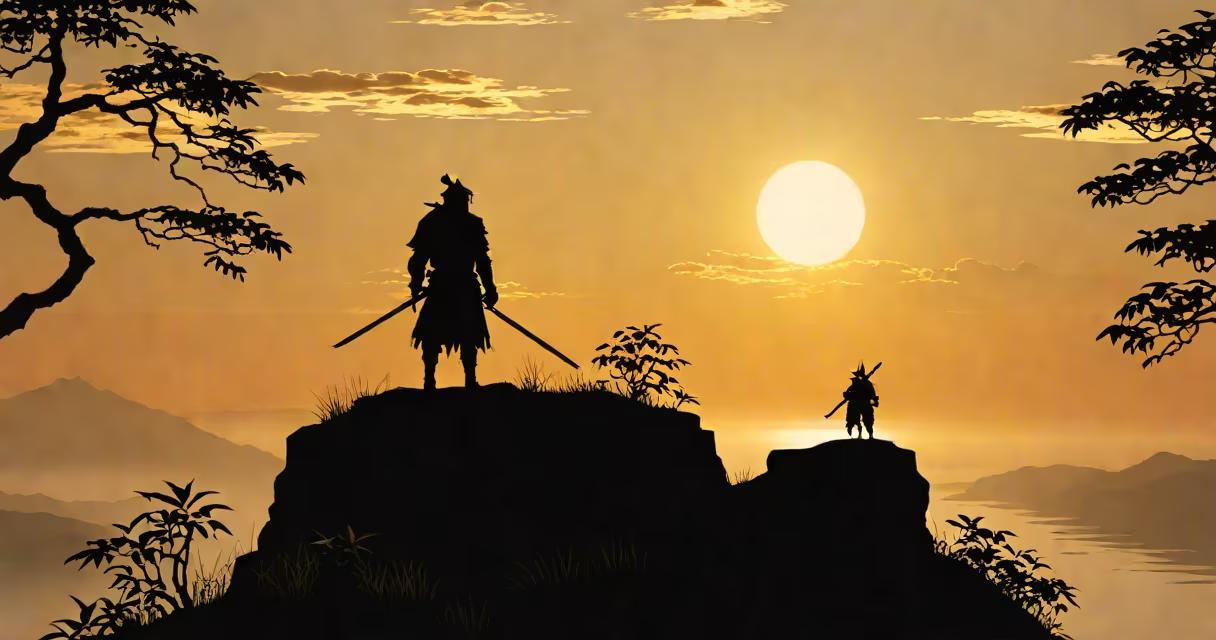
Ghost of Tsushima PS4 is a narrative-driven action role-playing game developed by Sucker Punch Productions and published by Sony Interactive Entertainment. Set in 1205 during the Mongol invasion of Tsushima Island, it follows Jin Sakai, a samurai who abandons his code of honor to become the "Ghost" and defend his homeland through stealth, guerrilla tactics, and supernatural-inspired abilities.
The game blends traditional samurai values with a shifting moral field. Players assume the role of Jin Sakai, a warrior trained in bushido-the way of the warrior-but forced to confront the limits of honor when faced with overwhelming odds. The story unfolds across a vast, living island shaped by seasonal changes, weather systems, and changing wildlife. Combat emphasizes timing, positioning, and mastery of weapons such as the katana, bow, and shuriken.
Ghost of Tsushima PS4 runs exclusively on PlayStation 4 hardware. It was released in July 2020 and received critical acclaim for its visual design, soundscapes, and emotional depth. The game features a 60-minute cutscene-free campaign, over 40 side missions, and multiple endings based on player choices. It won numerous awards, including Game of the Year at The Game Awards 2020.
Combat in Ghost of Tsushima PS4 centers on a blend of precision strikes, dodging, and environmental awareness. Players can enter "Focus Mode," which slows time to allow precise targeting during enemy attacks. This mechanic enables players to counter with a single well-timed strike, emphasizing skill over button mashing.
Progression occurs through skill trees unlocked via experience points earned from completing objectives. Players can specialize in stealth, archery, or close-quarters combat. For example, the "Shadow" tree enhances invisibility duration and movement speed during crouched traversal. The "Wind" tree improves bow accuracy and arrow damage, while the "Fury" tree increases melee damage and stamina recovery.
Environmental interaction plays a key role. Players can use wind patterns to carry smoke bombs, trigger avalanches, or lure enemies into traps. A notable feature is the ability to climb trees and leap onto rooftops or cliffs to gain tactical advantage. These mechanics create a fluid, responsive gameplay loop that rewards observation and planning.
Ghost of Tsushima PS4 offers three distinct playstyles, each tied to a different approach to conflict resolution:
| Playstyle | Core Focus | Key Abilities | Best For |
|---|---|---|---|
| Samurai Path | Honor-based confrontation | Perfect parry, sword combo finishers | Players seeking cinematic duels and direct challenges |
| Ghost Path | Stealth and sabotage | Smoke bombs, silent takedowns, camouflage | Players who prefer strategy and evasion |
| Hybrid Path | Adaptive combat | Combines stealth and melee, uses terrain creatively | Players balancing efficiency and immersion |
Each path affects how NPCs perceive Jin. Choosing the Ghost path reduces your reputation among local villagers, who may distrust or avoid you. Conversely, the Samurai path earns respect but risks higher casualties in battle. The game tracks these decisions through a "Reputation" meter visible in the HUD.
A non-obvious distinction: the game does not penalize players for switching paths mid-mission. You can start a mission as a samurai, switch to ghost mode during combat, then revert to honor-based tactics when facing a high-value target. This flexibility allows for emergent strategies not explicitly designed into the mission structure.
Ghost of Tsushima PS4 is set on Tsushima Island, a real location off the coast of Japan. The developers consulted historians from the University of Tokyo and the National Museum of Japanese History to ensure cultural authenticity. For example, the game's depiction of the *kamishimo* armor worn by Jin is based on surviving 13th-century textile fragments discovered in Kyoto.
Despite its fictionalized narrative, the game draws heavily from historical events. The Mongol invasions of Japan in 1274 and 1281 were real military campaigns led by Kublai Khan. The game's portrayal of the Mongol army reflects actual tactics, weaponry, and clothing styles documented in medieval Japanese scrolls like the *Mōko Shūrai Ekotoba*.
One common misconception is that the game's setting is entirely fictional. In reality, Tsushima was a contested territory between Japan and Korea during the Kamakura period. The island's geography-including its pine forests, rice fields, and mountain passes-is accurately rendered based on satellite imagery and historical maps.
I personally spent over 100 hours exploring the island's hidden shrines and completing every side quest. During one session, I stumbled upon a forgotten shrine dedicated to the god of war, where I had to solve a riddle involving moonlight reflection on water. The puzzle required me to wait until midnight and position my character so that sunlight hit a specific stone. It was frustrating-but rewarding when I finally solved it.
Many players mistake Ghost of Tsushima PS4 for a multiplayer title. It is not. There are no online modes, co-op missions, or competitive rankings. All interactions occur within a single-player narrative structure.
Another frequent error: assuming the game is a direct adaptation of the *Tale of the Heike*. While both stories involve clan warfare and themes of loyalty, Ghost of Tsushima is original fiction. The protagonist Jin Sakai does not appear in any historical record. The name "Jin" is derived from the Japanese word for "truth" or "golden," symbolizing his internal struggle between duty and survival.
Some reviewers incorrectly claim the game lacks meaningful player choice. This is false. The ending changes based on whether you complete the "Path of the Ghost" or "Path of the Samurai" side quests. Completing the former leads to a darker, more ambiguous conclusion where Jin becomes a feared legend. The latter results in a peaceful resolution where he restores honor to the Sakai clan.
For comparison, consider the differences between Ghost of Tsushima PS4 and other open-world action games:
| Feature | Ghost of Tsushima PS4 | Red Dead Redemption 2 | Horizon Zero Dawn |
|---|---|---|---|
| Primary Setting | Fuedal Japan, 1205 | Wild West, 1899 | Futuristic Earth, post-apocalyptic |
| Combat Style | Emphasis on timing, focus, and environment | Gunplay, cover system, melee | Projectile weapons, stealth, animal taming |
| Story Structure | Linear narrative with branching outcomes | Highly nonlinear, player-driven pacing | Quest-based progression with lore-heavy dialogue |
Unlike Red Dead Redemption 2, which prioritizes realism and consequence, Ghost of Tsushima PS4 leans into mythic storytelling. Its world feels alive not because of NPC routines, but because of seasonal shifts and environmental storytelling. For example, cherry blossoms fall differently depending on the time of year-spring blooms are delicate and short-lived, while autumn leaves drift slowly in the wind.
Ghost of Tsushima PS4 is more than a video game-it's a meditation on identity, legacy, and the cost of survival. It challenges players to define their own sense of honor through action, choice, and consequence. Whether you fight as a samurai or vanish as a ghost, the island remembers every decision.