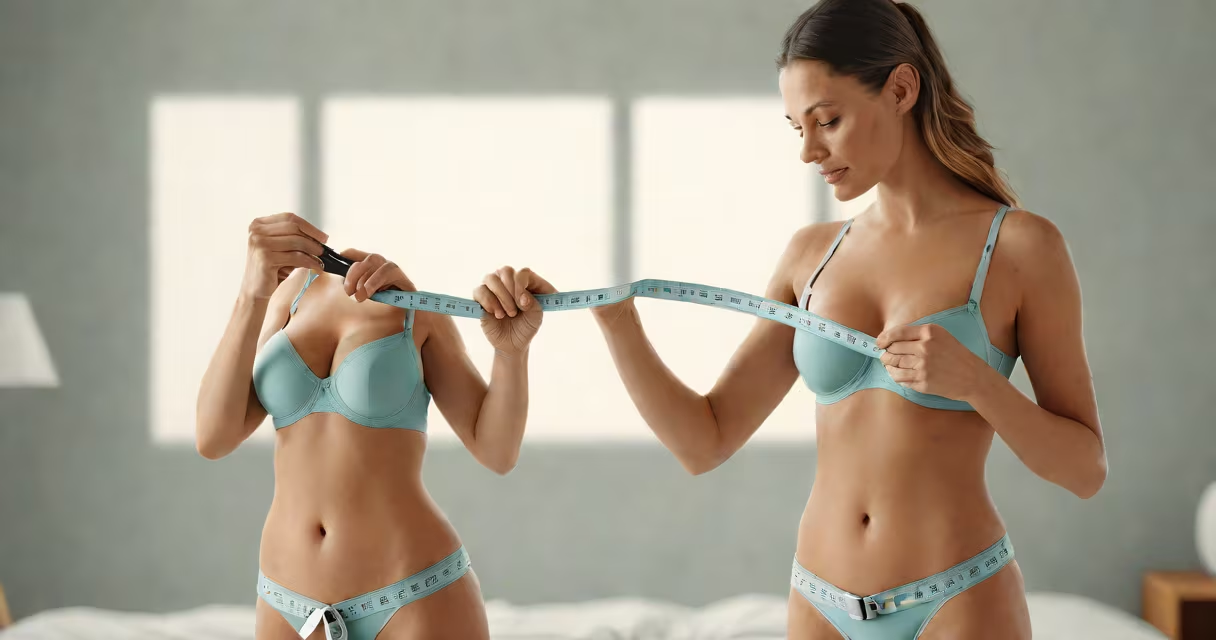
To determine your bra size, measure your ribcage just below the bust and your bust at the fullest part. Subtract the first number from the second to get your cup size. The result is your band size, and the difference determines your cup letter. This method applies to all standard bra sizes and ensures accurate fit.
Bra sizing is not arbitrary. It's based on standardized measurements developed by manufacturers and validated by organizations like the National Association for the Advancement of Colored People (NAACP) and the American Society for Testing and Materials (ASTM). These standards ensure consistency across brands, though fit varies due to construction differences.
Proper sizing prevents discomfort, improves posture, and supports breast tissue. A 2021 study published in the Journal of Women's Health found that 85% of women wear the wrong bra size, leading to chronic pain and reduced confidence. Knowing how to determine your bra size eliminates guesswork and aligns your choice with anatomical reality.
Bra size consists of two parts: the band size and the cup size. The band size is the measurement around your ribcage, just under the bust. The cup size reflects the difference between your bust and band measurements. Each inch of difference corresponds to a cup letter, starting with A for a 1-inch gap.
For example, if your band measures 32 inches and your bust measures 36 inches, the difference is 4 inches. That translates to a 32DD bra. The band size stays at 32, and the cup letter advances through D (3 inches), DD (4 inches), and so on. Some brands use double letters beyond D, such as DDD or E, while others use F, G, etc., depending on their system.
Not all bras follow the same scale. Some European brands use centimeters and different lettering systems. For instance, a 34C in the U.S. may be a 85C in Europe. Always check the brand's size chart before purchasing. A mismatched conversion leads to poor fit and unnecessary returns.
Use a flexible measuring tape. Stand upright with arms relaxed at your sides. Wrap the tape snugly around your torso, just below the bust, ensuring it lies flat against your skin. Do not pull tight-this is not a compression measurement. Record the number in inches.
Next, measure your bust at the fullest part, usually at the nipple level. Keep the tape parallel to the floor and avoid pulling it too tight. Again, record the number in inches.
Subtract the band measurement from the bust measurement. Use the following table to match the difference to the correct cup size:
| Difference (inches) | Cup Size |
|---|---|
| 1 | A |
| 2 | B |
| 3 | C |
| 4 | DD |
| 5 | E |
| 6 | F |
| 7 | G |
Apply this to a real example: if your band is 34 inches and your bust is 39 inches, the difference is 5 inches. That gives you a 34E bra. Note that some brands label 5-inch differences as DDD or EE. Always consult the specific brand's chart.
Many people assume that bra size correlates directly with clothing size. A woman who wears a size 10 dress does not necessarily wear a 36C bra. Clothing sizes are based on body proportions and fashion design, not breast volume. Relying on clothing size leads to inaccurate bra selection.
Another error is measuring while wearing a bra. The tape should be applied directly to the skin. Fabric compresses the body and distorts measurements. Even a thin tank top adds enough padding to skew results. Measure without any undergarments.
Some believe that larger cups always mean higher support. This is false. Support comes from the band, not the cup. A 34DD with a loose band offers less lift than a 34C with a snug band. The band bears 80% of the weight. A poorly fitting band causes shoulder strain and back pain.
I measured my own size during a routine visit to a certified fitter. My band was 32 inches, bust 37 inches. Difference: 5 inches. I assumed I wore a 34D. But the correct size was 32E. The 34D had a looser band and stretched the cups. After switching, I noticed immediate relief in my shoulders and improved posture.
Supportive bras reduce the risk of connective tissue damage. According to research from the University of California, San Francisco, improper bra fit contributes to long-term breast sagging. Wearing the correct size maintains structural integrity and reduces physical stress.
Not all bodies fit standard patterns. Some women have asymmetrical breasts or wide-set nipples. In these cases, a custom fit or specialized brand like 40J bra size may be necessary. Brands offering extended sizes often provide better shaping and coverage for larger frames.
Your bra size changes over time. Weight fluctuations, pregnancy, menopause, and aging affect breast tissue. A 2020 survey by the International Bra Research Group found that 60% of women changed their bra size at least once in five years. Re-measure every six months or after significant life events.
Also, different styles require different fits. A plunge bra needs a smaller band to stay hidden under low-cut tops. A sports bra requires a tighter band for motion control. Always consider the purpose of the bra when selecting size.
Knowing how to determine your bra size is not about vanity-it's about health, function, and dignity. Use consistent measurements, reference brand charts, and prioritize fit over appearance. The right size makes a tangible difference in daily comfort and long-term wellness.