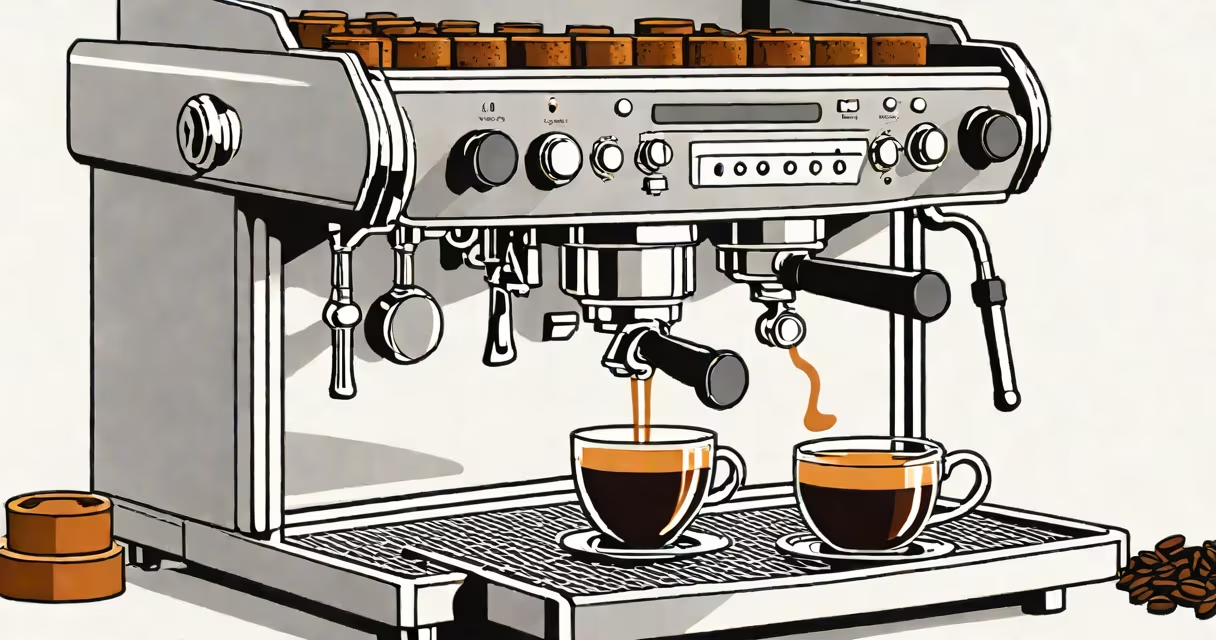
How to make espresso at home involves using a semi-automatic espresso machine, freshly roasted coffee beans, a burr grinder, and consistent technique to produce a concentrated shot with a rich crema layer. The process requires precise water pressure (9 bars), temperature control (around 92°C), and a uniformly tamped puck of finely ground coffee.
Espresso is not just a drink-it's a method. It relies on forcing hot water through tightly packed, fine coffee grounds under high pressure. This extraction takes 25 to 30 seconds and yields about 30 milliliters of liquid. The result is bold, aromatic, and layered with flavor notes that differ based on bean origin, roast level, and grind consistency.
Home espresso machines range from entry-level lever models to professional-grade semi-automatic units. The most common setup uses a group head with a portafilter, a steam wand for milk texturing, and a built-in boiler. Machines with PID controllers offer better temperature stability, which affects shot quality. According to the Specialty Coffee Association (SCA), optimal espresso extraction occurs between 18-22 grams of coffee and 25-30 seconds of brew time.
To make espresso at home, you need a few core components: a semi-automatic espresso machine, a burr grinder, fresh whole-bean coffee, a scale, a tamper, and a timer. A refractometer is optional but useful for tracking extraction yield.
The machine must deliver consistent pressure and maintain stable water temperature. Machines like the Breville Barista Pro or the La Marzocco Linea PB have PID controls and dual boilers, enabling simultaneous steam and brewing. Entry-level options such as the De'Longhi EC685 or Gaggia Classic offer manual control and are suitable for learning.
Grind size is critical. Too coarse, and water passes through too quickly, leading to sour, under-extracted shots. Too fine, and flow slows, causing bitterness. A burr grinder ensures uniform particle size. The SCA recommends a grind setting between 7-8 on a standard scale for a 18-20 gram dose.
| Component | Minimum Requirement | Why It Matters |
|---|---|---|
| Espresso Machine | Semi-automatic with 9-bar pressure | Consistent pressure enables proper extraction |
| Burr Grinder | Adjustable, conical or flat burrs | Uniform particles prevent channeling |
| Coffee Beans | Freshly roasted, within 3 weeks of roasting | Flavor degrades rapidly after roasting |
| Tamping Tool | Standard 58mm diameter | Ensures even distribution in portafilter |
Start with 18 grams of coffee. Grind to a fine, consistent texture-like powdered sugar. Weigh the grounds and transfer them to the portafilter. Distribute evenly with a finger or distribution tool to avoid clumping.
Apply 15 pounds of pressure (about 7 kg) with a tamper in a circular motion until the surface is flat and compact. The goal is a dense, uniform puck. Any unevenness causes water to channel through weak spots, resulting in inconsistent extraction.
Lock the portafilter into the group head. Start the shot with the machine's brew button. Time the extraction: aim for 25-30 seconds. A well-balanced shot should finish around 30 mL. If it takes longer than 35 seconds, the grind is too fine. If less than 20 seconds, it's too coarse.
After pulling, observe the crema-a golden-brown foam layer. A good crema is thick, persistent, and speckled with tiny bubbles. If it's thin or dissipates quickly, the beans may be stale or the grind too coarse.
One frequent error is using old or improperly stored beans. Coffee loses volatile compounds within days of roasting. Store beans in an airtight container away from light and heat. Use within 3-4 weeks for peak freshness.
Another mistake is inconsistent tamping. Applying uneven pressure creates channels. Always tamp with steady, downward force. Use a tamper with a flat base and handle that fits your hand comfortably.
Water quality matters. Hard water deposits scale in the machine. Soft water lacks minerals needed for balanced extraction. The SCA recommends water with 50-150 ppm total dissolved solids (TDS) and pH between 6.5-7.5. Filtered tap water usually meets these standards.
During my first month of home espresso, I pulled 42 shots before getting one that tasted balanced. The breakthrough came when I switched from a blade grinder to a burr model. The difference in consistency was immediate. My shots went from sour and watery to rich and syrupy in under a week.
Espresso is not the same as regular coffee. It's not brewed with a drip machine. It's not filtered. It's extracted under pressure. A single shot of espresso contains roughly 60 mg of caffeine-similar to a 12 oz drip coffee-but in half the volume.
Some people call any dark, strong coffee "espresso." That's incorrect. A French press or pour-over can produce a bold cup, but it lacks the pressure-driven extraction that defines espresso. The crema, the mouthfeel, the speed of extraction-all distinguish it.
Also, espresso is not synonymous with cappuccino or latte. These drinks contain espresso as a base but include steamed milk and foam. A cappuccino has equal parts espresso, steamed milk, and foam. A latte has more milk and less foam. The espresso itself remains unchanged.
Once you've mastered the shot, experiment with ratios. Try a double shot (36g) for a stronger base. Adjust grind size slightly to fine-tune timing. Track changes in your notebook or app.
For milk-based drinks, steam milk to 60-65°C. Hold the pitcher at a slight angle, submerge the steam wand just below the surface, then swirl to create microfoam. The texture should resemble wet paint-smooth, glossy, and uniform.
Practice makes consistent. Pull 3-5 shots daily during the first month. Focus on weight, time, and taste. Over time, you'll develop muscle memory and sensory feedback. You'll know when a shot is off before it finishes.
When you're ready to expand beyond espresso, try making fried rice at home-a dish that pairs well with a strong espresso after dinner.
Mastering how to make espresso at home requires attention to detail, fresh ingredients, and repetition. It's not instant perfection. But with the right tools and consistent practice, you can pull a shot that rivals any café's.