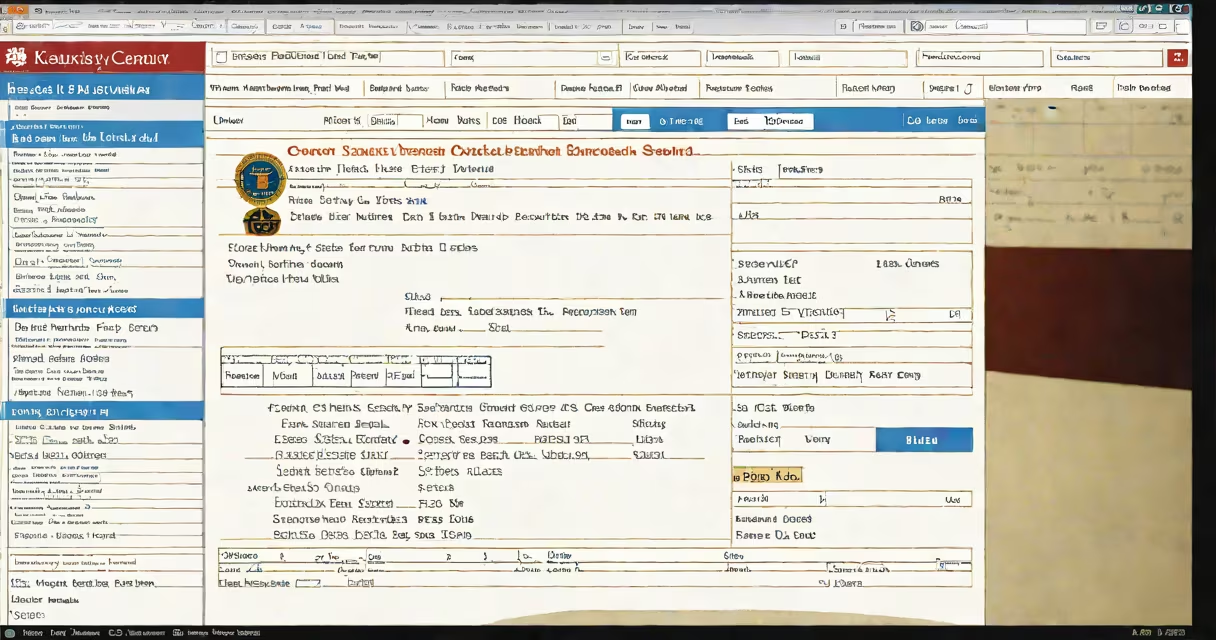
Ky court dockets by county refer to the official public records listing court cases, hearings, filings, and rulings organized by Kentucky's 120 counties. These dockets are maintained by individual county courts and provide real-time access to legal proceedings within a specific jurisdiction.
Dockets are structured chronologically and include case numbers, parties involved, charges or claims, filing dates, hearing times, and outcomes. They serve as the primary tracking tool for civil, criminal, family, and probate matters heard in local and circuit courts across the state.
The Kentucky Administrative Office of the Courts (AOC) oversees the statewide electronic case management system, known as KECMS. This platform aggregates dockets from all 120 counties, enabling users to search across jurisdictions. However, individual county clerks retain authority over their own records, meaning access methods may vary slightly by location.
Each Kentucky county operates its own circuit and district courts. The circuit court handles felony cases, major civil disputes, and appeals. District courts manage misdemeanors, small claims, traffic violations, and preliminary hearings. Probate and family law matters are handled by specialized divisions within these courts.
When a case is filed, the court clerk assigns a unique case number and logs the initial filing into the docket. Subsequent actions-such as motions, subpoenas, trial dates, and judgments-are added in real time. The docket updates automatically when new documents are submitted electronically or entered manually.
For example, in Jefferson County, a DUI charge filed on March 15, 2024, appears in the district court docket with the case number 2024-CR-12345. The docket shows the arraignment scheduled for April 2, the discovery deadline set for April 10, and the trial date set for May 15. All entries are timestamped and accessible to the public via the KECMS portal.
There are four main types of dockets in Kentucky's court system, each serving a distinct function:
| Type | Scope | Use Case | Access Method |
|---|---|---|---|
| Criminal Docket | Felony and misdemeanor cases | Tracking arrests, trials, sentencing | KECMS, county courthouse terminals |
| Civil Docket | Debt, contract, property disputes | Monitoring lawsuits, settlements, judgments | KECMS, county clerk websites |
| Family Docket | Divorce, custody, child support | Following parenting plans, enforcement orders | KECMS, county-specific portals |
| Probate Docket | Wills, estates, guardianships | Verifying executor appointments, asset distribution | KECMS, county probate court records |
While all dockets are publicly available, access levels differ. Some require registration or authentication. For example, viewing sealed records in a domestic violence case requires a court order, even if the case is listed in the public docket.
A key distinction often missed: dockets list events, not full case files. A docket entry stating "Motion to Suppress filed" does not contain the motion itself. To view the document, users must request a copy through the court clerk or download it from the KECMS portal using the case number.
Many assume that ky court dockets by county are updated instantly. In reality, delays occur due to processing times, especially in rural counties with limited IT infrastructure. A filing made on Friday afternoon may not appear in the docket until Monday morning.
Another frequent error is confusing dockets with case summaries. Dockets show chronological events. They do not explain legal reasoning, evidence presented, or judge's rationale. For example, a docket may show "Judgment entered in favor of plaintiff," but it won't detail why the jury sided with the plaintiff.
One non-obvious fact: some dockets are not searchable by name alone. In Boyd County, the court system limits name searches to 10 results per query. Users must refine searches using case numbers, dates, or attorney IDs to locate specific records.
The most reliable source is the Kentucky Electronic Case Management System (KECMS), accessible at https://ecms.ky.gov. This portal allows users to search by county, case type, party name, or case number. You can filter results by date range and sort by filing date or hearing time.
For physical access, visit the county courthouse clerk's office. Most counties maintain public terminals with access to the KECMS database. In Fayette County, the clerk's office provides free computer stations and staff assistance during business hours (8:30 AM - 4:30 PM, Monday through Friday).
I once visited the Franklin County courthouse in Frankfort to retrieve a docket for a contested will. The clerk helped me enter the case number into the terminal. Within seconds, the full docket appeared, including the date of the hearing, the names of the attorneys, and the judge's ruling. The process took less than ten minutes.
Incorrect docket references can lead to missed deadlines. In a 2022 case from Warren County, a defendant's attorney failed to notice a scheduled hearing because the docket was misfiled under the wrong case number. The court later dismissed the appeal on procedural grounds.
Always verify case numbers and jurisdiction. A case filed in Jefferson County Circuit Court cannot be tracked through the Clark County District Court portal, even if both handle similar offenses.
When searching ky court dockets by county, start with the official KECMS site. Cross-check results with the county's website or call the clerk's office if details are unclear. Always confirm the court's jurisdiction and case status before acting.
Understanding how ky court dockets by county operate ensures accurate access to legal information. concerned citizen, knowing where and how to look is essential for timely and correct action.