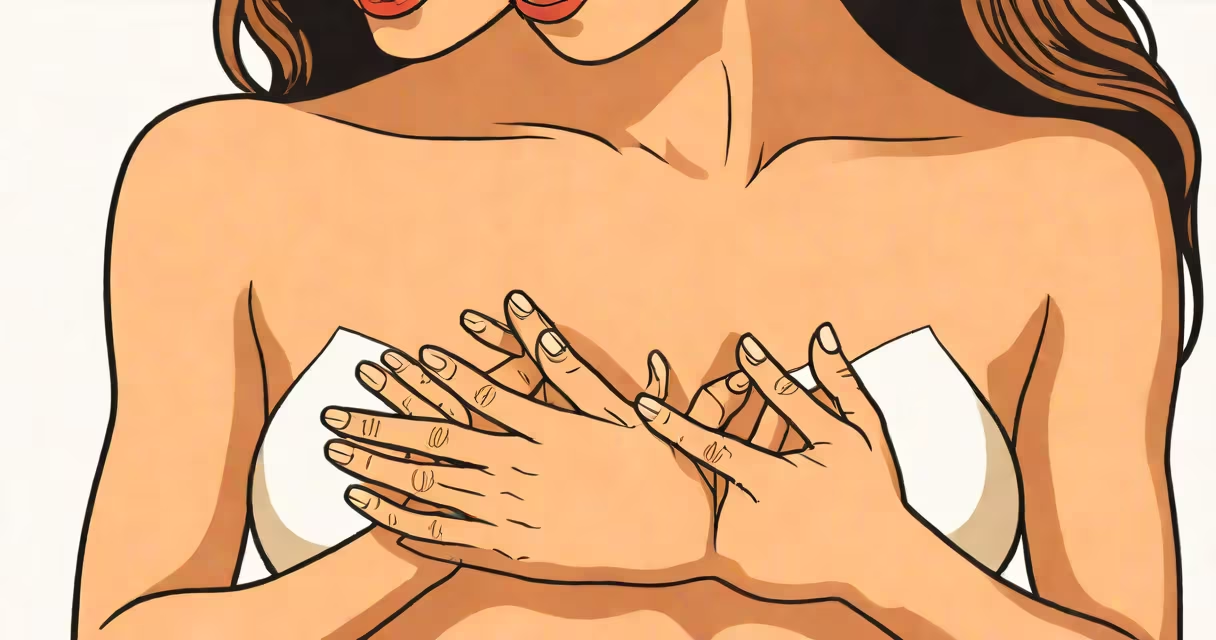
Left breast tenderness and pain refers to discomfort, soreness, or sharp sensations localized to the left breast, often linked to hormonal fluctuations, benign breast conditions, or musculoskeletal strain. It may occur cyclically with the menstrual cycle or persist continuously, varying in intensity and duration.
Most cases of left breast tenderness and pain are not signs of cancer. The condition typically results from normal physiological processes or minor tissue changes. However, persistent or worsening pain requires evaluation to rule out underlying issues such as cysts, infections, or rare malignancies.
According to the American College of Obstetricians and Gynecologists (ACOG), up to 70% of women experience some form of breast pain during their reproductive years, with most reporting cyclical patterns tied to ovulation and menstruation. The pain often resolves on its own or improves with lifestyle adjustments.
The sensation arises from nerve endings in breast tissue responding to physical or chemical stimuli. Hormonal shifts-particularly increases in estrogen and progesterone-cause fluid retention and swelling in breast ducts and lobules, leading to pressure and tenderness. This process is most pronounced in the luteal phase of the menstrual cycle, about 7-10 days before menstruation begins.
Pain may also stem from non-hormonal sources. For example, costochondritis-a condition involving inflammation of the cartilage connecting ribs to the sternum-can mimic breast pain. A 2021 study in Journal of Clinical Rheumatology found that 15% of patients presenting with breast pain were later diagnosed with costochondritis after imaging and physical exams.
Other mechanisms include trauma from exercise, ill-fitting bras, or repetitive motions. Nerve entrapment syndromes, such as intercostal neuralgia, can cause sharp, shooting pain along the rib cage that radiates into the breast area. These are often misidentified as breast-related issues.
Left breast tenderness and pain falls into two primary categories: cyclical and non-cyclic. Cyclical pain occurs about the menstrual cycle and affects both breasts, though one side may feel more sensitive. Non-cyclic pain persists outside the cycle and may be localized to one breast.
| Type | Timing | Common Causes | Typical Duration |
|---|---|---|---|
| Cyclical | Pre-menstrual, lasts 3-5 days | Hormonal fluctuations, fibrocystic changes | Varies by cycle |
| Non-cyclic | Anytime, often constant | Muscle strain, costochondritis, injury, breast cysts | Days to weeks |
Fibrocystic breast changes involve lumpy, rope-like tissue and are common in women aged 20-50. They're benign and often worsen before periods. The National Breast Cancer Foundation notes that these changes affect nearly half of all women at some point in life.
A less common but notable cause is mammary duct ectasia, a condition where milk ducts widen and fill with fluid, leading to inflammation and pain. It's more frequent in perimenopausal women and can cause nipple discharge or skin dimpling.
While hormones explain many cases, left breast tenderness and pain can also result from referred pain originating elsewhere. For example, gastrointestinal reflux disease (GERD) can cause burning sensations near the left breast, especially when lying down. A 2019 study in Alimentary Pharmacology & Therapeutics found that 12% of patients with unexplained left-sided breast pain had undiagnosed GERD.
Cardiac issues, though rare, must be ruled out in certain populations. Left breast pain that radiates to the arm, jaw, or back-especially with shortness of breath or sweating-may indicate angina or a heart attack. Women under 65 are more likely to have atypical presentations, including isolated chest or breast pain.
One key distinction often missed: breast pain from heart conditions rarely localizes to one breast. True cardiac pain tends to be central or diffuse. However, because symptoms can overlap, doctors use electrocardiograms and blood tests to confirm or exclude cardiac causes.
In 2022, a 38-year-old woman reported persistent left breast tenderness lasting six weeks. She experienced sharp pain when pressing on the upper inner quadrant. Her cycles were regular, but pain didn't follow her period. She wore a supportive bra and avoided caffeine, but improvement was minimal.
Imaging revealed a 2.3 cm solid nodule in the left breast. Biopsy confirmed a fibroadenoma-benign, non-cancerous tumor. The pain resolved after surgical removal. This case highlights that even localized, non-cyclical pain can stem from structural breast changes unrelated to hormones.
Another patient, a 45-year-old with a history of acid reflux, reported burning pain in the left breast that worsened after meals. After a gastroscopy, he was diagnosed with Barrett's esophagus. His breast pain disappeared after proton pump inhibitor therapy. This illustrates how gastrointestinal conditions can masquerade as breast pain.
Self-assessment is the first step. Check for lumps, skin changes, nipple discharge, or asymmetry. Use a mirror and gentle palpation in a well-lit room. If you notice new or changing symptoms, consult a healthcare provider.
Seek immediate medical attention if pain is sudden, severe, or accompanied by fever, redness, swelling, or warmth-signs of infection such as mastitis. Also, see a doctor if pain persists beyond two menstrual cycles or worsens despite home remedies.
During a clinical visit, providers may perform a physical exam, ultrasound, or mammogram based on age, risk factors, and symptom profile. The American Cancer Society recommends annual screening mammography starting at age 45 for average-risk individuals, though earlier screening may be advised for higher-risk groups.
Left breast tenderness and pain is frequently benign and manageable. Most cases resolve with time, lifestyle changes, or over-the-counter pain relief. However, persistent or unusual symptoms demand professional evaluation to distinguish between harmless causes and conditions requiring treatment.