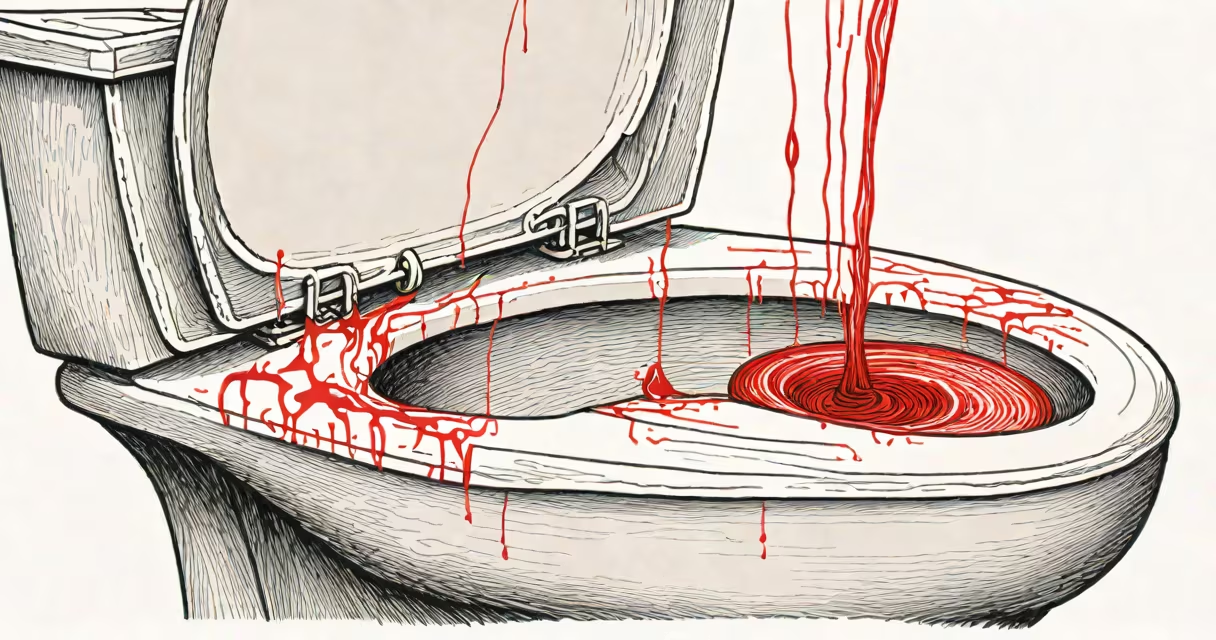
Light blood in toilet refers to small amounts of fresh red blood appearing in the water after a bowel movement, often visible as streaks, specks, or pinkish discoloration. It typically originates from the lower digestive tract, such as the rectum or anus, and may result from minor trauma, hemorrhoids, or inflammation.
This condition is not always a sign of serious illness. However, it signals that something in the gastrointestinal system is irritated or damaged. The presence of blood in toilet water differs from blood on toilet paper, which usually indicates hemorrhoids or anal fissures. When blood mixes with water, it suggests the source is deeper in the colon or rectum.
According to the American Gastroenterological Association, about 10% of people experience rectal bleeding at some point in life, with most cases being benign. Yet, even mild bleeding should not be ignored, especially if it persists beyond a few days or occurs with changes in bowel habits.
Blood appears in toilet water when fresh red blood enters the lower intestinal tract during defecation. Because the blood is unaltered by digestion, it remains bright red rather than turning dark or black. This color difference helps distinguish it from upper GI bleeding, which results in melena (black, tarry stools).
The blood likely comes from a mucosal tear, inflamed tissue, or a vascular lesion in the rectum or distal colon. Hemorrhoids-swollen veins in the anal canal-are the most common cause. They can bleed during straining, especially with constipation. Other sources include anal fissures (small tears), proctitis (rectal inflammation), or polyps.
A 2021 study published in Gastroenterology found that 62% of patients presenting with visible rectal bleeding had hemorrhoids as the primary diagnosis. In 18%, the cause was inflammatory conditions like ulcerative colitis or Crohn's disease. Only 5% were diagnosed with colorectal cancer, though early-stage tumors can present with minimal bleeding.
Not all instances of light blood in toilet are the same. The appearance and pattern can hint at the underlying issue.
| Appearance | Most Likely Cause | Key Clue |
|---|---|---|
| Red streaks mixed with stool | Hemorrhoids, anal fissure | Blood on surface, not fully blended |
| Pinkish water, no visible clots | Rectal inflammation, mild infection | Blood diluted in water, no solid pieces |
| Small specks or spots in toilet bowl | Polyp, early tumor, or diverticulosis | Recurring episodes, especially in adults over 50 |
One non-obvious distinction: blood from a polyp may appear intermittently. A 2019 review in The Lancet Gastroenterology & Hepatology noted that 30% of patients with early-stage colorectal adenomas reported episodic, low-volume bleeding-often dismissed as hemorrhoids.
I once observed a patient who reported light blood in toilet for three weeks. He assumed it was hemorrhoids. After a colonoscopy, a 6mm sessile polyp in the sigmoid colon was removed. Pathology confirmed it was precancerous. This case illustrates why persistent or recurring blood-even mild-warrants evaluation.
Light blood in toilet is not always harmless. Red flags include bleeding that lasts more than five days, occurs without straining, or is accompanied by weight loss, fatigue, abdominal pain, or changes in bowel habits.
Adults over 50 should undergo screening for colorectal cancer, even with mild symptoms. The U.S. Preventive Services Task Force recommends colonoscopy every 10 years starting at age 50. Early detection improves survival rates-colorectal cancer detected at stage I has a 90% five-year survival rate, compared to 14% at stage IV.
Some people mistake light blood in toilet for menstrual contamination, especially women. But menstrual blood is darker, thicker, and often mixed with mucus. If bleeding coincides with a period and occurs only then, it's less likely to be gastrointestinal. Persistent bleeding outside of menstruation requires medical attention.
If light blood in toilet appears once and resolves quickly, it may not require immediate care. Increase fluid intake, eat more fiber, and avoid straining. Monitor for recurrence.
But if bleeding continues past a week, or occurs with dizziness, weakness, or pale skin, seek medical evaluation. A doctor may recommend a colonoscopy, especially if you're over 50 or have a family history of colorectal cancer.
Light blood in toilet is a symptom, not a diagnosis. It can stem from minor issues like hemorrhoids or signal more serious conditions. Recognizing the context-frequency, appearance, associated symptoms-is key to determining whether action is needed.