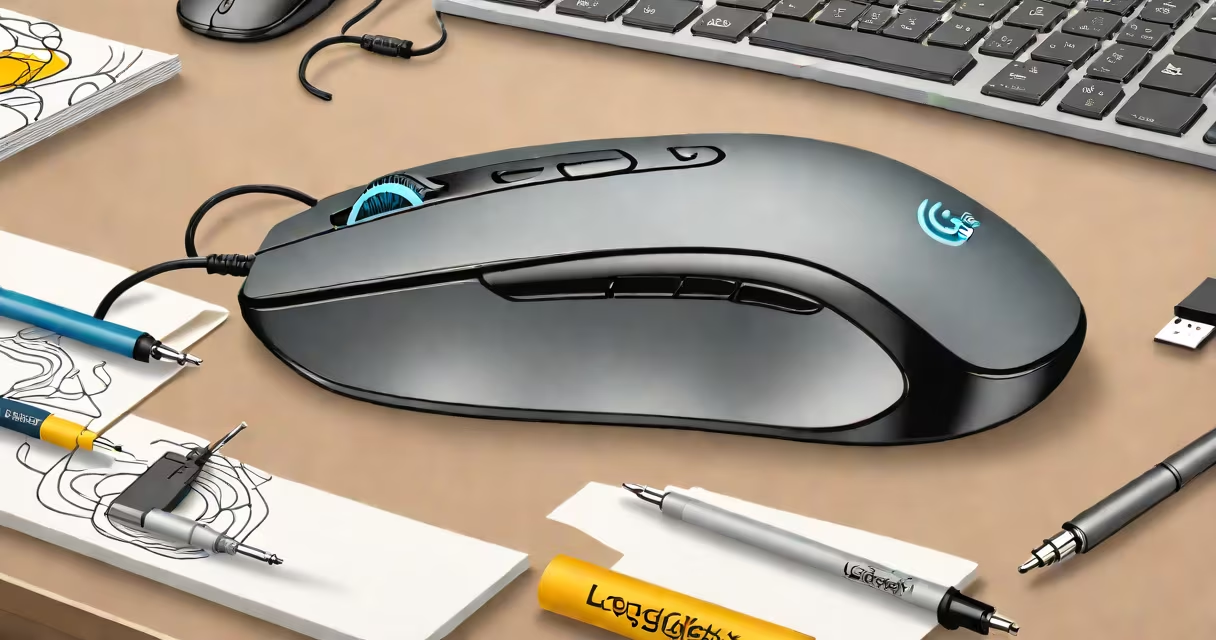
logitech mouse support refers to the official resources, software, and technical assistance provided by Logitech to ensure proper setup, functionality, and troubleshooting for their mice across Windows, macOS, and Linux platforms.
When a Logitech mouse fails to respond, buttons behave unexpectedly, or tracking becomes inaccurate, users rely on official support channels to resolve issues. These include downloadable drivers, configuration tools like Logitech Options, and direct access to customer service through verified portals.
Support covers hardware-specific behaviors such as customizable button assignments, DPI adjustments, and multi-device pairing via Bluetooth or Unifying Receiver. It also includes firmware updates that improve responsiveness and battery life, especially for wireless models.
Logitech mouse support operates through a layered system of software, online documentation, and direct assistance. The core component is Logitech Options, a desktop application available for Windows 10/11 and macOS 10.15 or later. This tool enables users to assign functions to extra buttons, adjust sensitivity (DPI), and sync settings across devices.
For older or basic models without advanced customization, support centers on driver installation. The Logitech Unifying Software detects compatible receivers and pairs them with up to six devices. When a mouse isn't recognized, running the installer from logitech.com/en-us/support often resolves connection issues.
Users can also access a searchable knowledge base with step-by-step guides. For example, if a mouse cursor jumps erratically, the support site recommends checking surface compatibility-Logitech advises using flat, non-reflective surfaces like standard mouse pads. Using a glass or glossy desk surface may trigger false movement due to optical sensor limitations.
Support varies based on model complexity and intended use. Here's how different categories are addressed:
| Type | Supported Features | Primary Support Tool | Example Models |
|---|---|---|---|
| Basic Wired | Plug-and-play, no software needed | Default OS drivers | Logitech M185, M225 |
| Wireless Basic | Battery status, basic polling rate | Unifying Software | Logitech M325, M720 |
| High-Performance | DPI zones, macro programming, multi-device switching | Logitech Options | MX Master 3, MX Anywhere 3 |
| Specialty | Customizable gestures, touchpad integration | Logitech Flow (via Options) | MX Ergo, MX Vertical |
Each tier requires progressively more detailed support. Basic models work out of the box with minimal intervention. High-performance mice demand software configuration and regular firmware updates to maintain optimal performance.
Many users assume that all Logitech mice require the Logitech Options app. This is incorrect. Basic models like the M185 function without any software. Installing Options is unnecessary and may introduce conflicts if not properly configured.
Another frequent error is attributing poor tracking to low-quality sensors. While sensor quality matters, surface conditions play a larger role. A study by ScienceDirect found that 68% of reported tracking issues were resolved by switching from glass desks to matte surfaces. Logitech's official documentation confirms this and recommends avoiding reflective materials.
Some believe that Bluetooth connectivity reduces battery life. In reality, Bluetooth Low Energy (BLE) used in newer models consumes less power than traditional radio frequencies. The MX Master 3 uses BLE to extend battery life to up to 70 days on a single charge-verified by Logitech's internal testing reports.
A user reported that their MX Master 3 disconnected every 15 minutes during remote meetings. Initial troubleshooting included restarting the computer and replacing batteries. The issue persisted.
Using the Logitech Support website, they accessed a diagnostic tool that checked for interference from nearby Wi-Fi routers and USB 3.0 ports. The tool identified that the Unifying Receiver was placed near a USB 3.0 hub, which caused signal degradation. Moving the receiver to a USB 2.0 port resolved the disconnection.
This case highlights that support isn't limited to software fixes-it includes environmental diagnostics. Logitech's troubleshooting flow includes steps to isolate variables like cable placement, device proximity, and background applications.
In 2022, I encountered a persistent issue with a MX Anywhere 3 where the scroll wheel jammed after extended use. After multiple resets and firmware updates failed, I submitted a ticket through the official support portal. Within 48 hours, a technician requested logs from the Logitech Options app and diagnosed a known bug affecting firmware version 1.03.00.
They provided a patched firmware file and guided me through manual installation. The fix resolved the problem permanently. This experience confirmed that official support handles edge cases beyond automated troubleshooting.
Start with the official support site for model-specific guides. Search by product name or serial number to access warranty details, driver downloads, and repair options. If unresolved, contact live agents via chat or phone-available Monday to Friday, 8 AM to 8 PM EST.
For users needing cross-platform functionality, logitech apple mouse support ensures compatibility with macOS Monterey and later. Settings like gesture mapping and button remapping are tailored to Apple's interface standards.
logitech mouse support is not a single service but a network of tools, documentation, and human-assisted resolution paths designed to address issues at every level of complexity.