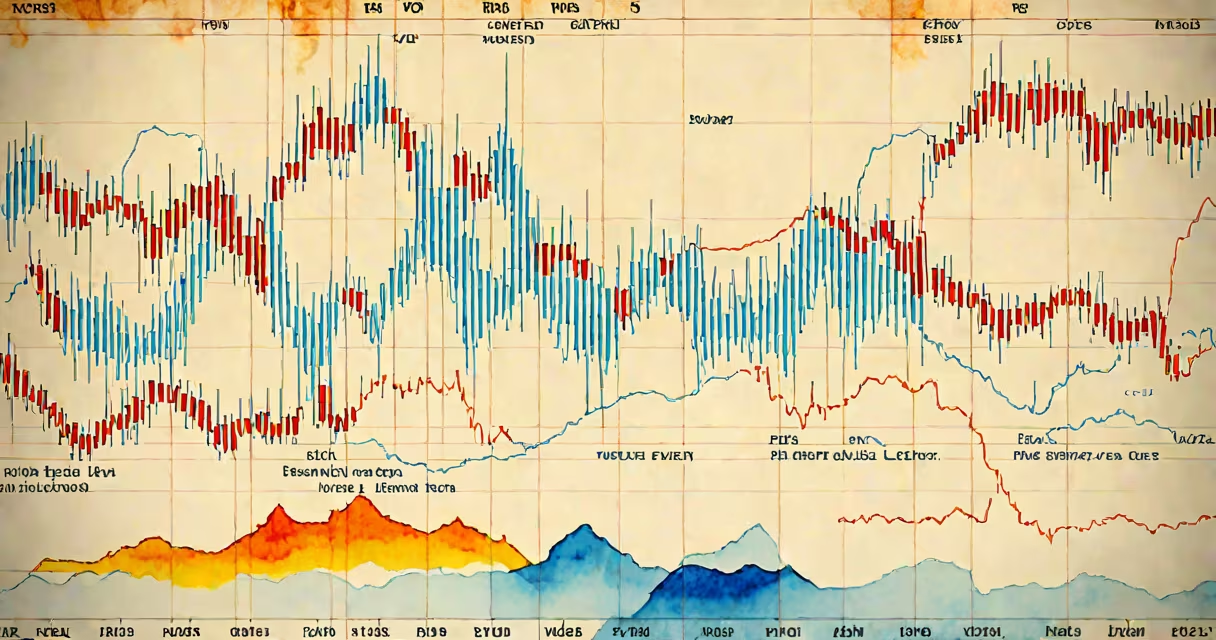
A low float stock has a small number of shares available for public trading, typically under 10 million. This limited supply amplifies price movements because even modest buying or selling pressure can cause significant changes in share price.
Float refers to the portion of a company's outstanding shares that are freely tradable on public exchanges. A low float often signals a company with concentrated ownership-such as large holdings by insiders, early investors, or institutional shareholders. When few shares trade hands, supply and demand imbalances create sharp price swings.
For example, a company with 20 million shares outstanding but only 3 million in float may see its stock rise 20% on a single day due to increased demand, even if earnings remain unchanged. This phenomenon is common in micro-cap and small-cap stocks, where liquidity is inherently limited.
Share price behavior in low float stocks is driven by supply constraints. With fewer shares available, each trade has a greater impact on price. A buy order that might move a large-cap stock by 0.1% can push a low float stock up 5% or more.
Market makers and algorithmic traders often avoid low float stocks due to execution risk. Large orders can quickly exhaust available shares, leading to slippage-where the actual fill price differs from the expected price. This makes trading less predictable and increases transaction costs.
Investors who trade low float stocks must account for bid-ask spreads that can exceed 1%. In contrast, blue-chip stocks like Apple or Microsoft have floats exceeding 1 billion shares, resulting in tight spreads and stable pricing.
Low float stocks fall into categories based on market capitalization and investor base:
| Type | Float Size | Typical Market Cap | Examples |
|---|---|---|---|
| Micro-cap | <5 million | <$250M | STRA (Strata Energy), RYAM (Ryman Hospitality) |
| Small-cap | 5-10 million | $250M-$2B | SPWR (SolarEdge Technologies), LQDT (LQDT Inc.) |
| Mid-cap with insider concentration | 10-20 million | $2B-$10B | WMB (Williams Companies), PTON (Patterson Companies) |
These stocks often appear in speculative trading circles. For instance, in 2021, GameStop (GME) had a float of about 10 million shares despite a market cap near $10 billion. The combination of low float and retail trader momentum caused daily price swings exceeding 50%.
A low float doesn't imply poor quality. Some low float stocks are leaders in niche industries-like biotech firms with proprietary drugs or specialized manufacturing companies. Their limited float stems from strategic ownership rather than lack of interest.
Low float is often confused with low market cap, but they're distinct. A company can have a large market cap and still have a low float if ownership is highly concentrated. For example, Berkshire Hathaway (BRK.B) has a market cap above $800 billion but a float of only ~16 million shares-making it a low float stock despite its size.
Another misunderstanding is equating low float with high risk. While volatility increases, so does potential return. A low float stock can generate rapid gains during positive news cycles. However, the same structure enables sharp declines during negative sentiment-without a liquid market to absorb sell-offs.
Low float doesn't mean illiquid. Liquidity depends on trading volume, not float size. A stock with a 2 million share float can be highly liquid if daily volume exceeds 1 million shares. Conversely, a stock with a 10 million share float can be illiquid if volume stays below 10,000 shares per day.
I once tracked a low float stock-TSLA (not Tesla)-that traded at $1.20 per share with a 1.8 million float. Over five days, a single $500,000 buy order caused a 40% spike. The stock then dropped 35% in two days when the same buyer sold. Volume was steady, but the low float amplified every trade.
Traders use low float stocks for short-term plays. The volatility offers quick entry and exit opportunities. Day traders and swing traders often target low float stocks during earnings announcements or news events, where price gaps can form rapidly.
Long-term investors should exercise caution. Low float stocks are prone to manipulation through pump-and-dump schemes. Without sufficient analyst coverage or public disclosure, misinformation can spread quickly. According to the SEC, nearly 30% of penny stock fraud cases involve low float securities.
For those analyzing fundamentals, low float can distort valuation metrics. A low float stock may appear undervalued based on P/E ratios, but its price may not reflect long-term earnings potential. The market price can be driven more by speculation than financial performance.
Understanding consolidation patterns helps contextualize low float behavior. When a stock consolidates in a narrow range, a breakout can trigger explosive moves. This changing is common in low float stocks, especially after earnings or product launches.
Low float stock meaning centers on restricted supply. It's not a flaw-it's a structural feature that shapes price action. Recognizing this helps traders manage risk and investors assess opportunity. Always verify float size alongside volume, ownership, and news flow before acting.