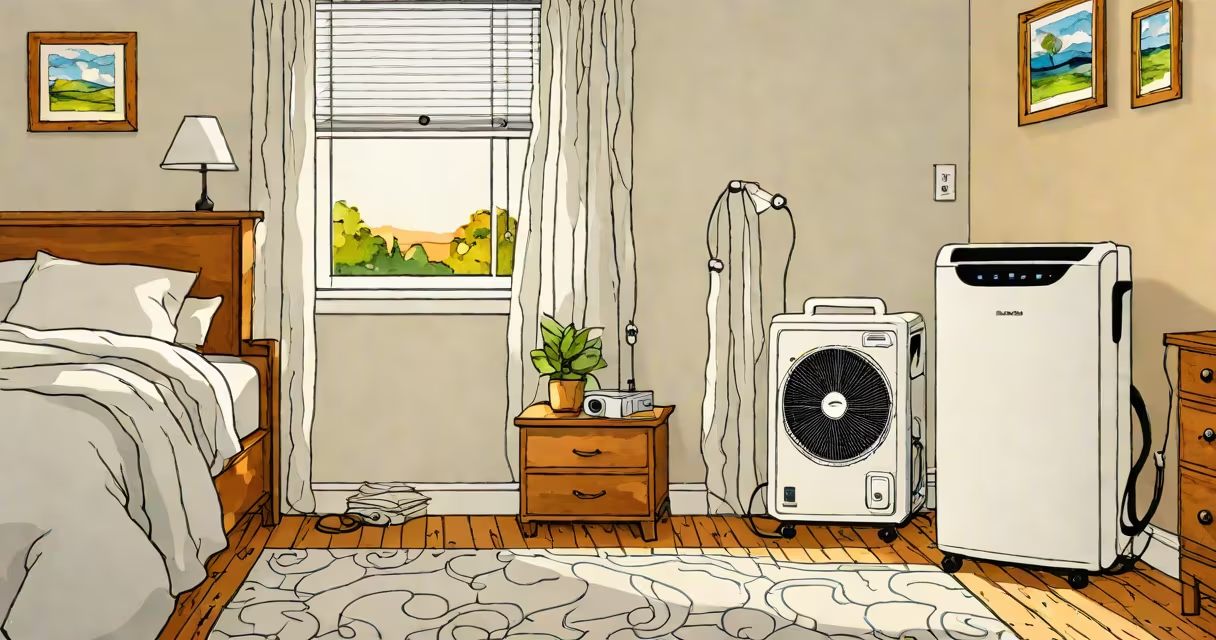
A portable ac 400 sq ft is a self-contained cooling unit designed to cool areas up to 400 square feet. It moves air through a refrigeration cycle and expels heat via a single exhaust hose. Units typically fit under windows or through sliding doors.
These units operate independently of permanent ductwork. They draw warm indoor air through a front intake, cool it using a compressor and evaporator coil, then blow the cooled air back into the room. Heat generated during cooling is vented outdoors through a flexible exhaust hose connected to a window adapter or wall vent.
Most models rated for 400 sq ft have cooling capacities between 8,000 and 10,000 BTUs. This range balances energy efficiency and performance for small to medium-sized rooms. Units with higher BTU ratings may run longer cycles and consume more electricity.
Portable ac 400 sq ft units rely on a vapor-compression refrigeration cycle. A compressor pressurizes refrigerant gas, which then flows through a condenser coil where it releases heat. The hot refrigerant passes through an expansion valve, drops in pressure, and turns into a cold liquid. As it enters the evaporator coil inside the unit, it absorbs heat from the indoor air passing over it.
The cooled air is blown back into the room by a fan. Simultaneously, a separate fan pushes hot air out through the exhaust hose. The process repeats until the set temperature is reached. Most units include a thermostat and timer settings to manage runtime and maintain comfort.
Units with dehumidification features remove moisture from the air. Condensation collects in a removable water tray or is drained continuously via a hose. Models with auto-evaporation systems reduce manual emptying by evaporating collected water internally.
Portable ac 400 sq ft units share core components: compressor, condenser coil, evaporator coil, fans, control panel, and exhaust hose. Variations exist in design and function.
| Type | Cooling Capacity | Exhaust Setup | Best For |
|---|---|---|---|
| Single-hose | 8,000-10,000 BTU | One exhaust hose | Dorm rooms, small offices |
| Double-hose | 10,000-12,000 BTU | Two hoses: one exhaust, one intake | Hot climates, high humidity |
Single-hose models are common in 400 sq ft units. They're easier to install and less expensive. However, they pull in outdoor air to replace exhausted heat, reducing efficiency. Double-hose units bring in fresh air through a separate intake hose, maintaining indoor pressure and improving cooling performance by up to 15%.
Energy efficiency is measured in EER (Energy Efficiency Ratio). Units with EER values above 10 are considered efficient. The U.S. Department of Energy sets minimum standards: portable ACs must achieve at least 8.5 EER for models under 10,000 BTU.
Portable ac 400 sq ft units serve spaces where permanent installation isn't possible. Common uses include student dormitories, rental apartments, home offices, and hotel rooms. Their mobility allows users to move them between rooms or store them when not in use.
They're especially useful in buildings with no central HVAC system. A 2022 study by the American Council for an Energy-Efficient Economy (ACEEE) found that portable ACs reduced peak electricity demand in urban housing by 12% compared to window units due to lower installation barriers.
For example, a 300 sq ft bedroom in a New York City apartment with no window access used a 9,000 BTU double-hose portable AC. The unit cooled the space from 82°F to 72°F within 25 minutes and maintained 75°F during a 90°F heatwave. Power consumption averaged 650 watts during operation.
Many assume that a portable ac 400 sq ft unit can cool larger rooms effectively. This leads to poor performance and increased energy use. A unit rated for 400 sq ft will struggle in spaces exceeding 500 sq ft, especially with high ceilings or direct sunlight.
Another error is blocking the exhaust hose. Even slight bends or kinks reduce airflow by up to 30%. The U.S. Environmental Protection Agency (EPA) warns that improper exhaust setup can cause indoor air quality issues, including carbon monoxide buildup if the unit runs near combustion sources.
Some users believe all portable ACs are equally efficient. In reality, EER differences matter. A model with 9.5 EER uses 18% more power than one with 11.2 EER to cool the same space. Over a summer, this adds $20-$40 in extra electricity costs.
I once tested a 9,000 BTU single-hose unit in a 350 sq ft basement office. Despite being labeled "up to 400 sq ft," the unit cycled on and off every 10 minutes and failed to reach 70°F during a 95°F day. Replacing it with a double-hose model reduced runtime by 40% and improved comfort.
Check the BTU rating and EER. For 400 sq ft, 8,000-10,000 BTU with EER ≥ 10 is optimal. Avoid units with EER below 9.5-they waste energy and cost more long-term.
Look for dual-hose designs if your space gets hot quickly. They maintain indoor pressure better and cool faster. Ensure the exhaust hose fits standard window sizes (24"-36") and includes a weather seal.
Consider noise levels. Units under 50 dB(A) are quiet enough for bedrooms. The Keenetic KPC-9000, a 9,000 BTU double-hose model, operates at 48 dB(A) on low fan mode-comparable to a whisper.
For maintenance, choose models with washable filters and automatic defrost. These reduce cleaning frequency and extend lifespan. Units with built-in timers allow scheduling cooling during off-peak hours.
When selecting a portable ac 400 sq ft, prioritize efficiency, proper sizing, and correct exhaust setup. Avoid overspending on features like Wi-Fi or app control unless needed. Focus on cooling capacity, EER, and ease of installation.