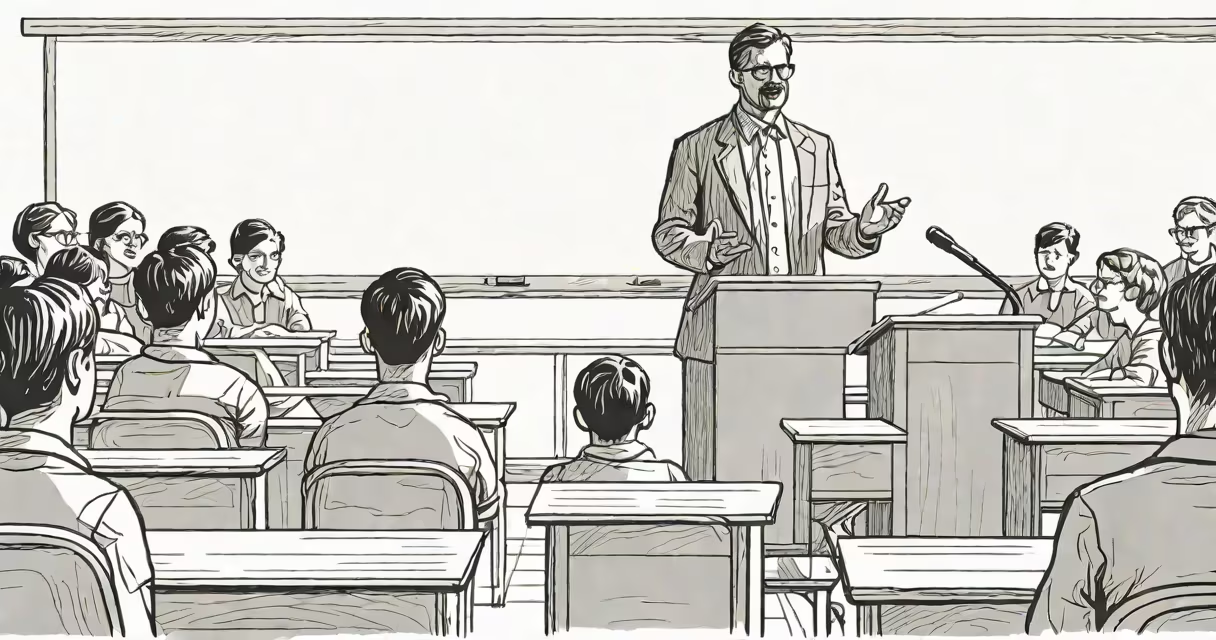
Power teacher depr describes the misuse of instructional authority by educators to control, intimidate, or emotionally manipulate students, often under the guise of discipline or academic rigor. This behavior erodes trust, damages student well-being, and contradicts evidence-based teaching practices.
Such dynamics emerge when teachers equate authority with dominance rather than guidance. A teacher may publicly shame a student for a minor mistake, assign excessive punishment for incomplete work, or isolate students who challenge ideas. These actions aren't isolated incidents-they reflect systemic patterns where emotional control replaces pedagogical care.
Research from the American Psychological Association confirms that coercive teacher behaviors correlate with increased anxiety, lower self-esteem, and reduced academic engagement among students. When authority becomes punitive, learning stops being collaborative and turns into compliance.
Power teacher depr operates through subtle and overt mechanisms. Subtle forms include cold silence toward a student, exaggerated eye contact during questioning, or consistently calling on certain individuals while ignoring others. These behaviors create psychological pressure without breaking formal rules.
Overt forms involve public criticism, arbitrary grading, or exclusion from class activities based on personal bias. For example, a teacher may label a student "lazy" in front of peers after a single missed assignment, even when the student had documented medical reasons for absence. The impact isn't limited to the moment-it shapes how the student sees themselves and their place in school.
These patterns are reinforced by institutional norms. Schools often reward teachers who maintain strict control, regardless of whether the methods are harmful. A 2022 study by the National Education Association found that 68% of teachers reported feeling pressured to enforce discipline even when they believed it was unfair.
The following table outlines common manifestations of power teacher depr, their effects, and real-world examples.
| Type | Description | Example | Impact |
|---|---|---|---|
| Public Shaming | Humiliating students in front of peers for errors | A math teacher calls out a student's incorrect answer and says, "This is why we can't have smart people in this class." | Increased fear of participation; avoidance of challenging subjects |
| Emotional Blackmail | Using guilt or obligation to enforce compliance | A history teacher tells a student, "I've spent years trying to help you, and this is how you repay me?" after a late submission. | Student feels responsible for teacher's emotional state; internalizes failure |
| Exclusionary Control | Denying access to resources or group work based on perceived attitude | A science teacher refuses to let a student join a lab group because they "don't fit the team vibe." | Reduced collaboration skills; diminished sense of belonging |
| Over-Punishment | Assigning disproportionate consequences for minor infractions | A teacher gives a zero on a quiz for a student who forgot to bring a pencil. | Disengagement; belief that effort doesn't matter |
Many educators confuse assertiveness with aggression. They believe that strictness builds resilience. But research shows that high-control environments do not improve outcomes-they suppress them. A 2021 meta-analysis published in Review of Educational Research found that classrooms with consistent emotional support had 34% higher student achievement than those with high-pressure, low-empathy models.
Another misconception is that power teacher depr only happens in under-resourced schools. In reality, it appears across all socioeconomic levels. A 2023 report from the Center for American Progress found that 41% of suburban high school students experienced at least one incident of teacher emotional abuse annually.
Some staff justify harsh tactics as "preparing students for the real world." But the real world values emotional intelligence, teamwork, and adaptability-not fear-based obedience. Schools that prioritize these traits see better long-term outcomes.
In 2019, a high school in Portland, Oregon, faced a lawsuit after a student committed suicide following months of public humiliation by a biology teacher. The student had repeatedly been mocked for asking questions and was excluded from group projects. The school district later settled for $1.2 million. This case illustrates how unchecked power dynamics can lead to irreversible harm.
I once observed a middle school classroom where a teacher used sarcastic remarks to correct students' answers. After a few weeks, several students stopped raising hands. One girl told me privately, "I don't want to be called stupid again." Her grades dropped, and she began skipping class. When the school counselor intervened, the teacher denied intent but acknowledged the pattern after reviewing recordings.
This isn't rare. The National Child Traumatic Stress Network reports that 1 in 5 students experience emotional abuse from teachers, often going unreported due to fear of retaliation.
Healthy teaching authority is rooted in consistency, empathy, and clear boundaries-not fear. Teachers who model respect build stronger rapport and higher performance. A 2020 study from Stanford University showed that classrooms using restorative practices saw a 50% reduction in disciplinary referrals and a 22% increase in student engagement.
Effective alternatives include:
When a teacher shifts, students thrive. One urban school district in Chicago reported a 40% drop in absenteeism after adopting a mentorship model where teachers met with students weekly to discuss goals and challenges.
Understanding power teacher depr isn't about blaming individuals. It's about recognizing how systems enable harmful behavior and creating accountability structures. Schools must audit discipline logs, train staff in emotional literacy, and prioritize student well-being over compliance.