A programming boot camp for beginners is an intensive, short-term educational program that teaches foundational coding skills through hands-on practice, typically lasting 8 to 16 weeks. These programs focus on job-ready competencies in web development, software engineering, or data analysis using languages like Python, JavaScript, and SQL.
Boot camps differ from traditional academic courses by prioritizing practical application over theory. Participants build real applications-such as full-stack websites or mobile apps-using frameworks like React, Node.js, and Django. The curriculum is designed around industry demands, aligning closely with hiring needs in tech companies.
According to the Council on Integrity in Results Reporting (CIRR), 75% of boot camp graduates who completed their programs were employed in tech roles within six months of graduation. This outcome rate exceeds the national average for computer science bachelor's degree holders in similar timeframes, demonstrating the effectiveness of focused, skill-driven instruction.
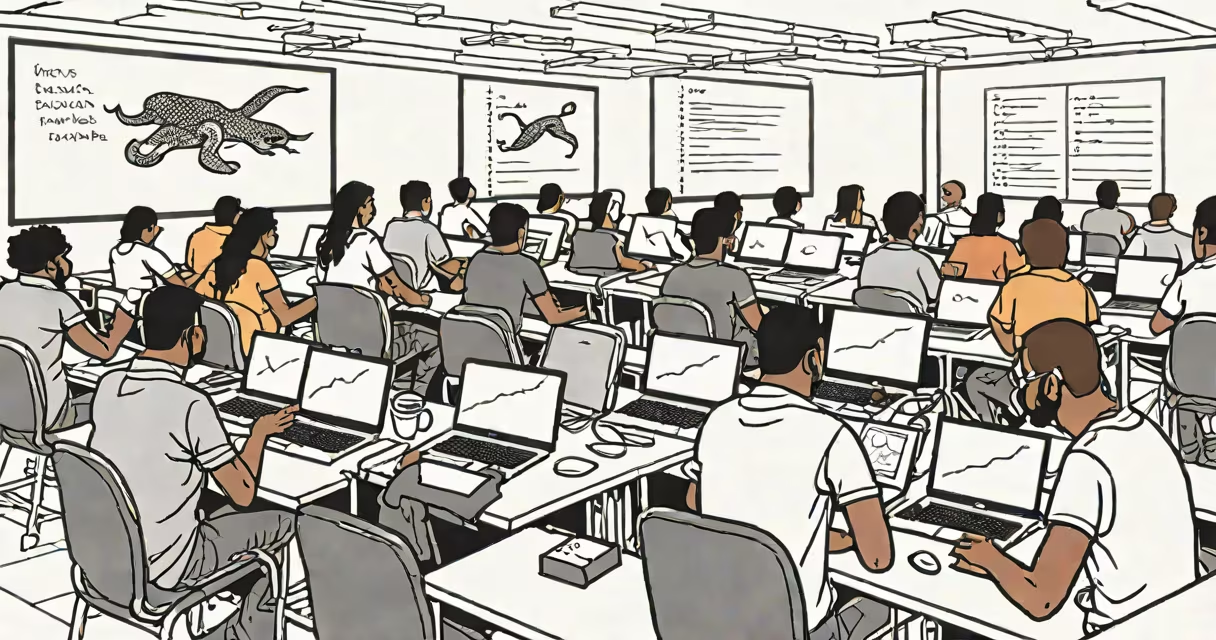
These programs operate on a cohort model, where students progress through modules together. Daily schedules often include morning lectures, afternoon lab sessions, and evening review or project work. Instructors are experienced developers who provide immediate feedback during coding exercises.
Learning occurs through guided project cycles. For example, a beginner cohort might spend three weeks building a responsive e-commerce site using HTML, CSS, JavaScript, and a backend API. They deploy the app live on platforms like Netlify and Heroku, gaining exposure to version control with Git and cloud deployment workflows.
One program at Flatiron School requires students to complete five capstone projects, including a full-stack application with authentication and database integration. The final project is reviewed by a panel of industry professionals, simulating a real job interview scenario.
Most programming boot camps for beginners follow a standardized structure. The following table outlines typical formats based on delivery method and duration:
| Format | Duration | Time Commitment | Common Tools |
|---|---|---|---|
| Full-time in-person | 12-16 weeks | 40+ hours/week | VS Code, Terminal, Docker, AWS |
| Part-time online | 20-24 weeks | 10-15 hours/week | Zoom, GitHub, Jupyter Notebooks |
| Accelerated hybrid | 8-10 weeks | 35-40 hours/week | Remote labs, Slack, virtual whiteboards |
Some programs offer scholarships or income-share agreements (ISAs), where students pay tuition only after securing a job above a set salary threshold. Lambda School, now part of Springboard, previously operated under this model, allowing learners to attend without upfront costs.
Not all boot camps are accredited. The U.S. Department of Education does not regulate them, unlike colleges. However, reputable providers undergo third-party audits. The Council on Integrity in Results Reporting (CIRR) verifies graduate employment statistics and program transparency.
Many assume that a programming boot camp for beginners replaces a college degree. That is incorrect. Boot camps do not confer degrees. They deliver targeted technical training, not broad liberal arts education. A graduate may lack understanding of algorithms, computational complexity, or systems design-concepts covered in four-year computer science programs.
Another misconception is that boot camps teach everything needed to become a professional developer. While they cover essential tools and workflows, they do not replace years of experience. A graduate might build a functional website but struggle with debugging complex race conditions or optimizing database queries at scale.
One non-obvious fact: boot camps often prioritize learning outcomes over content coverage. A 2023 report by Course Report found that 89% of boot camp curricula emphasize problem-solving and collaboration over memorization. Students learn to debug errors by reading stack traces, using browser dev tools, and asking peers-skills that mirror actual team environments.
In 2022, Maria, a former retail manager, enrolled in a 12-week full-time boot camp at General Assembly. She had no prior coding experience. The program began with a week of orientation covering basics like command-line navigation, file systems, and setting up a development environment.
By Week 3, she was writing JavaScript functions to manipulate arrays and DOM elements. By Week 6, her team built a weather dashboard using the OpenWeatherMap API and Bootstrap. She deployed it via GitHub Pages and received feedback from mentors on accessibility and performance.
At the end of the program, Maria presented her final project-a task management app with user login and persistent data storage. She secured a junior front-end developer role at a fintech startup within three weeks of graduation, earning $68,000 annually.
This outcome reflects a trend: 62% of boot camp graduates land jobs in tech within six months, according to the 2023 Bootcamp Report by Course Report. Many employers value demonstrated project work over formal credentials when hiring entry-level developers.
When evaluating a programming boot camp for beginners, check for three criteria: employment outcomes, instructor background, and curriculum depth. Look for schools that publish verified job placement rates and median salaries of graduates. Programs with instructors who have worked in production environments-such as full-stack engineers at startups-are more likely to teach relevant practices.
Curriculum should include not just coding, but version control, testing, and deployment. A solid program covers Git workflows, unit testing with Jest, and continuous integration using GitHub Actions. These are standard in modern development teams.
Programming boot camp for beginners is not a shortcut. It is a high-intensity pathway to technical fluency, demanding consistent effort and resilience. Success depends on commitment, not just aptitude. Those who complete the program gain tangible skills and a portfolio that demonstrates their ability to solve real problems.