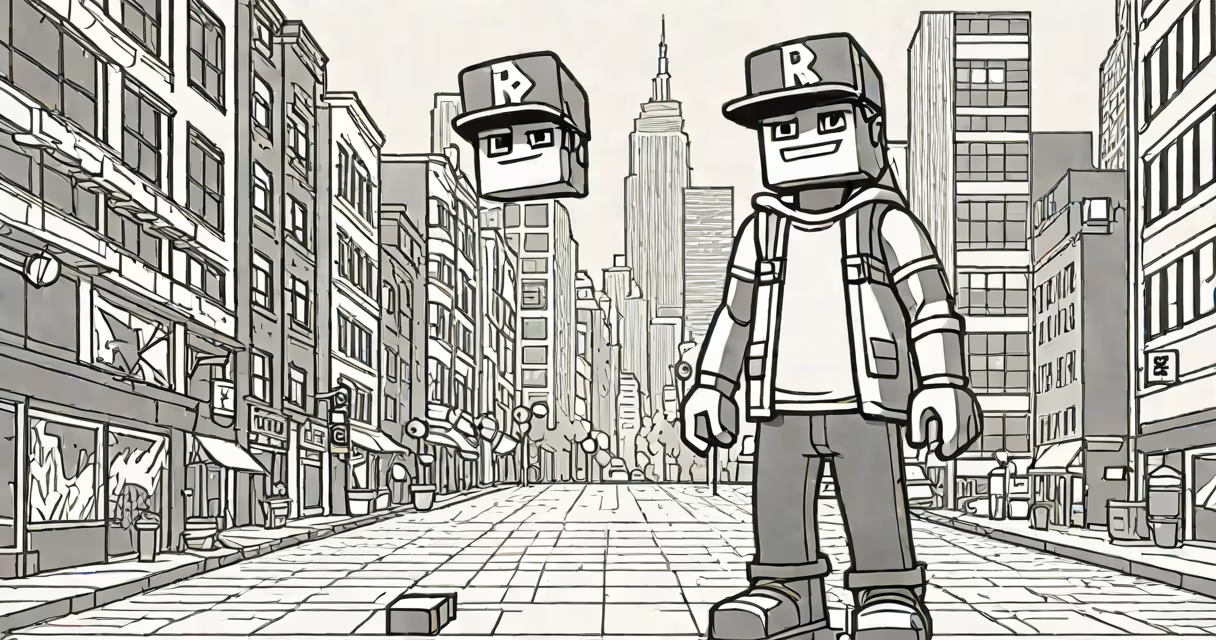
Roblox character avatar identification is the process by which players assign visual form and personal identity to their in-game presence using customizable body parts, clothing, and accessories. This system enables users to express individuality while maintaining consistent representation across games and social spaces within the platform.
Every Roblox account links to a single avatar profile that appears in all experiences. The avatar is not a static image-it's a changing model composed of 16 body parts: head, torso, left arm, right arm, left leg, right leg, face, hair, eyes, mouth, eyebrows, ears, neck, shoulders, hands, and feet. Each part can be modified independently using in-game items or the Roblox Studio editor.
When a player logs in, the game engine loads their saved avatar configuration. This includes color schemes, textures, animations, and equipped items. The system uses unique identifiers tied to the user's account to ensure consistency across sessions and devices. A player's avatar remains unchanged unless they manually update it.
Avatar identification begins during account creation. Users select a base model-either the default humanoid or a custom template-and begin adding assets. These assets come from two sources: free items available in the catalog and purchased or earned items from the marketplace.
Each item has metadata including a unique ID, category (e.g., shirt, pants, hat), and compatibility flags. When an item is worn, the game applies its texture and geometry to the appropriate body part. For example, equipping a red t-shirt adds a textured mesh to the torso layer, replacing the default color.
Items are stored in a user's inventory and linked to their account via cloud synchronization. Changes take effect instantly across devices. If a player wears a rare hat in one game and then enters another, the same hat appears on their avatar regardless of the environment.
Customization falls into four core categories: body shape, clothing, accessories, and animations. Body shape defines proportions and silhouette. Clothing covers specific body parts and often includes changing physics for realism. Accessories are decorative items worn on the head, hands, or back. Animations control movement and expression.
| Type | Examples | Function |
|---|---|---|
| Body Parts | Head, arms, legs | Define physical structure and size |
| Clothing | Shirts, pants, shoes | Provide visual coverage and style |
| Accessories | Hats, glasses, wings | Add flair and identity markers |
| Animations | Idle, walk, jump | Control motion and interaction behavior |
Not all items are visible to others. Some, like invisible shirts or layered hats, affect rendering but don't alter the silhouette. Others, such as animated wings or glowing effects, rely on scripting and may only appear in supported experiences.
Many assume that changing an avatar alters a user's account identity. That's incorrect. The avatar is a presentation layer, not a credential. Your username, friend list, and purchase history remain separate from visual appearance.
Another error is thinking that all items are universally compatible. They're not. A hat designed for the default model won't render correctly on a custom body shape with different joint positions. The Roblox engine enforces compatibility rules based on skeletal hierarchy and mesh alignment.
I once created a character for a roleplay server focused on medieval fantasy. I selected a taller body model with broad shoulders and dark skin tones. I added a chainmail chest piece, leather gloves, and a steel helmet with a feather crest. My eyes were set to a pale blue, and I equipped a glowing sword that activated during combat.
After saving, I joined a game where players had to identify each other by appearance. Within minutes, another player approached me and said, "You're the one with the feathered helm." The combination of visual cues-color, shape, and accessory-created instant recognition. No name was needed.
This illustrates how avatar identification functions beyond aesthetics. It supports social navigation, trust-building, and community cohesion. In large-scale events like Roblox's annual Halloween celebration, users often wear themed avatars to blend in or stand out intentionally.
Unlike platforms such as Fortnite or Minecraft, Roblox does not use predefined skins or character classes. There is no "warrior" or "mage" preset. Instead, identity emerges from cumulative choices. A player becomes a "ninja" not because they selected a class, but because they wore black robes, a mask, and carried a pair of shurikens.
Also, Roblox does not allow facial expressions to be controlled by real-time input (like webcam tracking). Expression is limited to pre-set animations and item-based effects. A smile is achieved by selecting a specific mouth texture or using a "happy" animation clip, not by manipulating facial muscles.
Avatar identification is central to user engagement. According to Roblox Corporation's 2023 Developer Report, 78% of active players customize their avatars within the first month. This level of investment correlates strongly with longer session times and higher participation in community events.
From a design perspective, consistent avatar rendering ensures predictable performance. The Roblox engine caches asset data per user, reducing load times and minimizing network lag during multiplayer sessions. This optimization is critical for experiences with hundreds of simultaneous players.
Finally, avatar identity supports safety. While users can choose anonymity, the ability to recognize familiar appearances reduces harassment risk. Moderators can flag suspicious behavior based on known avatar patterns, and users can report others by visual descriptor if needed.
Understanding how roblox character avatar identification works reveals that it's not just about looking good-it's about belonging, communicating, and going through a shared digital space. Your avatar is your digital signature, shaped by choice, maintained by the platform, and recognized across millions of experiences.