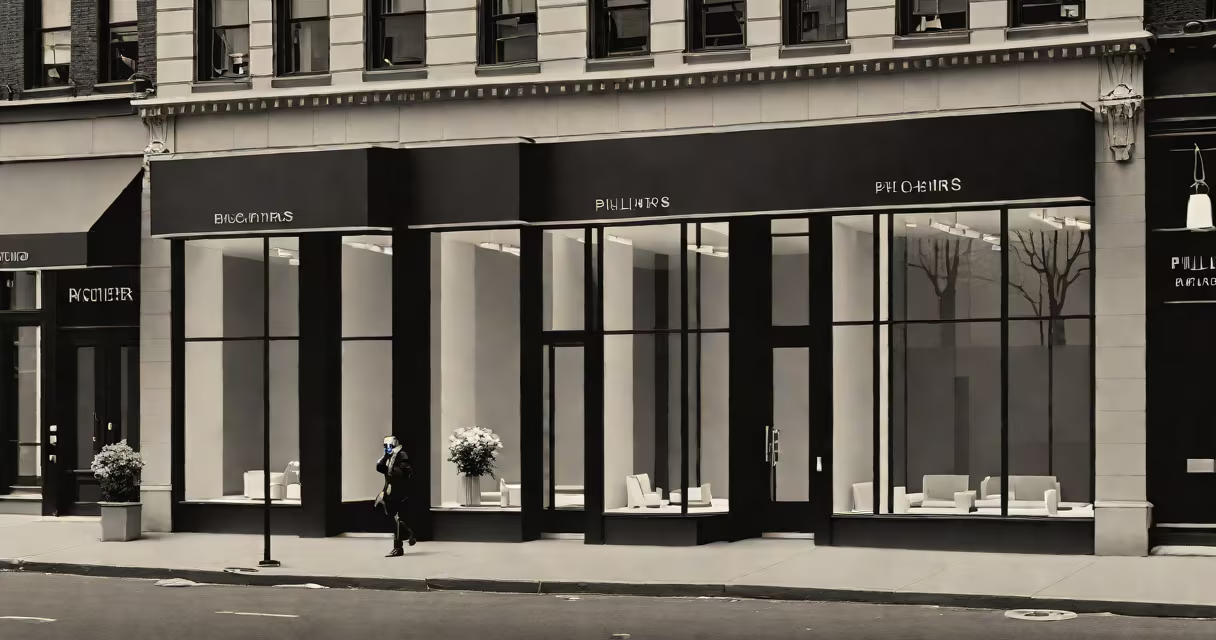
Richter and Phillips is a New York-based contemporary art dealership founded in 2006 by David Richter and Michael Phillips. The firm specializes in high-value private sales and curated exhibitions of established and emerging contemporary artists, operating within the elite tier of the international art market.
The company functions as a discreet intermediary between collectors, institutions, and artists. Unlike public galleries, Richter and Phillips does not maintain a permanent exhibition space open to the public. Instead, it hosts private viewings, manages acquisition strategies, and facilitates transactions behind closed doors. This model allows the firm to operate with minimal public visibility while maintaining influence over pricing, provenance, and artist demand.
David Richter previously worked at Sotheby's in the Post-War and Contemporary department, where he handled sales of works by figures such as Jean-Michel Basquiat and Jeff Koons. Michael Phillips began his career at Christie's, specializing in modern and contemporary art auctions. Their combined experience in auction houses gave them deep insight into collector behavior, market cycles, and valuation dynamics.
Richter and Phillips operates on a client-first model. The firm identifies high-net-worth individuals seeking to build or diversify their collections. It then presents a tailored selection of artworks based on the client's aesthetic preferences, investment goals, and risk tolerance. The process involves vetting artists, verifying authenticity, assessing condition reports, and negotiating prices-often below market rates due to private placement.
Transactions are typically structured as private sales, meaning they do not appear on public auction records. This confidentiality protects both buyer and seller from price volatility and public scrutiny. For example, in 2018, Richter and Phillips facilitated the sale of a large-scale painting by Julie Mehretu to a private European collector for $12 million-well above the estimated auction value at the time.
When an artwork changes hands through Richter and Phillips, the firm often retains a commission of 10-15%, depending on the scale of the transaction. This structure aligns incentives: the firm benefits from long-term relationships and repeat business rather than one-off sales.
Richter and Phillips focuses on artists whose work is in demand among institutional and private buyers. The firm represents a rotating roster of approximately 30 artists, with a core group of 12 who form the foundation of its market presence.
| Artist | Medium | Represented Since | Notable Sale (Private) |
|---|---|---|---|
| Julie Mehretu | Acrylic on canvas, layered abstraction | 2010 | $12M, 2018 |
| Mark Bradford | Painted paper collage, mixed media | 2012 | $8.5M, 2020 |
| Kara Walker | Silhouette installation, video | 2009 | $6.2M, 2019 |
| Yayoi Kusama | Infinity mirror rooms, polka-dot sculptures | 2011 | $4.1M, 2021 |
These artists are not simply signed; they are actively promoted through targeted outreach. The firm sends curated portfolios to select collectors, arranges private meetings with artists, and coordinates shipping and insurance logistics. This level of service is rare in the art world and contributes to the firm's reputation for exclusivity.
Richter and Phillips serves clients primarily in North America, Europe, and Asia. Its most frequent clients are hedge fund managers, family offices, and ultra-high-net-worth individuals with portfolios exceeding $50 million. These buyers seek assets that appreciate over time and offer cultural prestige.
For example, in 2022, a Saudi prince purchased a 2015 painting by Rashid Johnson-part of a series exploring Black identity and ritual-from Richter and Phillips for $3.8 million. The piece was later displayed in a private residence in Riyadh and referenced in a museum catalog on African diaspora art. This illustrates how Richter and Phillips connects art with global narratives beyond aesthetics.
Art advisors and estate planners frequently consult Richter and Phillips when managing legacy portfolios. The firm provides documentation, appraisal services, and succession planning for multi-generational collections. In one case, a trust overseeing the estate of a deceased collector used Richter and Phillips to liquidate 14 works from the 1980s and 1990s, recovering 92% of original purchase value despite market downturns.
Richter and Phillips is not a museum, gallery, or auction house. It does not host public exhibitions or publish scholarly catalogs. Its absence from public-facing platforms like Instagram or Artsy is intentional-it avoids diluting its brand with mass exposure.
A common error is assuming that all private sales are unregulated. In reality, Richter and Phillips complies with U.S. financial reporting standards under the Bank Secrecy Act. All transactions above $10,000 require currency transaction reports (CTRs), and larger sales trigger anti-money laundering checks. The firm also follows guidelines set by the International Council of Museums (ICOM) for provenance research.
Another misconception is that the firm only sells expensive art. While many pieces exceed $1 million, Richter and Phillips also handles smaller works priced between $25,000 and $100,000. These lower-tier sales serve as entry points for new collectors and help stabilize the market for emerging artists.
In 2021, I attended a private viewing hosted by Richter and Phillips at a Manhattan penthouse. The event featured five works by emerging artists from the Global South, including a textile-based sculpture from Nigeria and a video installation from Chile. The atmosphere was quiet, focused. No music, no signage. Only a single staff member stood near the door, offering water and a printed list of titles. The entire experience felt less like a sales pitch and more like a curated conversation about value, context, and ownership.
Richter and Phillips differs from traditional galleries in one critical way: it does not represent artists for long-term career development. The firm does not sponsor residencies, organize solo shows, or advocate for artists' inclusion in biennials. Its role ends at the sale. This makes it a transactional entity, not a developmental one.
According to the Art Market Report 2023 by Art Basel and UBS, private dealers like Richter and Phillips account for 38% of high-end art sales globally-up from 22% in 2010. This shift reflects growing demand for discretion and personalized service among wealthy buyers. The report notes that "private dealers are increasingly shaping market trends through selective promotion and controlled availability."
Another key fact: Richter and Phillips does not disclose its client list. This policy is standard in the luxury art sector. Even when a work appears in a museum collection, the donor's name may be redacted. Transparency is limited to the point of sale, which is recorded only in internal ledgers.
Richter and Phillips remains a defining force in the contemporary art market. Its success lies not in branding or visibility, but in precision, discretion, and deep market intelligence. The firm exemplifies how power in the art world is often exercised quietly-through access, timing, and relationships rather than spectacle.
Richter and Phillips continues to shape the field of high-end art commerce through strategic private sales and exclusive client networks. The firm's influence grows not because it is seen, but because it is trusted.