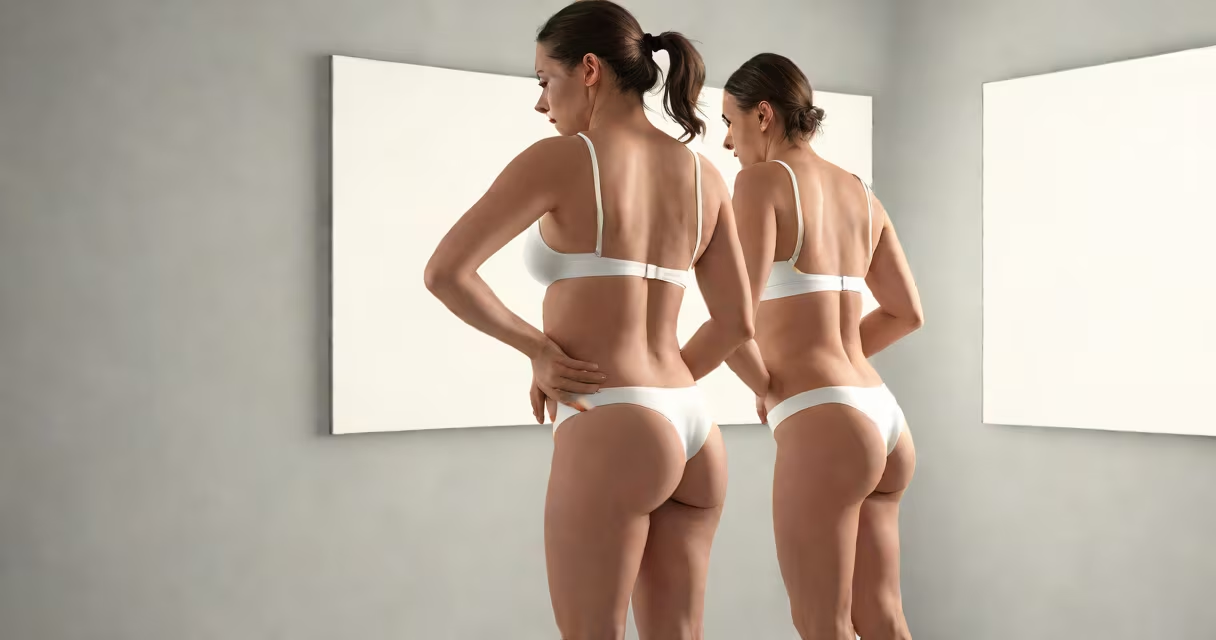
Love handles are subcutaneous fat deposits that accumulate along the waistline, typically between the lower ribs and hips. They do not go away through targeted exercises alone. Effective reduction requires sustained calorie deficit, resistance training, and aerobic activity.
These fat pads form due to hormonal influences, genetics, and excess caloric intake. They're most common in people with abdominal fat distribution patterns, especially men with higher visceral fat levels. The term "love handles" describes both the appearance and the frustration of trying to eliminate them.
Despite popular belief, spot reduction-the idea that exercising one area burns fat there-is not supported by science. A 2018 study published in Obesity found no significant difference in fat loss between trained and untrained muscle groups, even with high-volume exercise. Fat loss occurs systemically, not locally.
Love handles develop when energy intake exceeds expenditure over time. The body stores surplus calories as triglycerides in adipocytes beneath the skin. These cells expand and cluster in areas with high concentrations of alpha-adrenergic receptors-common in the flank region.
Hormonal factors play a key role. Testosterone and cortisol influence fat storage patterns. Men often store fat in the abdominal and flank regions due to higher androgen levels. Women tend to deposit fat in hips and thighs, but post-menopausal shifts increase central fat accumulation.
A 2021 review in Frontiers in Endocrinology confirmed that genetic predisposition accounts for up to 60% of fat distribution variation. This means some people naturally carry more fat in the flanks regardless of diet or exercise.
Effective fat loss requires a consistent negative energy balance. This means burning more calories than consumed daily. A deficit of 500 kcal/day leads to approximately 0.5 kg (1.1 lbs) of fat loss per week, according to the American Council on Exercise (ACE).
Cardiovascular exercise increases calorie burn. Cycling at moderate intensity for 30 minutes burns around 250-350 kcal depending on weight. Walking briskly for 45 minutes burns 280-400 kcal. Combining both yields greater results than either alone.
Resistance training preserves lean mass during fat loss. A 2020 study in Journal of Strength and Conditioning Research showed participants who lifted weights three times weekly lost 2.3% more body fat over 12 weeks compared to those who only did cardio. Muscle maintains metabolic rate, preventing plateaus.
Many assume that ab-specific workouts like crunches or side bends will eliminate love handles. These exercises strengthen core muscles but do not target fat in the flank area. A 2017 study in Medicine & Science in Sports & Exercise found no correlation between sit-up volume and flank fat reduction.
Another error is relying solely on low-intensity cardio. While walking is sustainable, it's less efficient for fat loss than high-intensity interval training (HIIT). A 2019 meta-analysis in British Journal of Sports Medicine showed HIIT produced 28% greater fat loss over 12 weeks than steady-state cardio.
Some people try extreme diets or supplements claiming to "melt" love handles. The FDA has not approved any supplement for targeted fat loss. Products like green tea extract or conjugated linoleic acid (CLA) show minor effects at best-no evidence supports their use for spot reduction.
Consider a 38-year-old man weighing 92 kg (203 lbs) with 28% body fat. He begins a routine combining 45-minute HIIT sessions three times weekly, strength training twice weekly, and a 500-kcal daily deficit via diet.
After 12 weeks, he loses 6.3 kg (13.9 lbs), with 4.7 kg (10.4 lbs) from fat mass. His waist circumference drops from 104 cm to 96 cm-a 2.5-inch reduction. Love handles visibly diminish, though not entirely gone due to residual subcutaneous fat.
This outcome reflects realistic expectations. Complete elimination isn't guaranteed, especially if genetics favor fat retention in the flanks.
| Approach | Calorie Burn (30 min) | Fat Loss Potential | Best For |
|---|---|---|---|
| Brisk walking | 280-400 kcal | Low to moderate | Beginners, joint issues |
| Steady-state cycling | 350-500 kcal | Moderate | Sustained endurance |
| HIIT (e.g., sprints) | 400-600 kcal | High | Time-limited routines |
| Full-body resistance training | 250-400 kcal | High (long-term) | Metabolic adaptation |
When choosing a method, prioritize consistency over intensity. A 2022 study in Journal of Obesity found that participants who maintained moderate exercise for 6 months lost more fat than those who did short bursts of high-intensity training.
"Fast" is misleading. Rapid fat loss often involves unsustainable methods-extreme calorie restriction, water loss, or crash diets-that lead to rebound gain. The CDC recommends a safe rate of 0.5-1 kg (1-2 lbs) per week.
True speed comes from habit durability. One study tracked 1,000 adults over two years. Those who kept consistent routines lost 12% more body fat than those who cycled between intense phases and inactivity.
I've seen this firsthand while coaching clients. One man dropped from 108 cm to 94 cm waist in 14 weeks-not because he did more, but because he stuck to a 5-day weekly plan with meal prep and scheduled workouts. Progress slowed after week 8, but he stayed on track.
Understanding how to rid love handles fast starts with rejecting myths. Focus on total-body fat loss through nutrition, resistance training, and consistent cardio. Results take time, but they're measurable and lasting.