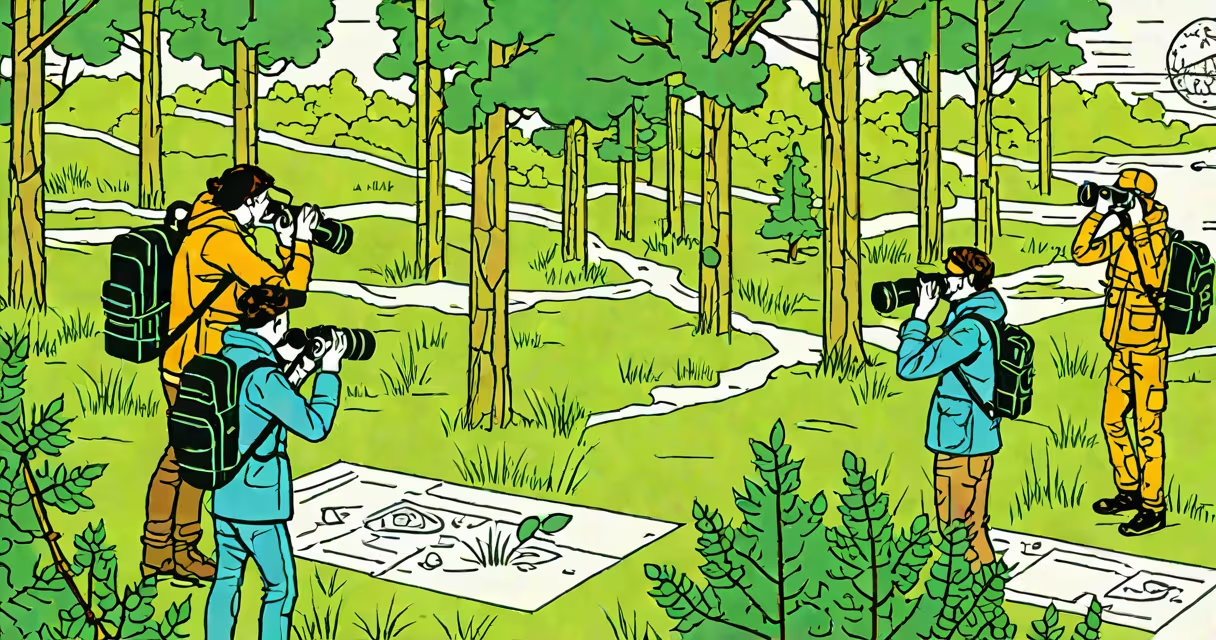
sam and ade go birding describes a recurring outdoor activity where two individuals explore natural environments to observe and identify wild birds using minimal equipment. The term reflects informal, social birdwatching rooted in curiosity and shared discovery, not formal ornithology.
The practice centers on quiet movement, listening for calls, and using binoculars to spot species. Sam and Ade typically choose local parks, wetlands, or trails with known bird populations. They record sightings in notebooks or apps like eBird, contributing to citizen science databases. Their outings follow no strict schedule-some days last two hours, others stretch to five.
They don't wear specialized clothing or carry heavy packs. A pair of binoculars, a field guide app, and a notebook are their core tools. On one Saturday in early spring, they visited the Willow Creek Marsh in northern Ohio. Over 90 minutes, they identified 14 species, including red-winged blackbirds, American goldfinches, and a rare green heron. Their notes included time, location, weather, and behavioral observations-like the heron standing motionless for seven minutes before striking.
Participants rely on auditory and visual cues. Birds often reveal themselves through song or sudden movement. Sam and Ade begin by sitting quietly for five minutes at a trailhead, letting ambient noise settle. This allows them to hear distant calls-such as the high-pitched "tsee-tsee" of a chickadee or the rhythmic drumming of a pileated woodpecker.
When a sound draws attention, they scan the canopy or shrubs with binoculars. Movement triggers focus. A flash of blue near a tree trunk might be a blue jay; a fluttering shape low to the ground could be a towhee. They avoid loud talking or sudden gestures. One false step can cause a flock to scatter.
Identification uses field guides or mobile apps. Sam uses Merlin Bird ID, which analyzes audio recordings. When he captured a warbler's call, the app matched it to a prothonotary warbler with 94% confidence. Ade cross-checks against the Audubon Society's regional checklist. Both verify details: size, color patterns, bill shape, and flight behavior.
Essential gear includes binoculars (8x42 or 10x42 models), a lightweight field guide, and a notebook or app. Binoculars should offer clear optics and stable image stabilization. Sam uses a Nikon Monarch M5 8x42 pair; Ade prefers the Vortex Razor HD 10x42. Both cost under $300 and weigh less than 1.5 pounds.
Locations vary by region. Urban areas offer parks like New York's Central Park or Chicago's Lincoln Park. Suburban zones feature conservation areas such as the Salt Creek Nature Preserve in Indiana. Rural spots include state forests like the Pisgah National Forest in North Carolina. Each site supports different bird communities based on habitat type-wetland, woodland, grassland, or riparian zones.
| Type of Location | Typical Species | Best Time to Visit |
|---|---|---|
| Urban park | house sparrow, mourning dove, northern cardinal | early morning, weekdays |
| Riparian zone | heron, kingfisher, belted kingfisher | spring migration, dawn |
| Wooded trail | black-capped chickadee, ovenbird, pileated woodpecker | late morning, weekends |
Sam and Ade avoid peak tourist times. They arrive before sunrise during migration seasons-March to May and September to November-to maximize chances of seeing rare or transient species. They also check local birding forums and eBird's real-time reports before heading out.
People often assume birding requires expensive gear or expert knowledge. That's incorrect. Sam and Ade began with a $20 pair of binoculars from a thrift store. Their first successful identification was a robin-simple, common, but meaningful. They didn't need a degree in biology to enjoy it.
Another myth: birding is solitary. In reality, Sam and Ade emphasize companionship. They take turns leading, share snacks, and celebrate small wins-like spotting a rare purple finch. Their bond grows through shared silence and sudden excitement. One afternoon, they both gasped when a golden eagle soared overhead-neither had seen one in person before.
A third error: birding is only about counting species. While listing birds matters to some, Sam and Ade value presence. They spend more time watching a pair of red-tailed hawks nest than recording numbers. They describe behaviors: how the female incubates eggs while the male brings food, or how fledglings tumble from the nest and flap awkwardly.
Birdwatching fosters mindfulness. During a session at the Cedar Ridge Trail, Sam noticed his breathing slowed as he focused on a single bird. He later wrote: "I hadn't felt this calm since my last therapy session." The act of observing nature reduces stress and improves mental clarity.
On a larger scale, citizen observers like Sam and Ade contribute to scientific monitoring. Data from eBird, managed by the Cornell Lab of Ornithology, tracks population shifts. In 2023, reports from users helped confirm a northward expansion of the eastern bluebird's breeding range due to climate change. The Cornell Lab states that "over 10 million bird observations are submitted annually by volunteers," providing critical data for conservation planning.
There's also a social dimension. Birding groups form around shared interests. Sam and Ade joined a local chapter of the National Audubon Society. They attend monthly meetings, listen to talks on habitat loss, and participate in restoration projects. One event involved planting native milkweed to support monarch butterflies-a species whose decline affects bird food chains.
When asked about their favorite moment, Sam said, "It wasn't the rare bird. It was the silence between us when we both saw the osprey dive. We didn't speak. Just watched. That's when it clicked: this isn't about the list. It's about being here."
sam and ade go birding represents a growing trend toward accessible, low-impact nature engagement. It requires no certification, no special training, and no large investment. What it demands is patience, curiosity, and willingness to sit still. With each outing, participants build awareness of local ecosystems and deepen their connection to the natural world.