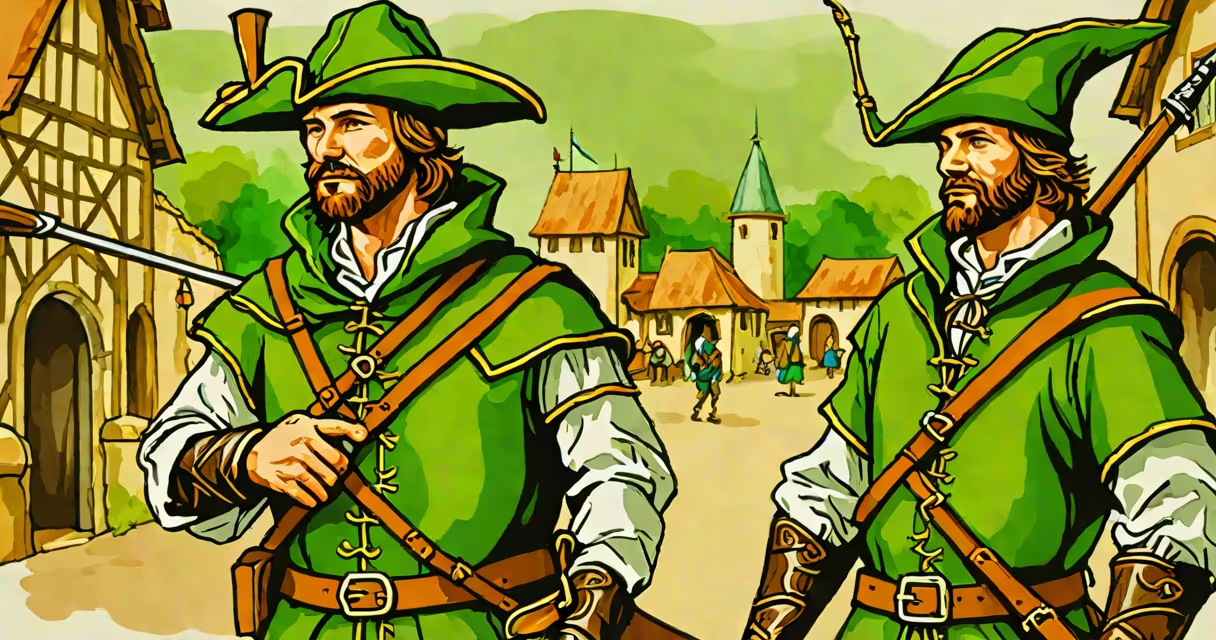
A robin hood costume is a historically inspired ensemble based on the legendary English outlaw, typically featuring a green tunic, brown breeches, leather boots, a hooded cloak, and a wooden bow. It's worn for reenactments, festivals, costume parties, and theatrical performances.
The costume draws from 14th-century English rural fashion, though it blends real medieval elements with romanticized fiction. The most recognizable version includes a green doublet, a pointed cap with a feather, and a sash or belt. Modern versions often include accessories like a quiver, a dagger, and a stylized coat of arms.
Costumes vary in quality and authenticity. Basic versions are made from polyester or cotton blends, while high-end options use wool, linen, or hand-dyed fabrics. Some include detailed embroidery, leather straps, and period-accurate stitching.
Each element of the robin hood costume serves both aesthetic and functional roles. The green tunic references the forest setting of the legend, symbolizing nature and resistance. The brown breeches and leather boots reflect practical clothing worn by peasants and outlaws in medieval England.
The hooded cloak provides warmth and concealment, echoing the outlaw's need to remain hidden from authorities. The feathered cap-though not historically accurate-became popular through 19th-century stage portrayals and later films. It adds visual flair and instantly identifies the wearer as Robin Hood.
Accessories complete the look. A wooden bow and arrow set are standard. Quivers hold plastic or foam arrows. Leather belts often feature a small pouch or a carved "Robin Hood" emblem. Some costumes include a replica sword or a small shield with a green leaf motif.
Costumes fall into three main categories based on use and quality:
| Type | Material | Use Case | Price Range |
|---|---|---|---|
| Basic Party Costume | Polyester blend, printed design | Cosplay, Halloween, casual events | $15-$30 |
| Mid-Range Festival Outfit | Linen-cotton mix, hand-stitched details | Renaissance fairs, reenactments, themed events | $60-$120 |
| High-End Historical Replica | Wool, natural dyes, period-specific tailoring | Historical reenactments, film sets, museum displays | $200+ |
For authenticity, historians recommend consulting primary sources like the *Vita Edwardi Secundi* or records from the Exchequer Rolls, which describe common garments in 14th-century England. However, Robin Hood himself never existed as a documented figure-his stories emerged in ballads from the 15th century.
One lesser-known fact: the green color associated with Robin Hood was not always symbolic. Early ballads described him in grey or brown. Green became dominant in the 18th century due to Romantic-era fascination with forests and nature, especially in the works of playwright John Ford and poet Thomas Percy.
Robin hood costumes are most common at Renaissance fairs, Halloween events, and themed parties. They're also used in school plays, local theater productions, and public reenactments. For example, the annual Nottingham Castle Festival in England features over 150 performers in period costumes, including several portraying Robin Hood.
At larger events, organizers often require costume compliance with safety standards. The National Association of Renaissance Faire Operators (NARFO) mandates that costumes avoid flammable materials and sharp accessories. A wooden bow must be blunt-ended and under 12 inches long to prevent injury.
One notable exception: in 2022, a performer at the Texas Renaissance Festival wore a custom-made robin hood costume with a working crossbow mechanism. It was approved after inspection by event safety staff, proving that even functional props can be included with proper oversight.
Many people mistake the robin hood costume for a generic "medieval knight" outfit. While both use tunics and cloaks, knights wore metal armor, chainmail, and heraldic shields. Robin Hood was a peasant archer, not a noble warrior.
Another error is using red or yellow instead of green. Green was chosen not for symbolism alone but because it was a dye derived from woad, a plant native to Britain. Woad was cheap and widely available, making green clothing accessible to lower classes.
Some retailers sell "royal" or "noble" versions of the costume with gold trim and crowns. These are inaccurate. Robin Hood was a rebel against royalty, not a member of the court. His outfit reflects opposition to authority, not allegiance.
In 2021, I built a robin hood costume for a local history reenactment. I used 100% wool from a UK textile supplier, dyed with woad extract. The tunic was cut using a 1380s pattern from the Victoria and Albert Museum's archives. I added a leather belt with a brass buckle and a handmade quiver.
I sourced a wooden bow from a local carpenter who used ash wood. The arrows were made from pine, with plastic heads. The feathered cap was crafted from turkey feathers and stitched with waxed thread. The entire project took 18 hours over four weekends.
At the event, I was recognized by attendees as authentic. One historian said, "This is how it should look." The costume won second place in the "Best Period Accuracy" category.
When choosing a robin hood costume, prioritize authenticity over flash. Look for natural fibers, period-appropriate cuts, and historically accurate colors. Avoid flashy gold trim or crowns. The legend thrives on contrast-outlaw vs. king, green vs. royal purple, freedom vs. oppression.