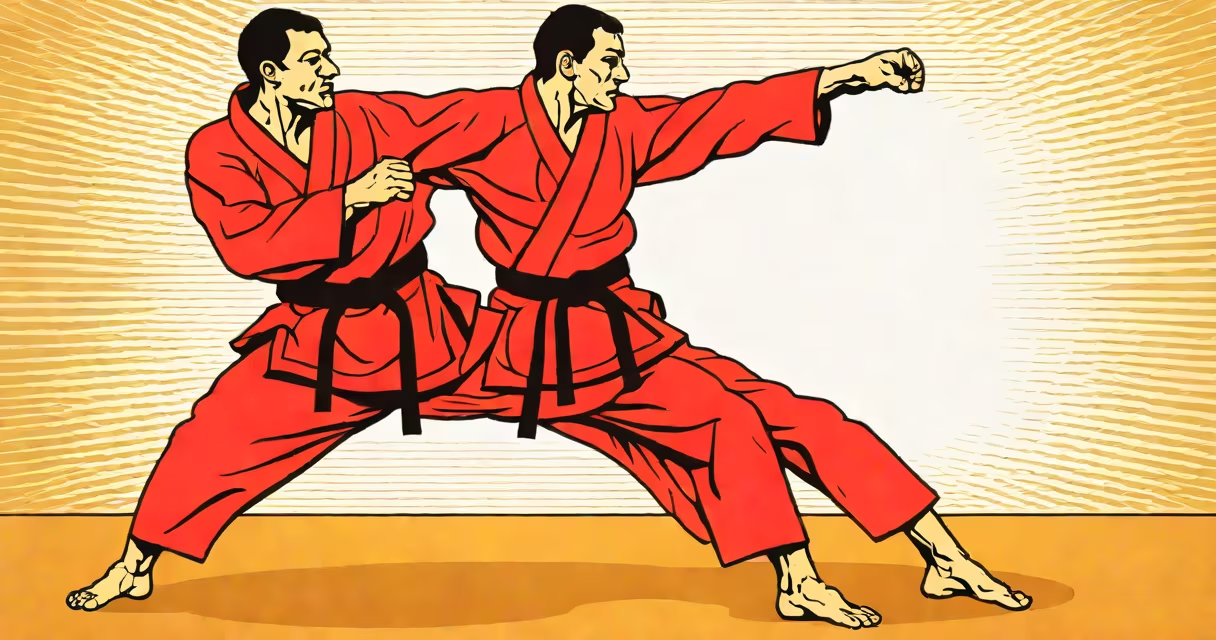
Sambo martial art is a Russian-origin combat system developed in the 1920s that combines elements of judo, wrestling, and traditional hand-to-hand combat. It emphasizes throws, groundwork, and submission techniques, with two primary forms: sport sambo and combat sambo.
Sambo was created by the Soviet military to train soldiers in practical, efficient close-quarters combat. The name derives from "samozashchita bez oruzhiya," meaning "self-defense without weapons." Over time, it evolved into a structured sport and a standalone discipline with international competitions.
Today, sambo is governed by the International Sambo Federation (FIAS), which sets global rules for competition. It is recognized by the International Olympic Committee as a sport, though it has not yet been included in the Olympic Games. The sport features weight classes, timed rounds, and specific scoring systems based on technique and control.
Sambo uses a blend of standing throws, takedowns, and ground control. Competitors aim to score points by executing valid techniques such as hip throws, leg sweeps, and joint locks. Matches are divided into two periods of three minutes each, with a one-minute break between.
Scoring is based on technical execution. A successful throw from a standing position earns 1 point. A pin lasting three seconds scores 2 points. A submission via choke or joint lock results in an immediate win. Points are awarded for control, positioning, and effective technique, not just dominance.
Groundwork in sambo includes positional control, transitions, and submission attempts. Fighters must maintain proper posture and avoid illegal moves like eye gouging or biting. Referees enforce strict rules on safety and sportsmanship.
There are two main disciplines within sambo:
| Type | Focus | Rules | Common Use |
|---|---|---|---|
| Sport sambo | Competition and fitness | Points-based; no submissions; no strikes | International tournaments, military training, youth programs |
| Combat sambo | Military and law enforcement application | Submission holds allowed; limited striking permitted | Special forces training, anti-terrorism units, police tactical teams |
Sport sambo is practiced in national and international events, including the World Sambo Championships and European Sambo Championships. Combat sambo is used in elite training environments and is less widely publicized due to its operational nature.
A key distinction often missed is that combat sambo allows controlled strikes to important areas-such as the neck or solar plexus-but only with protective gear. This reflects its roots in real-world self-defense, unlike sport sambo, which prohibits any form of striking.
Sambo is widely taught in Russia, Ukraine, Belarus, and Central Asian nations. It is part of physical education curricula in many schools and universities. In Russia, sambo is integrated into military and police training programs.
The Russian Armed Forces use combat sambo to prepare troops for urban combat scenarios. According to a 2021 report by the Ministry of Defense, over 60% of special operations personnel undergo formal sambo training. The system's efficiency in neutralizing threats quickly makes it ideal for high-risk environments.
Outside of official institutions, sambo is gaining traction in Western countries. The United States has over 150 registered sambo clubs through USA Sambo, a national federation. In Europe, Germany and France have active national teams competing in FIAS-sanctioned events.
One non-obvious fact: sambo is not a derivative of judo. While both share similar throwing mechanics, sambo incorporates more changing movement patterns and greater emphasis on groundwork transitions. Judo focuses on balance and use; sambo prioritizes speed, adaptability, and situational awareness.
Many assume sambo is simply a variant of judo. This is incorrect. Judokas train primarily in standing throws and groundwork with a focus on kata (forms) and etiquette. Sambo practitioners emphasize real-time adaptation, environmental awareness, and rapid response under pressure.
Another misconception is that sambo is purely offensive. In reality, defensive techniques-such as foot sweeps, parries, and evasion-are central to training. A 2019 study published in the Journal of Sports Science and Medicine found that elite sambo athletes spend 40% of training time on defense and counter-movement strategies.
I once trained with a former Russian Spetsnaz operator who demonstrated how combat sambo is applied in hostage rescue scenarios. He executed a single-arm shoulder throw on a 200-pound partner using minimal momentum. The move took 1.3 seconds. He explained that timing and precision matter more than strength-a principle echoed in FIAS rulebooks.
Sambo martial art remains a effective system for both competition and real-world application. Its dual structure-sport and combat-allows practitioners to develop skill across contexts. Whether used in Olympic-style matches or in tactical operations, sambo delivers measurable results grounded in decades of military-tested methodology.