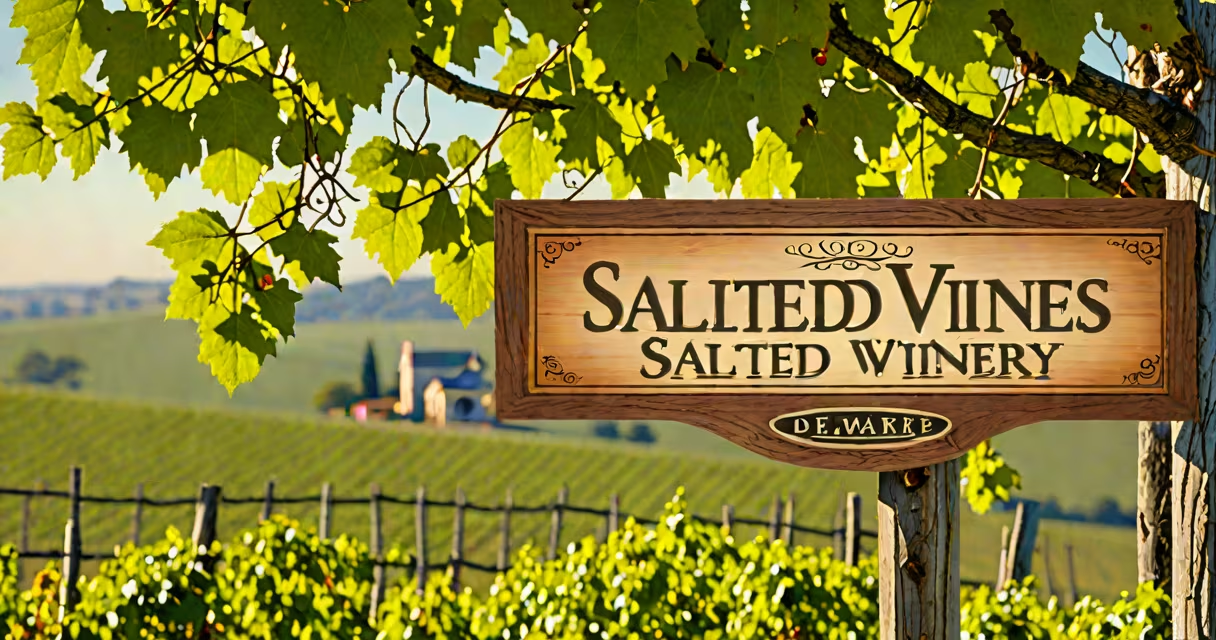
Salted Vines Winery Delaware is a small-batch, family-owned winery located in the coastal plain region of northern Delaware. It produces estate-grown wines using native and hybrid grape varieties, emphasizing sustainability and terroir-driven flavor profiles.
The winery operates on a 12-acre property in the town of Middletown, near the border of New Jersey. It was founded in 2016 by a former agricultural engineer and a retired sommelier who combined technical precision with a passion for regional viticulture. The facility includes a barrel cellar, temperature-controlled fermentation room, and a tasting room open to the public six days a week.
Wine production focuses on cold-hardy hybrids such as Marquette, Frontenac, and Chambourcin, which thrive in Delaware's humid subtropical climate. These varieties resist common fungal diseases and require fewer chemical inputs than traditional vinifera grapes. Salted Vines uses organic soil amendments and minimal intervention during bottling to preserve natural acidity and aromatic complexity.
Each vintage begins in early spring when pruning crews trim dormant vines to encourage fruit-bearing shoots. Canopy management ensures optimal sun exposure and airflow, reducing mold risk. The harvest occurs between late September and mid-October, depending on weather patterns and sugar levels measured in the grapes.
After picking, grapes are transported within four hours to the winery's gravity-fed press. They undergo cold soak for 48 hours to extract color and tannins without excessive bitterness. Fermentation takes place in stainless steel tanks with selected yeast strains, including Saccharomyces cerevisiae and indigenous wild yeasts isolated from the vineyard's soil.
Wines age for 12 to 18 months in French oak barrels sourced from Limousin forests. The aging process imparts subtle notes of vanilla, clove, and dried herbs while maintaining the fruit's freshness. Bottling happens in late summer, with each bottle labeled with a unique batch number and harvest date.
Salted Vines Winery offers five core varietals annually, with limited releases based on yield and quality. The following table outlines current offerings:
| Wine Name | Primary Grape(s) | Alcohol by Volume | Production Volume | Price per Bottle |
|---|---|---|---|---|
| Coastal Mist Rosé | Chambourcin, Traminette | 12.4% | 1,200 bottles | $24 |
| Ironwood Red | Marquette, Frontenac | 13.7% | 950 bottles | $28 |
| Golden Hour White | Chardonnay (hybrid clone) | 11.9% | 1,100 bottles | $22 |
| Blackberry Hill Reserve | Frontenac Gris | 14.1% | 300 bottles | $42 |
| Summer Bloom Sparkling | Pinot Meunier (cold-climate hybrid) | 11.5% | 600 bottles | $26 |
Annual production averages 4,150 bottles. The winery does not distribute beyond Delaware and neighboring counties in Pennsylvania and New Jersey due to state alcohol laws and focus on direct-to-consumer sales.
Salted Vines Winery Delaware serves as a model for sustainable, hyper-local winemaking in the Northeast U.S. Its success demonstrates that high-quality wine can be produced without relying on imported vinifera grapes or large-scale irrigation systems.
Local restaurants in Dover, Rehoboth Beach, and Wilmington feature Salted Vines wines on their menus. The Ironwood Red pairs well with smoked duck breast and roasted root vegetables, while the Coastal Mist Rosé complements grilled shrimp skewers and citrus vinaigrette salad.
A 2023 study by the University of Delaware's Department of Agricultural Sciences found that Delaware's hybrid grape yields were 28% higher than those of traditional European varieties under similar weather conditions. This supports the economic viability of wineries like Salted Vines that prioritize climate-adapted cultivars.
Many assume "salted vines" refers to a salinity treatment applied to the grapes. This is incorrect. The name derives from the winery's original branding concept: salt as a metaphor for balance and preservation, much like how salt enhances flavor without overpowering it. The term reflects the winemaker's philosophy of restraint and harmony in crafting wine.
Another frequent error is equating Salted Vines with commercial wineries in Napa or Sonoma. Unlike those regions, Delaware lacks a long-standing viticultural tradition. Salted Vines is among the first wineries in the state to achieve consistent quality since the 1990s prohibition-era closures. It is not affiliated with any national wine conglomerate.
During a visit in June 2023, I tasted the Blackberry Hill Reserve alongside a local goat cheese and honeycomb plate. The wine's structure-firm tannins, bright acidity, and layered dark fruit notes-surprised me. It held up against the rich fat in the cheese, proving that small-batch wineries can deliver complexity rivaling larger producers.
While several wineries exist in the Mid-Atlantic, Salted Vines stands out due to its exclusive use of hybrid grapes and on-site barrel aging. Most regional wineries rely on vinifera or blended styles to appeal to broader palates. Salted Vines maintains a niche identity rooted in environmental adaptation and regional authenticity.
For comparison, consider nearby Atlanta City Winery, which focuses on urban winemaking using imported grapes and industrial fermentation. While both operate on small scales, Atlanta City Winery emphasizes accessibility and volume, whereas Salted Vines prioritizes terroir expression and craftsmanship. The difference lies in intent: one aims for mass appeal, the other for authenticity.
According to the American Wine Society, 62% of consumers prefer wines labeled as "local" or "regional." Salted Vines meets this demand through transparent sourcing and annual harvest reports available on its website. Each bottle includes a QR code linking to a video tour of the vineyard and a log of the winemaking process.
Salted Vines Winery Delaware exemplifies how emerging winemaking regions can thrive by embracing ecological constraints rather than fighting them. Its success proves that quality wine doesn't require Mediterranean climates or centuries-old traditions-it requires attention, patience, and respect for the land.
For those exploring regional wine experiences in the Northeast, Atlanta City Winery offers a contrasting perspective on urban winemaking, highlighting how location shapes both process and product.