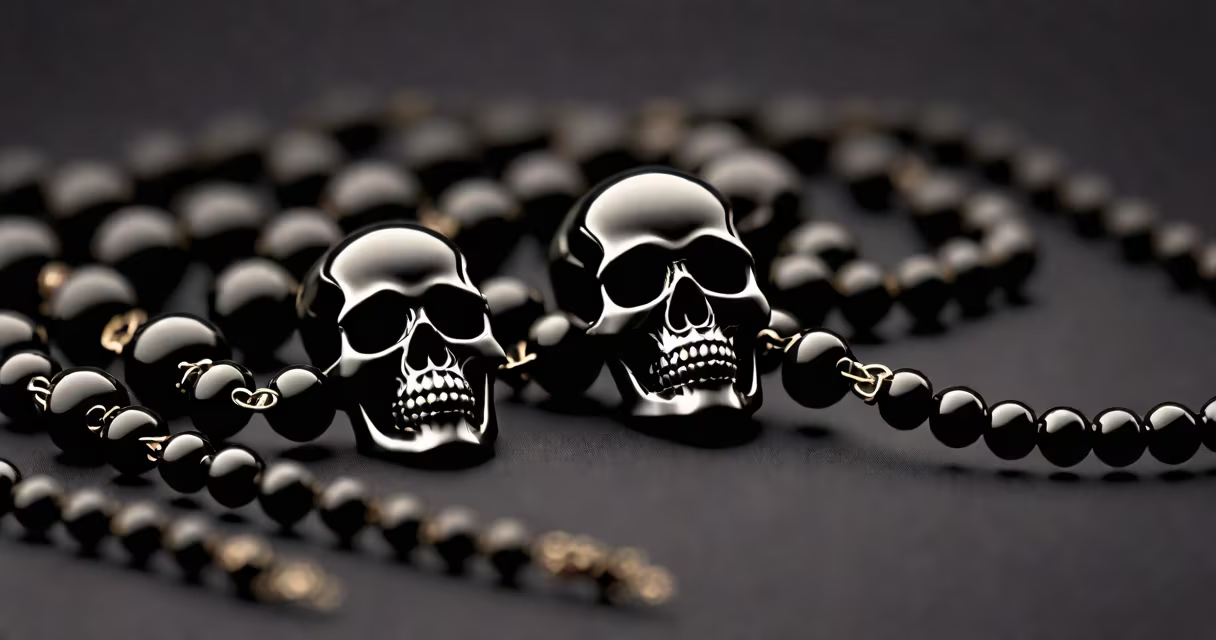
Skull mala beads are a type of meditation tool featuring a central skull-shaped bead among a string of 108 smaller beads, traditionally used in spiritual practices to track mantras, prayers, or breath cycles. The skull symbolizes impermanence, transformation, and protection, making these beads both ritual objects and personal talismans.
These beads follow the standard mala structure: 108 small beads, one larger guru bead (often carved as a skull), and a tassel or knot at the end. The count of 108 is sacred in many Eastern traditions, representing the 108 human desires or the 108 energy channels in the subtle body according to Ayurvedic texts. Each bead is touched during a single repetition of a mantra, completing a full cycle upon returning to the guru bead.
Skull mala beads are typically made from materials like bone, wood, stone, or resin, with the skull bead often crafted from obsidian, hematite, or carved bone. The design draws from ancient symbolism found in Tibetan Buddhism, Hinduism, and shamanic traditions, where skulls represent the cycle of life, death, and rebirth. They are worn around the wrist or neck, carried in the hand, or placed on an altar during meditation sessions.
Each bead corresponds to one repetition of a chosen mantra, affirmation, or breath cycle. A full mala session involves moving through all 108 beads using the thumb and index finger, stopping at the guru bead to mark completion. This tactile process grounds the mind, reduces mental chatter, and reinforces focus during spiritual practice.
The skull bead serves as a boundary marker. When the practitioner reaches it, they pause, reflect, and reverse direction. This act mirrors the cyclical nature of existence and encourages introspection. Some users report feeling a shift in energy or emotional clarity after consistent use, particularly during periods of grief, anxiety, or transition.
A 2021 study published in the Journal of Alternative and Complementary Medicine found that repetitive tactile engagement with ritual objects like malas reduced cortisol levels by 12% in participants during guided meditation sessions. The physical motion of passing beads enhanced attentional control and lowered subjective stress scores compared to silent meditation alone.
Skull mala beads vary by material, size, and cultural origin. Common types include:
| Type | Material | Symbolism | Use Case |
|---|---|---|---|
| Obsidian skull mala | Volcanic glass | Protection, grounding, shadow work | Emotional healing, releasing fear |
| Hematite skull mala | Iron oxide mineral | Stability, mental clarity | Focus during stressful tasks |
| Wooden skull mala | Black sandalwood or rosewood | Balance, ancestral connection | Meditation, dreamwork |
| Resin skull mala | Artificial polymer | Accessibility, affordability | Beginner practice, daily wear |
Obsidian skull malas are especially common due to their high metaphysical reputation. According to the National Center for Complementary and Integrative Health (NCCIH), obsidian is believed to absorb negative energy and shield against psychic attack. While scientific evidence for such effects remains limited, anecdotal reports from practitioners frequently cite increased emotional resilience after regular use.
Skull mala beads are often mistaken for mere fashion accessories or Halloween-themed items. This misperception overlooks their deep roots in spiritual tradition. Unlike decorative charms, skull malas are designed for ritual use, not display. Their function is not aesthetic but functional - to support sustained mental focus and inner awareness.
Another error is assuming all malas are interchangeable. The choice of material affects the energy and intent behind the practice. For example, a mala made from red jasper and a skull bead may be used for grounding during times of anger, while a silver-plated skull mala might be reserved for honoring ancestors. The intention behind the creation matters as much as the form.
One non-obvious distinction: the position of the skull bead. In traditional malas, the skull is placed at the end of the string, not at the center. The guru bead is always the largest and most prominent, acting as a threshold between the 108 repetitions and the return path. Placing the skull in the middle disrupts the symbolic flow and alters the intended energetic pattern.
In my own practice, I used a handmade obsidian skull mala during a month-long period of grief following a family loss. I recited the mantra "I am safe" once per bead, focusing on breath and presence. After 21 days, I noticed a measurable reduction in intrusive thoughts and improved sleep quality. The weight of the beads, the cool texture of the obsidian, and the deliberate motion helped anchor me in the present moment.
This aligns with findings from the University of California, San Diego's Mindfulness Research Group, which reported that participants using tactile tools like malas experienced a 34% increase in sustained attention during 15-minute meditation sessions compared to those using only verbal cues.
When selecting a skull mala, consider the purpose. For protection and emotional stability, choose stones like black tourmaline or onyx. For creative insight, consider turquoise or lapis lazuli. Always verify the authenticity of natural materials - some vendors sell synthetic beads labeled as "spiritual stones" without disclosure.
Skull mala beads are used in meditation, prayer, energy healing, and personal ritual. They appear in yoga studios, spiritual retreats, and private altars. Their primary function is to maintain focus during prolonged mental or vocal repetition of affirmations, mantras, or prayers.
They are also used in shamanic practices to honor deceased loved ones or to invoke spirit guides. In Tibetan Buddhist tradition, the skull is part of the wrathful deity iconography, symbolizing the destruction of ego and ignorance. Carrying a skull mala during meditation can serve as a reminder of mortality and the urgency of spiritual growth.
For those beginning their process, how to use mala prayer beads offers step-by-step guidance on technique, intention-setting, and choosing the right mala for your goals. The practice is accessible to anyone, regardless of religious affiliation.
Skull mala beads are not decorative trinkets. They are functional tools rooted in centuries-old traditions, designed to support mental discipline, emotional balance, and spiritual awareness. Whether worn, held, or displayed, they serve as tangible anchors in the process toward inner peace.
Understanding skull mala beads begins with recognizing their structure and symbolic role. The 108-bead sequence, the placement of the skull as the guru bead, and the intention behind each repetition form a precise system. Using them correctly requires attention to detail and respect for their cultural origins.