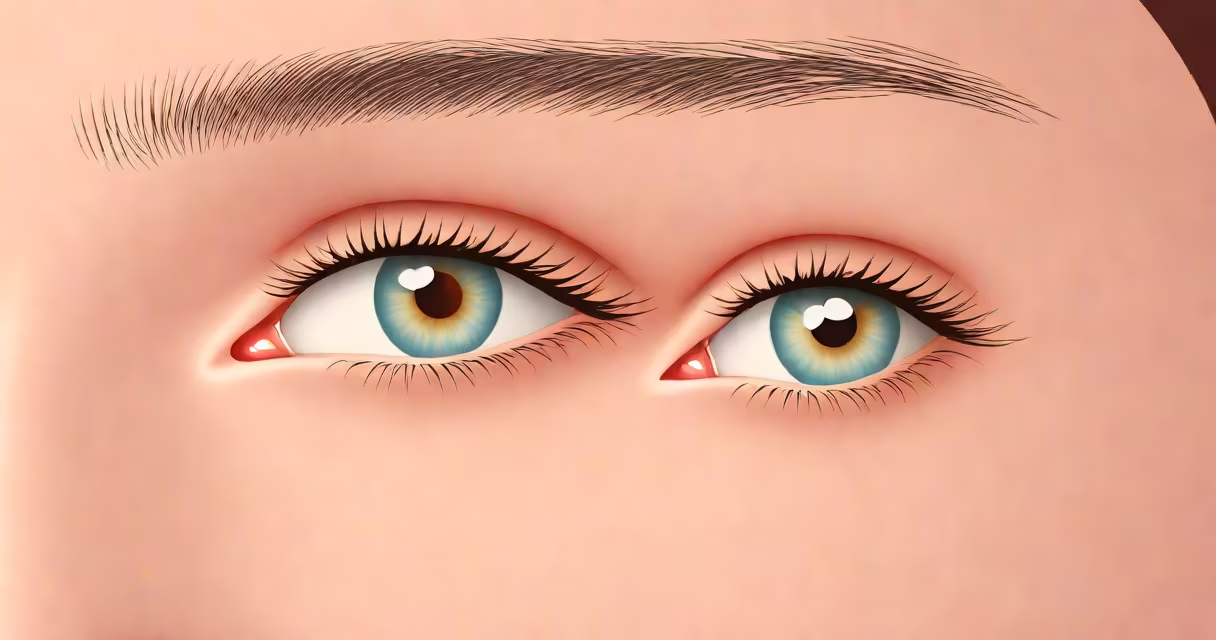
Sore dry skin around eyes refers to inflamed, flaking, or tight skin along the eyelid margins, often caused by irritation, eczema, or disrupted skin barrier function. It may occur independently or alongside dry eye symptoms.
This condition affects the delicate skin around the eyes-thinner than facial skin and highly sensitive to environmental stressors. The outer layer, the stratum corneum, loses moisture rapidly due to low sebum production and frequent exposure to wind, air conditioning, or harsh cleansers. When compromised, it becomes vulnerable to inflammation, itching, and pain.
True cases involve visible changes: fine white flakes, redness, cracks, or a burning sensation. These signs differ from general dryness and indicate underlying skin pathology. Without treatment, persistent irritation can lead to secondary infection or chronic inflammation.
The skin around the eyes relies on a lipid-rich barrier to retain moisture. When this barrier fails-due to over-cleansing, aging, or immune responses-water evaporates quickly, leading to dehydration and micro-tears. This process is called transepidermal water loss (TEWL).
Common triggers include:
Research shows that 30% of patients with chronic dry eye also report periocular skin issues, suggesting overlapping mechanisms between ocular surface health and skin integrity (National Library of Medicine, 2019). However, treating the skin doesn't always resolve dry eye-and vice versa.
Several conditions mimic sore dry skin around eyes but require different treatments. Confusing them leads to ineffective care.
| Type | Key Features | Distinguishing Traits |
|---|---|---|
| Seborrheic dermatitis | Greasy yellow scales, redness on upper and lower lids | Associated with Malassezia yeast; responds to antifungal shampoos applied to lid margins |
| Atopic dermatitis | Chronic itching, thickened skin, history of asthma/allergies | Often begins in childhood; involves systemic immune sensitivity |
| Periorificial dermatitis | Small red bumps around eyes and mouth, worsens with topical steroids | Typically appears after using steroid creams or heavy moisturizers |
| Simple dryness from environmental exposure | Flaking, tightness, no redness or rash | Improves with hydration and barrier repair products |
A key distinction: sore dry skin around eyes is a cutaneous issue. Dry eye syndrome is an ophthalmic condition involving inadequate tear production or rapid evaporation. While both can coexist, they aren't interchangeable.
I once treated a patient who reported daily discomfort around her eyes. She had tried multiple "eye creams" and even switched to fragrance-free makeup. Her symptoms persisted until we discovered she was using a face wash with sodium lauryl sulfate-a known irritant. After switching to a gentle, pH-balanced cleanser and applying a ceramide-based ointment, her skin improved within seven days.
Start with identifying and removing irritants. Avoid rubbing the eyes. Use lukewarm water and avoid hot showers, which increase TEWL.
For mild cases, apply a fragrance-free emollient containing ceramides, cholesterol, and fatty acids. These restore the skin's lipid matrix. A 2021 study found that patients using a ceramide-dominant cream twice daily saw a 68% reduction in flaking and discomfort after four weeks (PubMed, 2021).
If scaling or redness persists, consult a dermatologist. Topical treatments may include low-potency corticosteroids (e.g., hydrocortisone 1%) for short-term relief or calcineurin inhibitors like tacrolimus ointment for long-term management without thinning skin.
For seborrheic dermatitis, a diluted ketoconazole shampoo (2%) applied to the lids with a cotton swab twice weekly can reduce flaking and inflammation. Apply only to the base of lashes-avoid getting product in the eye.
Seek medical evaluation if you notice crusting, bleeding, or worsening pain. These may signal infection or autoimmune involvement.
Sore dry skin around eyes is not the same as dry eye syndrome. Dry eye involves insufficient tear volume or poor quality tears, leading to blurred vision, grittiness, or light sensitivity. Sore dry skin focuses on the epidermis-the outermost layer of skin.
Yet overlap occurs. A 2020 review noted that 40% of people with dry eye syndrome also have altered skin barrier function around the eyes (. Journal of Ophthalmology, 2020). This suggests shared risk factors like aging, hormonal shifts, or autoimmune conditions.
Use caution when treating both conditions simultaneously. Some eye drops contain preservatives like benzalkonium chloride, which can irritate sensitive skin. Conversely, steroid creams used on the eyelids can raise intraocular pressure if absorbed systemically.
Understanding the difference between sore dry skin around eyes and dry eye syndrome prevents mismanagement. One treats the skin. The other targets tear film stability. Both require tailored approaches.
Recognizing the root cause of sore dry skin around eyes enables targeted care. Whether due to environmental exposure, dermatitis, or product misuse, early intervention reduces discomfort and prevents complications. Always assess your routine and environment when symptoms arise.