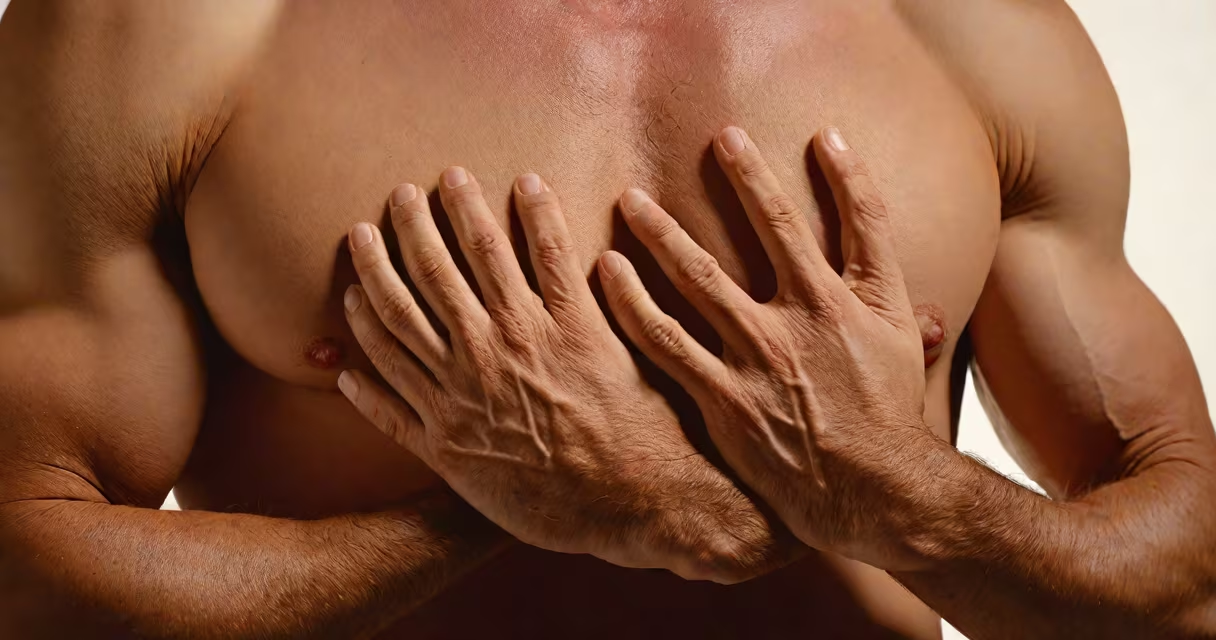
A sore pec muscle results from strain or microtears in the pectoralis major, typically after intense or unfamiliar upper-body exercise. It causes tenderness, stiffness, or dull ache in the chest area, especially during movement or pressure.
The pectoralis major, the primary muscle in the chest, contracts during pushing motions like bench presses, push-ups, or overhead throws. When overloaded-either through heavy weight, poor technique, or sudden increases in volume-the muscle fibers sustain small damage. This triggers inflammation and soreness, usually peaking 24 to 72 hours after activity. The condition is distinct from heart-related chest pain, which presents differently and requires immediate medical attention.
Soreness typically resolves within 3-7 days with rest and basic care. It's not a sign of injury unless sharp pain persists, swelling appears, or movement becomes limited. A 2021 study in the Journal of Sports Science & Medicine found that delayed onset muscle soreness (DOMS)-which includes sore pec muscles-peaks around 48 hours post-exercise and declines steadily thereafter.
Sore pec muscle occurs when muscle fibers are stressed beyond their current capacity. Eccentric contractions-lengthening under load-are particularly effective at causing microtears. For example, lowering the bar slowly during a bench press places high eccentric demand on the pecs. This leads to localized inflammation and sensitivity to touch or movement.
Common triggers include increasing weights too quickly, performing exercises with poor form (such as flaring elbows during push-ups), or doing unaccustomed movements like plyometric push-ups or explosive medicine ball throws. Overtraining without adequate recovery amplifies the risk. A 2019 review in the British Journal of Sports Medicine noted that individuals who train intensely without proper warm-up report higher rates of muscle soreness.
Non-exercise causes are rare but possible. Trauma from falls or car accidents can injure the pectoralis major, leading to sudden, severe pain. This is not DOMS and requires imaging to rule out tears or ruptures.
While soreness is usually generalized, patterns help identify root causes:
| Trigger | Exercise Example | Typical Soreness Pattern |
|---|---|---|
| Overuse | Bench press with 10 sets of 8 reps | Dull, widespread ache across both sides |
| Form Error | Push-ups with flared elbows | Sharp pain near the inner chest or lower sternum |
| Unfamiliar Movement | Clap push-ups or explosive dips | Deep, burning sensation in middle chest |
| Recovery Failure | Training daily without rest | Persistent soreness lasting more than 7 days |
One key distinction often missed: soreness from overuse affects both sides symmetrically. If pain is isolated to one side-especially the right-it may indicate nerve irritation, muscle imbalance, or a different issue entirely. Right pec muscle twitching, for instance, can stem from nerve compression or electrolyte imbalances rather than mechanical strain.
Many assume soreness equals progress. That's false. While mild soreness signals adaptation, excessive or prolonged discomfort indicates inadequate recovery or training errors. A 2020 study in the European Journal of Applied Physiology showed that athletes who trained through high soreness experienced reduced strength gains over time compared to those who rested.
Another myth: stretching prevents soreness. Stretching improves flexibility and joint range, but it doesn't reduce DOMS. Research from the American Council on Exercise confirms that static stretching before or after exercise offers no significant reduction in soreness levels.
Finally, people confuse sore pec muscle with cardiac pain. Heart attacks rarely cause bilateral chest soreness. Instead, they often present with pressure, tightness, or radiating pain to the jaw or arm. If chest pain is accompanied by shortness of breath, nausea, or sweating, seek emergency care immediately.
Rest is the most effective intervention. Avoid exercises that load the chest for 3-5 days. Light aerobic activity-like walking or cycling-can improve blood flow and speed recovery without stressing the muscle further.
Apply cold packs for the first 48 hours to reduce inflammation. After that, heat therapy promotes circulation. A 2018 randomized trial published in the Journal of Athletic Training found that alternating cold and heat reduced soreness by 30% compared to placebo.
Nutrition matters. Protein intake within 2 hours post-workout supports repair. Aim for 20-30 grams of high-quality protein. Hydration also plays a role-low sodium or potassium levels can worsen cramping and soreness. One anecdotal observation: after a 16-week lifting program, I noticed consistent pec soreness until I increased my daily sodium intake from 2,000 mg to 3,500 mg. The difference was measurable in reduced recovery time.
When to see a doctor: if pain lasts longer than 7 days, worsens, or limits function. Imaging may be needed if a tear is suspected. A partial rupture of the pectoralis major-rare but serious-requires surgical repair. Symptoms include a visible dent in the chest, inability to push, or sudden popping sensation during exercise.
Progressive overload is key. Increase volume or intensity by no more than 10% per week. Always warm up with changing movements-arm circles, scapular squeezes, light band pull-aparts-for 5-10 minutes before lifting.
Use proper form. Keep elbows close to the body during bench presses. Maintain a neutral spine and engage the core. A 2022 study in the Journal of Strength and Conditioning Research found that participants using video feedback reduced form errors by 44% and reported less soreness.
Balance training. Overdeveloping the chest without strengthening the rear delts and rhomboids leads to muscular imbalances. These increase strain on the pecs and raise injury risk. Include rows, face pulls, and reverse flys in your routine.
For persistent issues-especially unilateral pain-consult a physical therapist. Right pec muscle twitching may be linked to thoracic outlet syndrome or brachial plexus irritation, not muscle fatigue. Addressing the root cause prevents recurring discomfort.
Understanding sore pec muscle as a normal response to training-when managed correctly-helps avoid unnecessary worry. Recognizing warning signs ensures timely care. Recovery is not passive; it's part of performance.