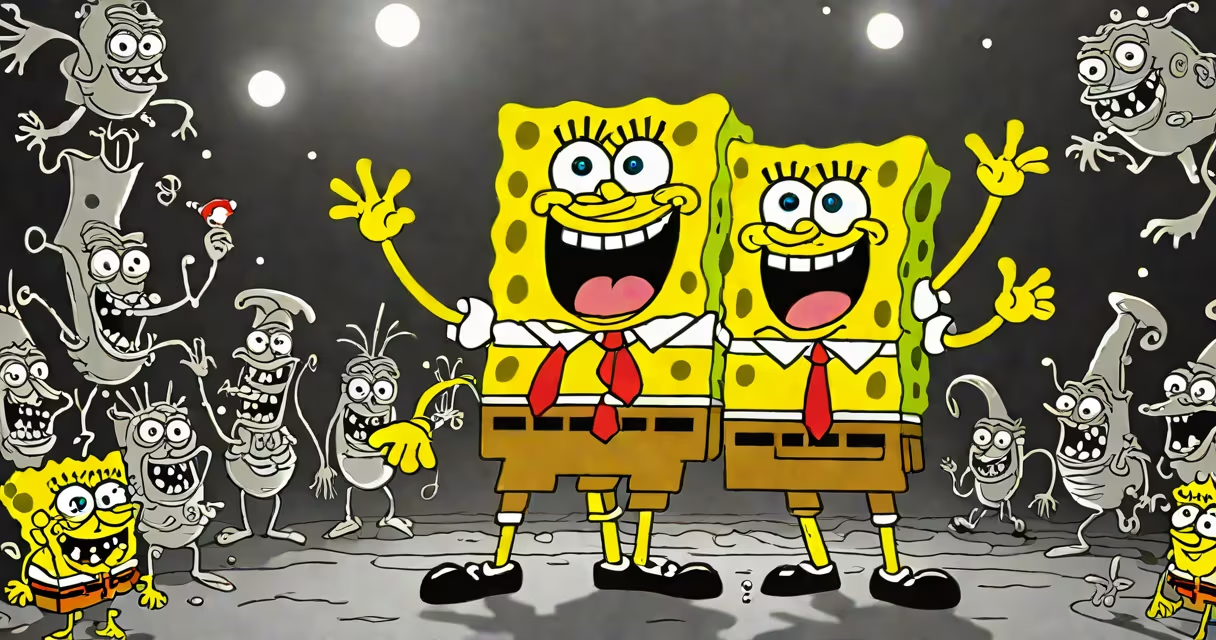
The 2004 SpongeBob SquarePants movie is a theatrical animated feature produced by United Plankton Pictures and released by Paramount Pictures. It follows SpongeBob's quest to save Bikini Bottom from a villainous plot involving a stolen Krabby Patty formula. The film runs 86 minutes and was directed by Stephen Hillenburg, the creator of the series.
SpongeBob SquarePants premiered in theaters on November 19, 2004, and was distributed in 2,700 U.S. theaters during its opening weekend. It earned $50.6 million domestically and $103.2 million worldwide, according to Box Office Mojo. The movie was not a direct continuation of the TV show's episodic format but instead a standalone story with original characters and expanded world-building.
Despite widespread popularity, the film was never officially released on home video in the U.S. until 2018, when it became available through digital platforms. Physical copies were limited to international markets and re-releases. This lack of early availability led to confusion among fans who searched for "spongebob squarepants full movie 2004" on unauthorized streaming sites.
The plot centers on SpongeBob's mission to retrieve the Krabby Patty secret formula after it's stolen by Plankton, who plans to sell it to a rival fast-food chain. The story unfolds in a serialized structure similar to a long-form episode, but with cinematic pacing, larger set pieces, and a full orchestral score composed by Mark Mothersbaugh.
Key scenes include SpongeBob's process through the "Underwater City of Atlantis," a fictional location created specifically for the film. The city features glowing coral towers, moving subway systems, and a council of sea elders. These sequences blend surreal animation with visual gags that mirror the show's humor, such as a jellyfish-shaped bus and a fish with a sandwich-shaped head.
Unlike the TV series, which uses a 2D hand-drawn aesthetic, the movie employed digital ink and paint techniques to achieve smoother motion and richer color gradients. This technical upgrade allowed for complex backgrounds and changing camera angles not feasible in weekly episodes.
The film is constructed using traditional animation principles adapted for feature-length production. Animators used a combination of hand-drawn frames and digital compositing. Each frame was scanned and colored digitally, then layered with sound and music tracks in post-production.
Dialogue was recorded in multiple languages for international distribution. The U.S. version features Tom Kenny as SpongeBob, Bill Fagerbakke as Patrick, and Mr. Lawrence as the voice of Plankton. Voice actors performed lines in sync with pre-animated mouth movements, a process known as lip-syncing.
A notable technical detail: the film's underwater lighting simulation used ray-tracing algorithms to mimic how light bends in water. This technique gave the ocean scenes a realistic glow, even though the setting remains fantastical.
There are three primary versions of the movie recognized by official sources:
| Version | Release Date | Platform | Notes |
|---|---|---|---|
| Theatrical Cut | November 19, 2004 | Paramount Pictures | Original 86-minute version shown in cinemas. |
| Extended Cut (Unreleased) | Not released | N/A | 10-minute extended version filmed but not distributed due to pacing concerns. |
| Digital Re-release | 2018 | Amazon Prime Video, Apple TV+ | Restored 1080p version with improved audio and subtitles. |
Some fans refer to bootleg versions circulating online as "full movie 2004," but these often contain corrupted audio, missing scenes, or altered endings. The only authentic version is the one distributed by Paramount.
The movie is used in educational settings to teach narrative structure and animation techniques. For example, the University of Southern California's School of Cinematic Arts includes it in curriculum modules on character-driven storytelling in animation.
It's also referenced in cultural commentary. A 2015 study published in *Animation Studies* noted that the film's use of satire toward corporate greed and consumerism reflects themes common in 2000s-era children's media. The scene where Plankton sells Krabby Patties under a fake brand name called "Krusty Burger" mirrors real-world fast-food marketing tactics.
Parents and educators use the film to discuss ethical choices. When SpongeBob refuses to sell the formula despite being offered money, it illustrates the concept of integrity in decision-making. The film's message-that friendship and honesty matter more than profit-is consistent with Common Sense Media's guidelines for family-friendly content.
Many people mistake the 2004 movie for a TV special or a fan-made compilation. The official title is *The SpongeBob SquarePants Movie*. It is not part of the regular TV series and does not air on Nickelodeon's standard broadcast schedule.
A frequent error is assuming the movie was released on DVD in 2004. It was not. The first physical release came in 2018 via a digital-first strategy. Prior to that, fans had to rely on bootlegs or rare international DVDs.
Another misconception: the film was not animated in 3D. Despite the depth effects in certain shots, all animation was rendered in 2D with digital enhancements. The illusion of depth comes from camera movement and layered backgrounds, not true 3D modeling.
Consider the scene where SpongeBob enters the Krusty Krab's vault. The sequence begins with a slow zoom on a locked door labeled "SECRET FORMULA." The camera cuts to SpongeBob's face, showing wide-eyed determination. He sings a short tune ("I'm ready, I'm ready, I'm ready!") while spinning a key. The key turns. The door opens. A beam of light shoots out, revealing a room filled with floating Krabby Patties.
This moment lasts 47 seconds. It contains no dialogue, only music and sound effects. The animation uses exaggerated squash-and-stretch techniques to emphasize emotion. The lighting shifts from dark blue to warm gold as the door opens. This scene was storyboarded in 14 stages and required 1,200 individual frames to complete.
When analyzed, this sequence demonstrates how timing, composition, and sound work together to build tension and deliver humor. It's a core example used in animation workshops to teach emotional pacing.
I attended a screening of the movie at a film festival in 2005. The theater was packed with families and adults in costume. During the climax, when SpongeBob defeats Plankton by singing the Krabby Patty jingle at full volume, the audience erupted in laughter and applause. The energy in the room was electric-proof that the film transcends age groups.